Can I apply for an SBA Loan if I have a criminal history?
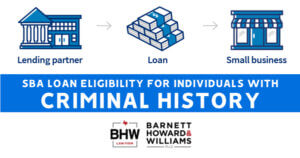 Countless small businesses have been impacted by the COVID-19 pandemic. The US Government has several different loan programs offered through the Small Business Administration aimed at helping small business get through the crisis and maintain jobs for their employees. Many of the SBA loan programs for the COVID-19 crisis can be found on the SBA website COVID-19 section.
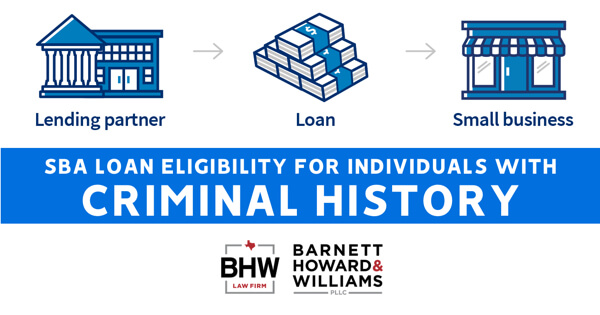
One of the questions that we have received during the last couple of weeks is whether a person with a criminal history can apply for an SBA loan. The answer is…it depends. It depends on the nature of the criminal offense.
What will disqualify me from applying for an SBA loan?
When it comes to criminal history, the following will disqualify a company and make it ineligible for SBA assistance.
If an owner of the company (who owns 20% or more) answers YES to any of the following questions taken from the SBA application, then the company is NOT eligible to apply for SBA assistance:
- Are you currently incarcerated?
- Have you been adjudicated for a felony in the preceding 5 years? This includes
- Felony conviction;
- Plea of guilty to a felony offense;
- Plea of nolo contendere (no contest) to a felony;
- Participating in a pre-trial diversion program for a felony offense;
- Probation or Deferred Adjudication for a felony offense.
- Are you currently on probation for a felony or a misdemeanor?
- Are you currently on parole?
- Are there pending criminal charges against you that have not yet been adjudicated (felony or misdemeanor)?
*NOTE: There is also a question on the Economic Injury Disaster Loan that asks whether an applicant has been arrested (even if the charge was dismissed) for any criminal offense (other than a minor motor vehicle violation). It is unclear whether an arrest by itself is a disqualifier or just a point of inquiry.
If a 20% (or more) owner answers YES to any of those questions, then the company will not even be able to complete its application for SBA assistance.
In the past, it seemed that the SBA was only concerned with felony criminal history (see 13 CFR 120.110), but the new applications for the COVID relief do not distinguish between felonies and misdemeanors when it comes to either active probationers or individuals with pending charges. This is especially difficult for individuals that have a pending criminal charge to which they have pleaded not guilty and not yet received their day in court. To sink their business while at the same time presuming them innocent is not in keeping with the spirit of the presumption itself.
Please be reminded that it is a federal offense to falsify a loan application, so please don’t do that.
 With the declaration of a state of disaster in Texas by Governor Greg Abbott on March 13,2020 comes some new consequences that Texas citizens need to be aware of.