
All Posts By

Brandon Barnett's Criminal Defense Blog at HLAW

Brandon Barnett is a partner and criminal defense attorney with Barnett Howard & Williams PLLC in Fort Worth, Texas. His law practice is exclusively focused on misdemeanor and felony criminal defense in Tarrant County and surrounding areas. He is also a military judge in the Marine Corps Reserve and a law professor at Texas A&M University School of Law.

Handgun on a white background, relevant to community caretaking and legal evidence in criminal defense cases.

Searching for Evidence or Community Caretaking?

By Community Caretaking

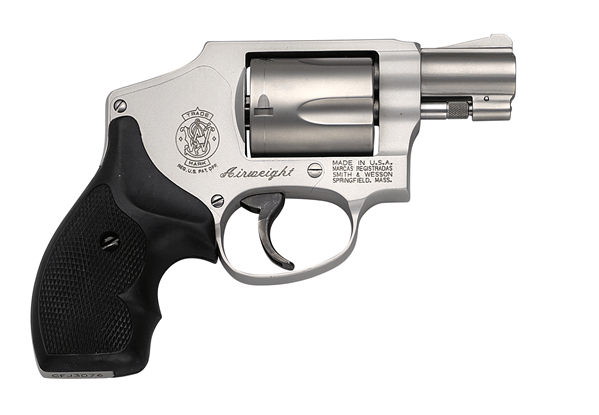
Photo of a handgun found under car seat during inventory search, illustrating Fourth Amendment evidence-search issues.United States v. McKinnon, 2012 U.S. App. LEXIS 7806, May 8, 2012

An officer stopped the car Appellant was driving because it had an expired registration sticker.  The officer arrested Appellant after he could not produce a valid driver’s license.  Based on the Houston Police Department’s (HPD) towing policy, the officer ordered the car to be towed.  During the “inventory search,” the officer found a handgun under the driver’s seat.  At trial, Appellant moved to suppress the handgun as being the fruit on an unlawful search in violation of the Fourth Amendment, arguing that:

[the officer’s] inventory search violated his Fourth Amendment rights because (1) the inventory search was merely a pretext for searching for evidence related to the burglaries that had recently taken place in the neighborhood where McKinnon was stopped; and (2) the inventory search was conducted pursuant to a policy that provided HPD officers with impermissible discretion in deciding when to tow a vehicle.

The trial court denied the motion.

The Supreme Court has recognized that the police may seize vehicles without a warrant in furtherance of their “community caretaking” function.  This usually occurs when officers impound damaged or disabled vehicles or vehicles that violate parking ordinances or impede the flow of traffic.  As long as an officer’s decision to impound a vehicle for community caretaking purposes is reasonable, it will not violate the Fourth Amendment.

Here, the court held that the officer’s decision to have the car towed was reasonable under the Fourth Amendment.  It was undisputed that the neighborhood in which the stop occurred had experienced a series of burglaries.  Although these were house burglaries, there was nothing to suggest that the vehicle would not have been stolen or vandalized if left parked and locked at the scene.  By impounding the car, the officer ensured that it was not left on a public street where it could have become a nuisance or where it could have been stolen or damaged.

In addition, while one of the passengers possessed a valid driver’s license, the car’s registration sticker was expired, so it could not have been lawfully driven away from the scene.  Finally, the HPD tow policy provides for the towing of vehicles when the owner is not able to designate a tow operator to remove the vehicle and no other authorized person is present.  The registered owner of the vehicle was not present to designate a tow operator and there was nothing to suggest that she had authorized either of the two passengers, who were present, to operate her car.

The Court further held that HPD’s inventory search policy was constitutional.  By its clear terms, the policy is consistent with preserving the property of the vehicle’s owner while ensuring that the police protect themselves against claims or disputes over lost or stolen property and protecting the police from danger.

Community caretaking…Hmmm.  Seems like alot of things could fit under that title.  I suppose that is the point.

Lane Ends, Merge Left | Reasonable Suspicion for DWI Stop

By Traffic Offenses

Back in 2010, we posted about Mahaffey v. State, a case in which the CCA directed the 12 District Court of Appeals (Tyler) to determine whether a “lane merge” is a “turn” under the Texas Transportation Code, such that it requires a driver to signal.  If a “merge” does not require a turn signal (as the appellant failed to do in this case), then the police stop was improper (without reasonable suspicion) and the evidence of his DWI gained from the stop should have been suppressed.

The 12th Court took another look at the case and once again determined that a “merge” was a “turn” and thus required a turn signal.  Apparently, the 12th Court did not get the CCA’s hint the first time around.

In a 5-3 opinion with Judge Meyers concurring, the CCA reversed (again), holding:

We disagree with the State’s contention that the termination of a lane does not affect whether a driver changes lanes under the signal statute.  As a practical matter, “changing lanes” requires the existence of more than one lane: In order to change lanes from Lane A to Lane B, Lane A must exist.  Appellant did not change lanes.  The two lanes became one. …[N]o signal is required when two lanes become one.

Presiding Judge Keller dissented and was joined by Judges Price and Keasler.  She would hold that because Appellant’s lane ended, he had to change lanes, and that changing lanes requires a turn signal.

Well, it looks like logic prevailed in this one.  You cannot change lanes if there is only one lane in which to drive.  The majority got it right here.  No signal is required for a lane merge.  Remember that if a police officer tries to pull you over for failing to signal.

Pre-Arrest, Pre-Miranda Right to Remain Silent

By Miranda

You have the right to remain silent…as long as you’re in custody and have been mirandized.

In Salinas v. State, the Texas Court of Criminal Appeals addressed an issue about which it and the Supreme Court have remained silent while many other courts across the nation are split; whether the state may comment on an accused’s silence prior to his arrest and Miranda warnings.

In Salinas, the appellant was convicted for murder and sentenced to 20 years in the penitentiary after the state introduced evidence during guilt/innocence about his refusal to answer a question about the possibility of the shotgun shells found on scene matching the shotgun found at his residence.  Appellant refused to answer the question, choosing to remain silent, at a time prior to his arrest and before the police had issued any Miranda warnings.  The defense argued the state was solely using the testimony regarding appellant’s silence as evidence of his guilt in violation of the 5th Amendment.

The Fourteenth Court of Appeals (Houston) affirmed the trial court’s decision to allow the questioning, focusing on the difference between post-arrest, post-Miranda silence and pre-arrest, pre-Miranda silence.  The court of appeals noted that the appellant voluntarily answered questions by police for over an hour before refusing to answer the ballistics question.  Citing Justice Stevens concurring opinion in Jenkins v. Anderson, 447 U.S. 231 (1980) the CCA held:

the Fifth Amendment right against compulsory self-incrimination is “irrelevant to a citizen’s decision to remain silent when he is under no official compulsion to speak.”

The CCA spent little time in this opinion to proclaim loudly it affirms the Fourteenth Court’s holding:

The plain language of the Fifth Amendment protects a defendant from compelled self-incrimination.  In pre-arrest, pre-Miranda circumstances, a suspect’s interaction with police officers is not compelled.

Now, we will continue waiting for SCOTUS to speak up on the issue hoping they don’t continue exercising their right to remain silent…

UPDATE:  US Supreme Court opinion – Salinas Supreme Court Opinion

Accomodating Public Attendance at a Prison Trial

By Jury Trial, Public Trial

Lilly v. State

The Sixth Amendment of the United States Constitution guarantees an accused the right to a public trial in all criminal prosecutions.

Appellant Conrad Lilly, was charged with two counts of assault on a public servant while he was in prison.  The trial court sua sponte convened his trial in the prison-chapel courtroom in lieu of the local courthouse.  Appellant objected to his case being tried in the prison chapel and moved for a change of venue, arguing that his 6th Amendment right to a public trial was violated because “prisons are not open to the public and are more like military zones than public places.”  The trial court denied his change of venue request and the 11th Court of Appeals (Eastland) affirmed.

To support his claim, appellant pointed out the following facts to show that, as applied in his case, the prison chapel trial violated his constitutional rights:

  1. The prison is protected by double razor fences, locked metal doors, and high-security procedures;
  2. Only people listed on an inmate-defendant’s approved visitor list could enter the branch courthouse to attend proceedings (only 10 names can appear on that list and the names can only be modified once every 6 months);
  3. Media and other members of the public would be prohibited from entering unless TDCJ officials in Huntsville preapproved the media’s request;
  4. People attempting to attend the proceeding could be denied entrance if they wore offensive clothing; and
  5. Unaccompanied minors and people released from confinement within the last two years are prohibited from entering the prison at all.

In this case, “the court of appeals held that Appellant’s trial was not closed to the public because there was no evidence that anyone was ‘dissuaded from attempting’ to attend, and no one was actually prohibited from attending his trial.”  The Texas Court of Criminal Appeals disagreed with this analysis.  The focus of the inquiry, the CCA explained, “is not whether the defendant can show that someone was actually excluded.  Rather, a reviewing court must look to the totality of the evidence and determine whether the trial court fulfilled its obligation ‘to take every reasonable measure to accommodate public attendance at criminal trial.'”

[E]ven though many of the individual admittance policies in this case would not, standing alone, necessarily amount to a per se closure, the cumulative effect of the Unit’s policies undermines our confidence that every reasonable measure was taken to accommodate public attendance at Appellant’s trial.

Having found that Appellant’s trial was indeed closed to the public, the CCA further held that the trial court failed to make findings of fact on the record that justified closing Appellant’s trial.  Because Appellant’s 6th Amendment right to a public trial was violated, the CCA reversed the judgments of the court of appeals and the trial court, and remanded the case for a new trial.

The CCA refrained from considering or commenting on whether prison trials are inherently violative of the 6th Amendment, noting that there could be occasions where a “public trial” is held in a prison.

5th Circuit Opens the Barn Door on 4th Amendment Searches

By Theft

Below is a case update from the 5th Circuit (Federal)

U.S. v. Cooke, 5th Circuit, March 13, 2012

While appellant was in jail, federal agents approached him and asked for consent to search his house.  He refused.  A week later, while he was still in jail, federal agents went to his house to conduct a knock-and-talk interview.  Appellant’s house was a windowless structure that had two large sliding exterior barn doors.  Behind the barn doors was a large area with a dirt floor and a paved sidewalk path that led to a stoop and another set of doors.  Behind these interior doors were the living quarters where appellant, his wife and his mother lived.  When the agents approached the house, they noticed that one of the exterior barn doors was damaged, allowing them access to walk directly up to the interior doors.  Believing that knocking on the barn door would be futile, the agents walked through the open barn door and knocked on the interior set of doors.  Appellant’s mother answered the door and granted the agents consent to enter the house.  Once inside the house, the agents saw a shotgun shell and gun safe in plain view.  Based on these observations, the agents obtained a search warrant and found illegal firearms, ammunition and a bulletproof vest in appellant’s house.

Appellant argued that the agents unlawfully entered the curtilage of his house when they crossed the threshold of the barn door without a warrant or consent.  The court held that the area inside the barn doors, but outside the interior doors was not part of the curtilage, so the agents did not violate appellant’s Fourth Amendment rights by entering the area without consent or a warrant in order to knock on the interior doors.  First, the area had a dirt floor and a paved sidewalk that led to the interior doors.  Second, the contents of the area included non-operating washing machines and dryers, ladders, a grill and other items indicating that the space was used for storage.  Finally, the barn door was open wide enough such that the items stored there were exposed to the elements, the public could see into the area from the street, and anyone would reasonably think that they would have to enter and knock on the interior doors when visiting.

Appellant also argued that under Georgia v. Randolph the warrantless search was invalid because his mother’s consent to the agents’ entry into the house was trumped by his previous refusal to consent.  The court disagreed, stating that Randolph only applied to co-tenants who were physically present and immediately objected to the other co-tenant’s consent.  Here, appellant was not a present and objecting co tenant, but rather was miles away from his home and in jail when he objected to the search.

The Seventh and Eighth Circuits agree and allow searches under similar circumstances; however, the Ninth Circuit does not.

Reasonable Suspicion for Traveling Below the Speed Limit?

By Drug Crimes

 (14th Court of Appeals) April 3, 2012

I observed a traffic congestion in the inside westbound lane [on Interstate 10 in Waller County].  Traffic volume was moderate.  I inspected further and observed a grey Chevrolet 4 door sedan . . . traveling below the prima facie limit of 65 miles per hour and Impeding Traffic.  I paced the vehicle, which was traveling at approximately 52 miles per hour . . . . I initiated a traffic stop of the vehicle.

This traffic stop led to the search of the vehicle and the seizure of marijuana.  The driver of the vehicle was later convicted of Class B misdemeanor possession of marijuana.  The primary question on appeal to the 14th District Court of Appeals (Houston) was whether a vehicle traveling below the speed limit necessarily creates reasonable suspicion to initiate a traffic stop.

The appellate court explained:

Under Texas law, a vehicle “may not drive so slowly as to impede the normal and reasonable movement of traffic, except when reduced speed is necessary for safe operation or in compliance with law.” Tex. Transp. Code § 545.363(a). “Slow driving, in and of itself, is not a violation of the statute; a violation only occurs when the normal and reasonable movement of traffic is impeded.” Tex. Dep’t of Pub. Safety v. Gonzales, 276 S.W.3d 88, 93 (Tex. App.–San Antonio 2008, no pet.).

Noting that the only evidence at trial on this issue was the police officer’s report which contains a conclusory statement that appellant was “impeding traffic,” but no articulable facts (other than the speed of his vehicle), the court held that the trial court erred in denying appellant’s motion to suppress.

The dissent believed that there were enough facts in the record to support the stop, and would have upheld the trial court’s ruling.

Analysis: While traveling below the speed limit may indeed be enough to get you pulled over, the officer must indicate, either in his report or on the stand at trial, what specific articulable facts led to the reasonable suspicion that you were “impeding traffic” such that his stop was justified. Short of that, it is an unreasonable stop under that law.

The District and County Attorney’s Association was not too pleased with this opinion. Here is its analysis:

This is the kind of decision that drives me crazy. The officer testified that the defendant was “impeding traffic” based upon his slower speed. The trial court found and ruled in his favor. Should not the trial court’s ruling be upheld? Unfortunately, this holding is line with a similar decision of the Court of Criminal Appeals in which the court held that the State failed to prove that a defendant committed a traffic violation of following too closely because all that the officer testified was that the defendant was following too closely. I suppose that when an officer testifies that the defendant was “impeding traffic,” you should then ask the officer, “In what observable way was the defendant impeding traffic?” Were cars having to constantly go around him? Were they honking? Still, a trial court’s ruling should be upheld if it is supported by the record. Maybe the Court of Criminal Appeals will review this decision, especially since there is a dissenting opinion.

Be the German Shepherd, Not the Yipping Chihuahua

By Trial Advocacy

PROSECUTOR POST – Here is a helpful tip from a Texas prosecutor on Trial Advocacy in the criminal courtroom:

After years of practicing in criminal courts, I’ve seen numerous courtroom styles from criminal defense attorneys. One of the most prominent is the “grandstand” (a.k.a. Posturing). I would define the “grandstand” as attempted behavior exhibited by an attorney to establish dominance in the courtroom. Please note that word – attempted. From yelling to whining to stomping around and slamming things on counsel’s table, I’ve seen it all. Sometimes this behavior isn’t intentional but actual passionate investment, but more often than not I can see it’s a show for the client.

The client wants the bulldog lawyer in the courtroom. At least that’s what I hear. I think some of what I’m referencing is an attempt by these lawyers to be that bulldog by “grandstanding.” However, in my experience, these attorneys that “grandstand” in court, end up looking like the yipping chihuahua instead of the bulldog. And it’s funny to see the look on the defendant’s face when he realizes he’s hired the yipping chihuahua.

The more effective style I’ve seen is the old German Shepherd approach. The attorney that comes in and exudes that high level of comfort in the courtroom. He’s professional to everyone (including state’s counsel) and acts in a way that sends the message to his client – “yes, I’ve been here several times before.” Does he “grandstand?” No. He establishes dominance by respecting the balance b/w the defense, the state and the bench. Does he bark? Sometimes. But only when there’s cause. And when he barks everyone hears it and respects it.

Questioning an Inmate About an Unrelated Crime? Miranda Warnings?

By Miranda

Howes v. Fields is a U.S. Supreme Court Case that was released on February 21, 2012.  In this case, the U.S. Supreme Court confirmed that there is no bright line rule for determining when an inmate is in “custody,” such that Miranda warnings are required if officers wish to questions him about an unrelated crime.

While serving a jail sentence, a corrections officer escorted Fields to a conference room where two police officers questioned him about an unrelated crime.  At the beginning of the interview, the officers told Fields that he could leave whenever he wanted.  Fields eventually confessed to the crime.  The officers never advised Fields of his Miranda warnings or told him that he did not have to speak with him.

The Sixth Circuit Court of Appeals held that any time an inmate is taken from the general prison population and questioned about a crime that occurred outside the prison, he is always in-custody for Miranda purposes.  Makes sense, right?
The Supreme Court disagreed.  The Court held that serving a term of imprisonment, by itself, is not enough to constitute Miranda custody.  When a prisoner is questioned, the determination of Miranda custody should focus on all of the circumstances surrounding the interrogation, to include the language that is used in summoning the prisoner to the interview and the manner in which the interrogation is conducted.

In this case, the Court held that Fields was not in-custody for Miranda purposes.  Although the interview lasted between five and seven hours and continued well past the time Fields went to bed, the officers told Fields several times that he could leave and go back to his cell whenever he wanted.  Additionally, the interview was conducted in comfortable conference room, the officers did not physically restrain or threaten Fields and they offered him food and water.  All of these facts are consistent with an interrogation environment in which a reasonable person would have felt free to terminate the interview and leave.

Texas Court of Criminal Appeals Updates – Sufficiency of Evidence

By Assault, Theft

The CCA handed down two opinions today dealing with legal sufficiency of evidence.  Johnson v. State (Tex. Crim. App. 2012) involved a variance between allegations in the charging instrument and the sufficiency of the proof presented at trial.  Wirth v. State (Tex. Crim. App. 2012) involved a general question of legal sufficiency in light of the recent case, Brooks v. State, 922 S.W.2d 126 (Tex. Cr. App. 1996).

In Johnson v. State, Appellant was convicted on various counts of aggravated assault.  The indictment read that appellant did then and there, “intentionally or knowingly cause serious bodily injury to [the victim] by hitting her with his hand or twisting her arm with his hand.” The complaining witness in the case testified that appellant threw her against the wall and that hitting the wall caused her to fall to the floor and break her arm.  Appellant’s criminal defense attorney argued that the variance between pleading and proof rendered the evidence legally insufficient to support the conviction.  The CCA held that ultimately, “the act that caused the injury does not define or help define the allowable unit of prosecution for this type of aggravated assault offense, so variance at issue cannot be material.” The CCA also stated that this type of variance involved immaterial non-statutory allegations and when a variance like this presents itself it will not render the evidence legally insufficient.

I thought this case was interesting because, as a former criminal prosecutor, I used to try and charge the most accurate manner and means possible.  I came across cases like this occasionally where we alleged one way that a defendant had assaulted a victim and then upon further investigation or questioning of the victim, it looked as if there was going to be a variance.  In those cases, I would amend the indictment to reflect the more accurate description of the manner and means.  Another method that is commonly used by prosecutors is to allege a very broad manner and means.  Often, you will see the manner and means in an assault alleged, “by striking with defendant’s hands.” This language covers various types of assaults (slapping, punching, grabbing, squeezing).  But, in looking at the Johnson opinion, it looks like the bottom-line is that if the language in the indictment involves immaterial non-statutory allegations, it will likely not render the evidence legally insufficient if different evidence comes up at trial.

In Wirth v. State, the Appellant was convicted of the offense of Theft of $20,000 or more but less than $100,000, a third degree felony.  The Sixth Court of Appeals (Texarkana) held that the evidence was legally insufficient to support the conviction and rendered a judgment of acquittal. The State filed a petition for discretionary review.  The CCA found that the Sixth Court of Appeals had erred and reversed the Court’s decision, reinstating the Appellant’s conviction.  The CCA recognized that the Sixth Court of Appeals had reviewed the Appellant’s case and found that the evidence was factually insufficient to support the verdict based on Clewis v. State, 922 S.W.2d 126 (Tex. Cr. App. 1996).  As the Court noted, at the time that the Court of Appeals considered the Appellant’s case, the CCA had not issued its opinion in Brooks v. State, 323 S.W.3d 893 (Tex. Cr. App. 2010) which essentially overruled the factual sufficiency analysis (see our previous post on this issue here).  In light of the Brooks decision, the CCA analyzed Appellant’s case based on the legal sufficiency of the evidence and held that there was legally sufficient evidence (even given that the evidence was purely circumstantial and that the defendant was a party to the crime) to support the jury’s prior verdict of guilt. Accordingly, the CCA reversed the judgment of the Sixth Court of Appeals and affirmed the judgment of the trial court.

Fifth Circuit Federal Court Update

By Confession

Below are some case summaries from recent Fifth Circuit Cases regarding search and seizure and confessions.

4th Amendment Search and Seizure

United States v. Gray, February 1, 2012

Officers had probable cause to believe that appellant was concealing crack cocaine in his rectum.  After conducting two strip searches, in which appellant was not fully cooperative, an officer told appellant that he could either undergo a third strip search, be placed in a cell with a waterless toilet or he could consent to a rectal x-ray examination.  After appellant refused to consent to any of these options, officers obtained a search warrant in which appellant was forced to submit to a proctoscopic examination under sedation.  A doctor eventually recovered over nine grams of crack cocaine from within appellant.

The court held that the search was unreasonable because it was demeaning and intrusive to appellant’s personal privacy and bodily integrity and that there were less invasive ways to recover the evidence, such as a cathartic or an enema.  However, court held the evidence should not be suppressed because the police acted on good-faith reliance on a valid search warrant. In doing so, the court encouraged magistrates, where feasible, to hold a hearing to allow for more careful consideration of the competing interests at stake in medical procedure search cases.

United States v. Hernandez, February 8, 2012

Federal agents received an anonymous tip that appellant was harboring illegal aliens in her trailer.  The agents conducted a knock-and–talk in which they banged on the doors and windows, with their weapons drawn, while demanding entry and then attempted a forced entry by breaking the glass on the door.  When appellant answered the door, she admitted that an illegal alien was inside her trailer.  Agents entered the trailer and arrested appellant and two illegal aliens.  The court held that the agents’ conduct during their knock-and-talk violated the Fourth Amendment.  Since a Fourth Amendment violation had occurred by the time appellant came to the door, the agents could not rely on her admission as probable cause to either enter the trailer or arrest her.

Next, the court held that the incriminating statements appellant made to the agents, after her arrest at their office, were also inadmissible.  They occurred only a few hours after an egregious Fourth Amendment violation and no intervening events occurred to break the connection between her arrest and her statements.
Finally, the court held that the statements obtained from the two illegal aliens were inadmissible against appellant.  The government offered nothing more than pure speculation that their statements would have been inevitably obtained but even if they had, their statements were not sufficiently separated from the Fourth Amendment violation to make them admissible.

Voluntariness of Confession

United States v. Cantu-Ramirez, February 6, 2012

In this multiple defendant case, appellant Lauro Grimaldo argued that the district court should have suppressed his confession because federal agents delayed in presenting him to a magistrate judge for more than two hours for the purpose of interviewing him and obtaining a confession.

The court disagreed after applying the Supreme Court’s guidance from Corley v. United States.  First, because appellant’s presentment was delayed for less than six hours, his confession was admissible as long as it was obtained voluntarily.

Second, based on the totality of the circumstances, the court found that nothing about the interview indicated that his confession was involuntary.  The interview lasted only ninety minutes, the agents wore casual clothing, appellant was not handcuffed and the agents offered him food and drink and allowed him to make several phone calls.  The agents advised appellant of his Miranda rights and took care to ensure that he understood and voluntarily waived them.  The agents obtained appellant’s confession voluntarily and it was properly admitted against him.