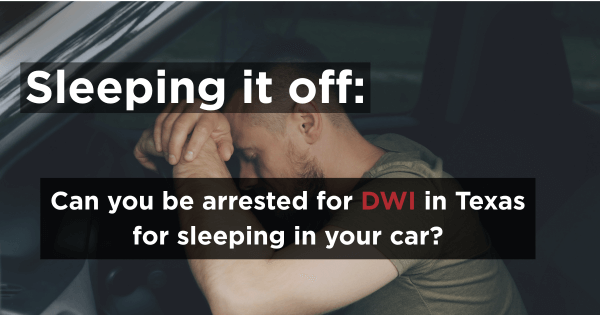
Sleeping in your car while intoxicated can still lead to a DWI arrest in Texas if you’re found in ‘actual physical control’ of the vehicle.
Ever thought about sleeping off a few drinks in your car? In Texas, that seemingly harmless decision could land you a DWI arrest. Our state’s definition of “operation” means you risk a DWI even if you never intended to drive. This article will break down how Texas law defines vehicle operation, why law enforcement applies it to “sleeping-it-off” cases, outline defense strategies, detail the penalties you could face, and offer proactive steps to avoid charges while reinforcing your rights under Texas DWI laws.
Ready to Discuss Your Case? Facing a Parked Car DWI in Texas?
If you’re facing a DWI charge in Texas, especially one involving a parked car, don’t delay. Our experienced legal team is here to provide the guidance you need. Get a Free Consultation
What Does “Operating a Vehicle” Mean in Texas DWI Cases?
Here in Texas, our DWI law (specifically Texas Penal Code § 49.04) states that “A person commits an offense if the person is intoxicated while operating a motor vehicle in a public place.” The statute doesn’t explicitly define “operating,” so Texas courts have stepped in to interpret it. Essentially, they’ve defined “operation” broadly to allow DWI charges when an intoxicated person has the *present ability* to operate a vehicle, even if it’s parked.
This interpretation focuses on your ability to steer, shift gears, or start the engine. It effectively closes the “no-drive” loophole, promoting public safety by discouraging intoxicated individuals from remaining behind the wheel. The core principle is that an intoxicated person in control of a vehicle poses an inherent risk, regardless of whether the vehicle is actually moving. Texas courts consider the “totality of circumstances” when deciding if a vehicle was “operated.”
This broad definition is touted as a preventative measure, allowing Texas law enforcement to intervene before a potentially dangerous situation escalates into an actual driving incident. It emphasizes preventive law enforcement, aiming to reduce drunk-driving incidents by intervening before motion occurs.
How Texas Law Applies “Operation” to Parked Vehicles
Texas courts and law enforcement apply the concept of vehicle operation even when your car is stationary. Why? Because the danger of an intoxicated person restarting and operating the engine remains. Law enforcement views a parked car as a potential roadway hazard if you, while intoxicated, can restart and operate it without delay. The legal reasoning is that the potential for harm exists as long as you have immediate control over the vehicle’s functions.
When evaluating parked vehicles under the definition of operation, authorities look at:
- Your position in the car (e.g., driver’s seat)
- The vehicle’s operability (can it start?)
- Your access to ignition devices (keys, fob)
Understanding these elements clarifies why sleeping in the driver’s seat with keys at hand could satisfy operation criteria and trigger an arrest in Texas. “Imminent” in this context often means the ability to start the vehicle and drive away within a very short timeframe, without significant obstacles. This proactive stance in Texas aims to prevent impaired driving before it starts.
What Factors Do Texas Courts Consider for Vehicle Operation?
Texas courts look at a combination of situational factors to determine if you were “operating” a vehicle. Here’s what they consider:
- Your Position in the Driver’s Seat: Sitting in the driver’s seat strongly suggests you’re ready to operate the steering and pedals. Even if you’re slumped over or asleep, your presence there indicates you were in a position to operate the vehicle. Conversely, being in the passenger or back seat could significantly weaken the argument for operation, especially if keys aren’t readily accessible.
- Key Location: Having keys in the ignition, on a seat, or within reachable distance signals your immediate ability to operate the vehicle. This includes traditional keys, key fobs, or smart keys. If keys are hidden or disabled (e.g., locked in the trunk, given to a sober friend, or the battery disconnected), it may weaken operation claims by showing a deliberate disconnection from vehicle controls.
- Engine Status: A running engine or a hot engine block indicates recent operation and the capacity to re-engage immediately. This is often strong evidence for operation. A cold engine may suggest the vehicle wasn’t recently operated, though it doesn’t eliminate concerns if keys are still accessible. For electric or hybrid vehicles, the “on” status or readiness to drive would be the equivalent indicator.
- Vehicle Location: Parking on public roads or in open parking lots exposes you to traffic risks, strengthening the justification for an operation charge. In Texas, “public places” are broadly defined to include any area accessible to the public, such as streets, highways, public parking lots, and even some private parking lots if they serve a public business. While private property locations *sometimes* reduce enforcement priority, the capacity to operate still applies if the ability exists, especially if the private property is accessible to the public (e.g., a private road within a gated community).
- Intent to Drive: While a lack of intent can support your defense, Texas courts often infer intent from readily available controls and your impaired condition. For example, if you’re found intoxicated in the driver’s seat with keys in the ignition and the engine running, the court may infer an intent to drive, even if you claim you were just “sleeping it off.” Demonstrating a clear lack of intent (e.g., calling a a ride-share, waiting for a sober friend, or having no immediate plans to move the vehicle) could still be a key defense strategy.
How Sleeping in a Parked Car Can Lead to a DWI Arrest in Texas
Sleeping in a parked car while intoxicated can lead to a DWI arrest in Texas because the concept of “operation” targets potential vehicle use, not just physical driving. Texas officers prioritize public safety by intervening whenever an intoxicated individual remains in immediate control. The rationale is simple: an intoxicated person behind the wheel, even if asleep, could awaken, make a poor decision, and drive, posing a significant risk to themselves and others.
Texas law enforcement will typically conduct field sobriety tests and/or blood alcohol concentration tests if they find a driver’s seat occupant slumped over the wheel. Your ability to move the car, even if you haven’t exercised it, triggers enforcement based on operation and (after investigation) can justify an arrest. This is often initiated by a welfare check or a report of a suspicious vehicle. This enforcement approach underscores that “sleeping it off” behind the wheel does not immunize you from DWI charges in Texas.
Why You Can Be Charged Even Without Driving in Texas
You can be charged without driving because Texas’s definition of “operation” focuses on your *capacity* to operate, rather than actual motion. Having the capacity to steer, shift gears, or move the vehicle creates sufficient legal grounds for a DWI offense aimed at preventing impaired operation. Texas law is designed to prevent the *potential* for harm, not just to punish actual harm. This is a critical distinction from other traffic offenses that require actual movement.
Common Police Interpretations in Texas “Sleeping-It-Off” Cases
Texas police often interpret a slouched occupant in the driver’s seat with accessible keys as a likely driver. Officers routinely check engine warmth, key proximity, and look for open containers to establish probable cause for a DWI based on operation. Other indicators include the smell of alcohol, slurred speech upon waking, bloodshot eyes, or an admission of drinking. Officers are trained to look for any signs that you were recently driving or intended to drive.
Texas-Specific Laws for Parked Car DWI
Texas law defines “operating a motor vehicle” broadly to include situations where an intoxicated person has the present ability to operate the vehicle, even if it is parked. The Texas Penal Code and Administrative Code clarify that mere readiness to operate suffices for a DWI offense, focusing on the capacity to initiate movement rather than requiring actual driving.
Texas statutes target public safety by interpreting sitting in the driver’s seat with keys within reach as operating. This broad definition enhances deterrence and reduces drunk-driving risks statewide. Texas courts have consistently upheld this interpretation, emphasizing the preventative nature of the law. Understanding these Texas-specific provisions is crucial for anyone facing such a charge.
Can You Get a DWI on Private Property in Texas?
Yes, Texas law applies the definition of operation on private property if public safety risks arise. While enforcement priority may differ, an intoxicated occupant with key access can still face a DWI charge regardless of property status. The key is whether the private property is considered a “public place” for the purposes of DWI law. Texas courts have interpreted “public place” broadly to include any place to which the public or a substantial group of the public has access, such as parking lots of businesses, apartment complexes, or even private roads within subdivisions.
Legal Defenses Against Parked Car DWI Charges in Texas
Defending against a parked-car DWI in Texas requires undermining one or more factors indicating operation or the basis for probable cause. Your attorney will meticulously examine every detail of the arrest. By evaluating each element—your seat position, key access, engine status, and location—your defense attorney can possibly create reasonable doubt about whether the vehicle was being operated. This multi-pronged approach often could yield reduced charges or dismissals.
For example, if the keys were in the back seat and you were asleep in the passenger seat, it becomes much harder for the prosecution to prove “actual physical control.” Seasoned practitioners also scrutinize law enforcement protocols to ensure proper stop and arrest procedures, bolstering challenges to evidentiary legitimacy. This includes reviewing dashcam footage, body camera footage, and police reports for inconsistencies or violations of your rights.
Texas-Specific Defense Strategies for Parked Car DWI
Here are some common defense strategies in Texas:
- No Actual Physical Control: Arguing that you did not have the immediate ability to operate the vehicle (e.g., keys were in the trunk, battery was dead, vehicle was inoperable).
- Not in a Public Place: If the vehicle was truly on private property with no public access, this could be a defense.
- Lack of Intent to Drive: Presenting evidence that you had no intention of driving (e.g., waiting for a ride, calling a tow, sleeping in the back seat).
- Challenging Probable Cause: Disputing the officer’s initial reason for contact or arrest. Your attorney will demand proof of a lawful stop and inquire whether the officer had specific, articulable facts indicating risk. Lack of clear impairment signs or improper traffic stop procedures could also void probable cause.
- Disputing Circumstantial Evidence: Your defense can contest open container presence, odor assessments, and field sobriety test administration. Disputing chain-of-custody and test validity reduces the weight of circumstantial indicators. For example, an attorney might argue that the odor of alcohol came from spilled drinks, not your breath, or that field sobriety tests were improperly administered or interpreted due to your physical condition (e.g., injury, fatigue).
Case Study: The “Sleeping It Off” Scenario in Texas
Scenario: John’s Night Out
John had too much to drink at a bar in Fort Worth. Knowing he shouldn’t drive, he decided to “sleep it off” in his car. He parked his vehicle legally in the bar’s parking lot (which is considered a public place in Texas), reclined the driver’s seat, and put his keys in the center console. He fell asleep. A Fort Worth police officer on patrol noticed John’s car, saw him slumped over, and conducted a welfare check. Upon waking John, the officer noticed signs of intoxication. John admitted to drinking and stated he was just “sleeping it off”. The officer then observed the keys within John’s reach in the center console and the engine was still warm from his drive to the parking spot. Based on these observations (John in the driver’s seat, keys accessible, engine warm, public parking lot, signs of intoxication), the officer determined John had “physical control” of the vehicle and arrested him for DWI.
Legal Outcome in Texas: John would likely face a DWI charge. Even though he had no *intent* to drive further, his *present ability* to operate the vehicle, combined with his intoxication and the vehicle’s location in a public place, satisfies the “operation” criteria under Texas law. His defense would focus on challenging the “operation” by arguing the keys were not *immediately* accessible or that he had taken steps to relinquish control, but the prosecution would have strong evidence.
Consequences of a Parked Car DWI Arrest in Texas
A parked-car DWI arrest in Texas carries the same severe penalties as a driving offense. Fines, jail time, license suspension, and mandatory interventions apply, reflecting the seriousness of violations related to vehicle operation. These consequences can be severe and long-lasting, impacting various aspects of your life.
Beyond criminal sanctions, a DWI arrest in Texas can lead to:
- Administrative License Revocation (ALR): This process begins immediately after arrest, often before your trial, threatening your driving privileges independent of a conviction.
- Insurance Premium Spikes: Insurers classify DWI convictions as high-risk, causing premium increases of 100–200% or even policy cancellation.
- Employment Prospects Suffer: Certain professions require clean driving records, and a DWI can derail career opportunities.
- Mandatory Ignition Interlock Devices: Many convictions trigger installation for six months to two years.
Understanding these consequences underscores the urgency of proactive legal defense.
Legal Penalties for Parked Car DWI Charges in Texas
For a first-time parked car DWI in Texas, penalties can range from class B misdemeanor fines up to $2,000, 72 hours to 180 days in jail, and up to two years of license suspension. Additionally, you may face mandatory DWI education, community service, and probation. Repeat offenders face significantly harsher penalties, including felony charges.
How Administrative License Revocation (ALR) Works in Texas
Following a DWI arrest in Texas, ALR initiates an automatic license suspension unless you file a hearing request within 15 days. Failure to act leads to immediate license loss. At the ALR hearing, an administrative law judge determines if the officer had probable cause for the arrest and if you refused or failed a breath/blood test. If the judge rules against you, the license suspension goes into effect, regardless of the criminal case outcome.
Long-Term Effects on Insurance and Employment in Texas
In Texas, insurers classify DWI convictions as high-risk, causing premium increases of 100–200% or even policy cancellation. Certain professions require clean driving records (e.g., commercial drivers, healthcare professionals, teachers), and a DWI can derail career opportunities, making it difficult to find or retain employment. A DWI conviction also becomes part of your criminal record, which can impact background checks for housing, loans, and other opportunities.
Are Ignition Interlock Devices Required After a Parked Car DWI in Texas?
Many DWI convictions in Texas trigger mandatory ignition interlock device installation for six months to two years. This device prevents you from operating your vehicle without a clean breath test. It must be installed at your expense and requires regular calibration and monitoring. Failure to comply can lead to further license suspension or probation violations.
How to Avoid a DWI Arrest While Sleeping in Your Car in Texas
Preventing a parked-car DWI arrest in Texas starts with removing all elements that could indicate vehicle operation. By distancing keys, choosing safe sleeping locations, and using alternative transportation, you eliminate the risk of being charged with operation. The goal is to clearly demonstrate that you have no “actual physical control” over the vehicle.
Is Using a Ride-Share or Alternative Transportation Safer in Texas?
Absolutely. Securing a ride-share or designated driver eliminates any vehicle control concern. Transferring travel responsibility to a sober operator removes DWI risk entirely. This is always the safest and most recommended option after consuming alcohol in Texas.
How Vehicle Location Affects Your Risk of Arrest in Texas
Parking on truly private property reduces police patrol frequency, though the capacity to operate still applies if the property is accessible to the public. Public lots or roadside parking invite greater scrutiny and increase chances of encountering Texas law enforcement. Remember, in Texas, the definition of a “public place” is broad, so even some private parking lots (e.g., shopping centers, apartment complexes) can be considered public for DWI purposes. Always aim for a truly private, non-publicly accessible location if you must sleep in your car.
Common Myths About “Sleeping It Off” in a Car in Texas
Don’t fall for these falsehoods:
- Myth: Sleeping in the back seat guarantees immunity from charges of vehicle operation. While it significantly reduces risk, if keys are still readily accessible and the vehicle is in a public place, an arrest is still possible in Texas, though harder to prosecute.
- Myth: Turning off the engine automatically voids a finding of vehicle operation. A warm engine can still indicate recent operation, and accessible keys still imply “actual physical control” under Texas law.
- Myth: Private property status shields you from law enforcement intervention. As discussed, many “private” properties are considered “public places” under Texas DWI law.
- Myth: As long as the car isn’t moving, you’re safe. This is the fundamental misunderstanding that Texas’s “definition of operation” aims to correct.
Texas DWI FAQs: Sleeping in Your Parked Car
Many drivers assume that remaining motionless in a parked car absolves them of DWI risk. In reality, Texas legal doctrine centers on your capacity to operate rather than movement, making “sleeping it off” potentially hazardous. Recognizing key factors indicating operation equips you to make safe, lawful decisions. Here are some common questions:
- Can You Get a DWI for Sleeping in Your Car in Texas? Yes, in Texas you can be charged with DWI while sleeping in a parked car if you occupy the driver’s seat with keys accessible, since the capacity to operate the vehicle constitutes “operation” under state law. The “actual physical control” element is key.
- What Are the Key Factors for Determining Vehicle Operation in Texas DWI Cases? Your position in the driver’s seat, proximity to ignition, engine status, vehicle operability, and location form the core criteria that Texas officers evaluate to justify a DWI arrest based on vehicle operation. The totality of these circumstances is considered.
- Is It Illegal to Sleep in Your Car While Drunk in Texas? Sleeping in a car while intoxicated is not per se illegal in Texas, but if elements indicating vehicle operation are present (e.g., in the driver’s seat, keys accessible, in a public place), law enforcement can proceed with a DWI arrest to mitigate potential risk. The act of sleeping itself isn’t the crime; it’s the potential for impaired operation.
- What Should You Do If Arrested for DWI While Parked in Texas? Immediately consult with an attorney, challenge probable cause, document factors related to vehicle operation, and seek an ALR hearing within the statutory 15-day deadline to protect your driving privileges.
Sleeping in a parked car after drinking may feel innocuous, but in Texas, the definition of vehicle operation ensures that vehicle readiness, your position, and key access matter more than motion. By understanding the elements indicating vehicle operation, Texas-specific laws, defense strategies, and prevention steps, you equip yourself to avoid charges or mount a robust defense. Prioritize safety and know your rights—consult experienced DWI defense counsel if you face a parked-car arrest in Texas.
Call for a Confidential Consultation
Need Immediate Legal Assistance in Texas?
Don’t face a DWI charge alone. Our team at HLAW is ready to help protect your rights and future.
Protect Your Future: Contact a Texas DWI Defense Attorney Today
A DWI charge in Texas, even for sleeping in your car, can have severe and lasting consequences. Don’t leave your future to chance. Our experienced legal team specializes in DWI defense and can help you navigate the complexities of Texas law. Contact our office 24/7 to schedule a free constulation to discuss your case.
About the Author
Jason H. Howard is a seasoned trial attorney based in Fort Worth, Texas, dedicated to defending clients in criminal and DWI matters. Before entering private practice, he served as a felony chief prosecutor in the Lubbock County Criminal District Attorney’s Office, gaining extensive courtroom experience on both sides of the aisle. Jason focuses his practice entirely on litigation, with a special concentration in DWI / intoxication offenses, criminal defense, and personal injury. Over his career, he has handled more than a thousand cases from start to finish and has earned recognition as one of Fort Worth’s Top Attorneys and a “Super Lawyer” from Thomson Reuters. Raised in small-town West Texas, Jason brings both legal skill and a grounded sense of purpose to his work. Outside the courtroom, he enjoys fly fishing, time outdoors, and serving his community and church.