Tag

CCA

A Harmful “Synergistic Effect” Instruction

ByDWI

What is a Synergistic Effect in a Texas DWI case?

You are further instructed that if a person by the use of medications or drugs renders herself more susceptible to the influence of intoxicating alcohol than she otherwise would be and by reason thereof became intoxicated from the recent use of intoxicating alcohol, she is in the same position as through her intoxication was produced by the intoxicating alcohol alone.

That sentence, in the world of Texas DWI litigation, is known as the “synergistic effect” instruction.  It is typically given to a jury in a DWI case that involves both the use of alcohol and drugs (including over-the-counter medications).  The Texas Court of Criminal Appeals has held that the synergistic effect instruction does not expand on allegations of intoxication due to alcohol, which means that a person charged with DWI due to intoxication from alcohol alone, may be convicted if the State proves that the intoxication occurred due to a combination of alcohol and drugs.  See Gray v. State, 152 S.W. 3d 125 (Tex.Crim.App. 2004).

Last week, the CCA revisited this issue (somewhat) in Barron v. State, a case on appeals from the 5th District Court of Appeals (Dallas).  In Barron, there was minimal evidence of intoxication and the defendant did not submit to a breathalyzer test.  However, the arresting officer found (but failed to seize) what he identified as hydrocodone in the defendant’s vehicle.  Although there was no evidence at trial that (1) the substance in the pill bottle was in fact hydrocodone, or (2) the defendant actually ingested the alleged substance, the trial court, nonetheless (and over defense objection), gave the synergistic effect instruction to the jury.  In closing argument, the state relied on the scant evidence of drug/alcohol combination and the defendant was convicted.

On appeal, the 5th COA held that the trial court erred by giving the synergistic effect instruction when there was no evidence in the record to support the theory that the defendant ingested hydrocodone.  The 5th COA further held that the erred was harmful.  On petition to the CCA for discretionary review, the State relied on the CCA’s holding in Gray to argue that because the synergistic effect instruction does not expand the allegation of intoxication due to alcohol, then there was no error (or it was harmless).

The CCA agreed with the COA that it was error for the trial court to give the instruction when there was no evidence in the record that the defendant ingested a drug in combination with her consumption of alcohol.  The CCA, however, disapproved of the manner in which the 5th COA conducted the harm analysis, noting that the COA’s harm analysis “simply repeats its error analysis.” A proper analysis, the CCA explains:

should follow the guidelines of Almanza, assaying the degree of harm ‘in light of the entire jury charge, the state of the evidence, including the contested issues and weight of probative evidence, the argument of counsel and any other relevant information revealed by the record of the trial as a whole.’

The CCA concluded that the error was harmful in this case because it emphasized the State’s theory of the case (that the defendant was intoxicated due to a combination of alcohol and drugs), when the state of the evidence did not support this theory.

Takeaway: The “synergistic effect” instruction is not an all-out license for the State to pursue a theory of intoxication that it did not charge in the indictment/information.  The theory must be supported by the evidence, rather than a mere hunch.

Presiding Judge Keller dissented, noting that the synergistic effect instruction in this case might not have been error under the CCA’s recent holding in Ouellette v. State (2011 Tex. Crim. App. LEXIS 1373 (October)), a case that had not been published when the COA decided this case.  She would have vacated the COA decision and remanded the case for reconsideration in light of Ouellette.

Judge Meyers dissented and would send the case back for the COA to conduct a legal sufficiency review rather than a harm analysis.

Judge Keasler also dissented, but without a written opinion.
Manual for Courts-Martial United States 2024 Edition cover featuring the Department of Defense seal and military service branch emblems, relevant to legal proceedings in military sex crime cases.

Military Sex Crime Conviction May Be Used for Enhancement in Texas

BySex Crimes

Manual for Courts-Martial, United States, 2024 Edition, featuring Department of Defense seals and a justice symbol, relevant to military legal proceedings and sex crime convictions.Rushing v. State (Tex.Crim.App. – Oct 5, 2011) – Here’s a case that interests me on a couple of levels.  When I was a prosecutor in the Marine Corps, one of the constant questions I received from defense counsel when negotiating a plea on a military sex crime case was how, and to what extent, the conviction will affect the service member in his/her home state.  I rarely knew the answer because many of the accused were from different states.  Well, the Texas Court of Criminal Appeals has confirmed that a military sex crime conviction, does have collateral consequences in Texas – one of them being that the conviction is able to be used for enhancement purposes in a later prosecution for a separate offense.

In Rushing, the CCA held that a prior sex-offense conviction under the Uniform Code of Military Justice (UCMJ) qualifies as a “conviction under the laws of another state” for enhancement purposes.  Texas Government Code §311.005(7) defines “state” to include any area subject to the legislative authority of the United States.  A UCMJ conviction is deemed to have taken place on United States soil and the defendant’s subsequent conviction is properly enhanced under Penal Code §12.42(c)(2)(b)(v) for that conviction.

Sentencing Range and Probation Period Not Linked

BySentencing

The punishment range for a second-degree felony sexual assault is 2-20 years in prison. However, the minimum period of community supervision (i.e. probation) for the same offense is five years. So can a trial court award community supervision if the jury returns a punishment verdict of less than five years? Here’s how this situation played out down in Houston:

A jury found a defendant guilty of the second-degree felony of sexual assault. On sentencing, the jury awarded the defendant the minimum punishment (two years) and further recommended community supervision (a recommendation the trial judge is required to take). The trial judge, however, informed the jury that its verdict was illegal because the minimum period of community supervision is five years. The trial court essentially instructed the jury that if it wanted to recommend community supervision, it must sentence the defendant to at least five years (which would then be probated). Following instructions, the jury went back and returned a verdict of five years with a recommendation for community supervision.

Was the trial court correct in his instructions to the jury?

NO, says the Texas Court of Criminal Appeals in Mayes v. State.

There is nothing in Article 42.12 (Tex. Code Crim. Proc.) that states, or even suggests, that the jury must assess a sentence that equals the minimum period of community supervision, the maximum period, or any particular period in between. The jury does not determine the period of community supervision. It assesses the sentence and recommends that the trial judge place the defendant on community supervision. The judge must follow that recommendation, but he has the discretion to determine the appropriate period of supervision, as long as it within the minimum and maximum statutory period.

The CCA opinion makes clear that the statutory minimums for punishment and community supervision are not inextricably linked.

[A] rule that a jury cannot assess the minimum sentence in a case if it also wants the defendant to serve that sentence on community supervision would lead to an absurd result.

Accordingly, the CCA reversed the judgment of the court of appeals.

Self-Defense and Reckless Offenses

BySelf-Defense

Under Chapter 9 of the Texas Penal Code, self-defense is provided as a justification to the offense of murder (among others).  Chapter 9 makes clear that if a fact-finder believes a defendant’s actions are justified, the fact-finder may not convict for an offense based on those self-defense actions.  In essence, a defendant that pleads self-defense is telling the fact-finder that he intentionally performed certain actions in order to protect himself against the unlawful actions of another.  So…if the defendant intentionally performed the self-defensive actions, can self-defense be applied to an offense like manslaughter that requires “reckless” conduct vice intentional?

In Alonzo v. State, the 13th District Court of Appeals (Corpus Christie) “believed it is illogical for a defendant to argue self-defense when charged with an offense whose requisite mental state is recklessness.”  The Texas Court of Criminal Appeals, however, disagrees, explaining that “there is nothing in Penal Code Section 2.03 or Chapter 9 that limits justification defenses to intentional or knowing crimes, nor do we have a reason to infer such a limitation.” The CCA notes that limiting self-defense to only intentional or knowing crimes could encourage prosecutors to charge manslaughter (a reckless offense) vice murder when there is a self-defense issue, because self-defense would be inapplicable.

Judge Womack explains that “by arguing self-defense, a defendant is arguing that his actions were justified, and therefore he did not act recklessly.” So really, it’s just another way to disprove the charged offense.

Of course, a defendant cannot argue self-defense in the face of a murder charge and then at the same time request a lesser-included instruction on manslaughter. The CCA made sure not to disrupt prior caselaw holding such. But the overarching takeaway from Alonzo is that a defendant that is acquitted of a murder charged based on self-defense CANNOT be convicted of the LIO of manslaughter.

The CCA reversed the decision of the 13th Court and remanded the case for a harm analysis.  Presiding Judge Keller concurred. Alonzo Concurrence

Videotaped Testimony of Child Sexual Abuse Victims Held Unconstitutional

BySex Crimes

Last week, the Texas Court of Criminal Appeals issued its opinion in Coronado v. State.

[The CCA] granted review of the case to determine whether the videotape procedures set out in [the Texas Code of Criminal Procedure] Article 38.071, Section 2, including the use of written interrogatories in lieu of live testimony and cross-examination, satisfy the Sixth Amendment rights of confrontation…

The case involved a six year-old child sexual abuse victim (who was three years-old when the abuse began) that the trial court determined was “unavailable” to testify in court because of the likelihood that she would suffer severe emotional trauma upon seeing the defendant.  Accordingly, the trial court allowed a neutral child interviewer to videotape an interview pursuant to Article 38.071, Section 2.  The defense counsel agreed to this procedure and propounded numerous questions for the interviewer to ask.  The defense counsel also agreed to allow the interviewer to ask follow-up questions that she deemed appropriate.  At trial, the videotaped testimony of the child was played to the jury in lieu of any live testimony by the victim.

The videotape procedures of Article 38.071, Section 2, were enacted prior to the Supreme Court’s decision in Crawford v. Washington.  Since that time, there has been a marked shift in confrontation clause jurisprudence in favor of a strict requirement of face-to-face live confrontation.  The lower appellate court, however, failed to cite (or even mention) the Crawford line of cases in its analysis.  The CCA, on the other hand, explained:

We are unable to find any post-Crawford precedent from any jurisdiction that states, or even suggests, that a list of written interrogatories, posed by a forensic examiner to a child in an ex parte interview, is a constitutional substitute for live cross-examination and confrontation…There was no “rigorous adversarial testing” of [the child victim’s] testimonial statements by that greatest legal engine for uncovering the truth: contemporaneous cross-examination.  The written-interrogatories procedure used in this case does not pass muster under our English common-law adversarial system or our United States Constitution.

The CCA’s reluctance to overturn this case was apparent.  On page 2 of the opinion, Judge Cochran writes, “On federal constitutional matters, we are obliged to follow the dictates of the United States Supreme Court regardless of our own notions.”

Judge Hervey concurred.  While she agreed with the majority that the procedure used in this case was unconstitutional, she wrote separately to express her opinion that the defendant’s right to confrontation should be balanced with the societal interest in protecting child sexual abuse victims.  She would not foreclose the possibility of allowing testimony via closed circuit television where the witness would testify in a separate room, but where the victim could still see the defendant and the jury.

Presiding Judge Keller dissented.  In a well-reasoned opinion, she explains why she believes that the confrontation clause was not violated in this case.  She calls this a “close case,” but she would have affirmed.

The Importance of a Waiver to a Potential Conflict of Interest

ByMurder

Back in June of this year the Texas Court of Criminal Appeals addressed a case involving a conflict of interest.  Criminal defense attorneys will find that conflict issues come up frequently. The writ of mandamus that the CCA heard in this case addresses conflicts of interest and provides some assurance as to what attorney’s can do to shore up any issues they may have with conflicts.

In Bowen v. State, a writ of mandamus was filed by a defense attorney representing a client on trial for Capital Murder.  A principal witness in the case against his client was a jailhouse informant who happened to also be a former client of the defense attorney.  The State moved to disqualify the attorney arguing that his ability to cross-examine his former client would be hampered because of the past representation.  At a hearing on the State’s motion to disqualify, the attorney introduced into the record signed written waivers from both his client on trial for capital murder and the witness whom he formally represented.  The trial court granted the State’s motion to disqualify the attorney.

The Court primarily looked to the Sixth Amendment as addressed by the Supreme Court in Wheat v. United States, 486 U.S. 153 (1988).  In Wheat, the Court emphasized the question of whether or not an actual conflict exists.  The Court held that trial courts must, “recognize a presumption in favor of [a defendant’s] counsel of choice, but that presumption may be overcome not only by a demonstration of actual conflict but by a showing of a serious potential for conflict.” Id. at 164.  In absence of an actual conflict, the court gives great weight to a waiver.

The Court in the Bowen case held that the decision to disqualify the attorney was a clear interference with the defendant’s Sixth Amendment right to counsel and that there had been no evidence of the existence of an actual conflict.  Ultimately, the Court held that the waiver that had been signed was sufficient in this case to preclude disqualification of the attorney.

It is a “must” in the defense world to obtain waivers when facing potential conflicts of interest.  Even in a Capital Murder case, a waiver can be effective to disclaim the conflict.  This case does not make waivers the “end-all, be-all,” but it does show the legal world that the court will give great deference to waivers and a defendant’s Sixth Amendment right to the counsel of their choice.

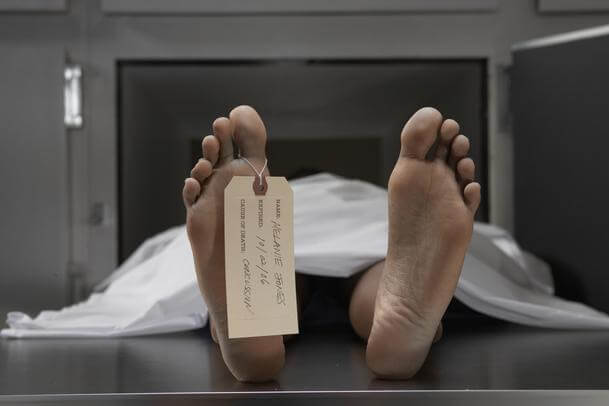
Feet of a deceased individual on a morgue table, with a tag labeled "Jane Doe" indicating the body is subject to examination, relevant to discussions on medical examiner testimony in capital murder cases.

CCA Refuses to Grant New Trial in Capital Case After Medical Examiner Recants Trial Testimony and Trial Court Recommends New Trial

ByMurder

Feet of a deceased individual on a morgue table, with a toe tag, relevant to the legal case involving medical examiner testimony and capital murder.Ex Parte Neal Hampton Robbins – Tex. Crim. App. , June 29, 2011

In 1999, Neal Robbins was convicted of capital murder and sentenced to life in prison for the death of his girlfriend’s 17 month-old child. The cause of death as reported by the medical examiner was asphyxiation by compression. The medical examiner testified to her theory at trial and despite contrary evidence that the compression wounds may have resulted from adult administered CPR, the jury convicted Robbins of capital murder.

In 2007, at the urging of one of Robbins’s acquaintances, the original findings of the medical examiner were reviewed by the Harris County Medical Examiner’s Office. The Deputy Chief Medical Examiner disagreed with the findings and the trial testimony of the original medical examiner. The autopsy report was then amended to reflect that the cause and manner of death was “undetermined.” Eventually, the original medical examiner was asked to review her prior findings. In a letter to the district attorney, she stated:

I believe that there are unanswered questions as to why the child died, and I still feel that this is a suspicious death of a young child. Given my review of all the material from the case file and having had more experience in the field of forensic pathology, I now feel that an opinion for a cause and manner of death of “undetermined” is best for this case.

She went on to explain that the bruises she originally equated with asphyxiation by compression could have resulted from aggressive CPR and other efforts to assist the child.

Armed with the recantation of the chief government witness, Robbins filed an application for writ of habeas corpus in June of 2007. The State did not oppose the application and recommended that Robbins be given a new trial “because his due process rights to a fair trial and impartial jury were violated.” In response, the trial court appointed yet another medical to review the evidence and offer an opinion. This time, the chairman of the Department of Pathology at Baylor College of Medicine opined that the original determination of the cause of death, as presented in the capital trial, could not be supported by the evidence.

Not satisfied with this opinion, the trial court ordered one last review by another pathologist. This last and final pathologist stated that it was her opinion that the child’s death was a homicide and that the manner of death was asphyxia by suffocation (a theory not presented at the original trial). After this finding, the State withdrew its recommendation that a new trial be granted, but agreed not to oppose the request for a new trial.

After an evidentiary hearing into the cause of the child’s death, the trial court recommended that the Texas Court of Criminal Appeals grant Robbins’s request for a new trial.

A slim majority (5-4) of the CCA was not equally convinced. Characterizing Robbins’s application as a “bare innocence claim,” the CCA explained that it must “look to see whether there is ‘clear and convincing evidence that no reasonable juror would have convicted him in light of the new evidence.’”

The CCA concluded that:

[The original medical examiner] did not entirely repudiate her testimony. Although she can no longer stand by her more definite trial testimony, it remains at least possible that [the child’s] death could have occurred as [the medical examiner] originally testified. Thus, [her] re-evaluation does not void her trial testimony. The jury could have considered [her] “undetermined” opinion and still found Applicant guilty, especially in light of all of the other evidence adduced at trial. Applicant has, therefore, failed to make the requisite showing “by clear and convincing evidence that no reasonable juror would have convicted him in light of” [the medical examiner’s] re-evaluation.

Application for writ of habeas corpus is denied.

Judge Price Concurred.

Judge Cochran, joined with Judges Womack and Johnson dissented, stating:

I certainly agree [that]…applicant has not established his actual innocence-not even close. But, given the inexperienced trial and habeas judge’s legitimate and serious concerns about the impact of [the medical examiner’s] testimony at trial on the critical and hotly disputed issue of [the child’s] cause of death, I agree that applicant did not receive a fundamentally fair trial based upon reliable scientific evidence (or the honest admission that science cannot resolve the critical issue.)

Judge Alcala also dissented in a separate opinion, stating that she would grant relief because Robbins “was denied due process of law by the State’s use of false testimony to obtain his conviction.”

If only Robbins had been tried in Florida by Casey Anthony’s jury, this entire appeal could have been averted.

CCA Upholds DWI Search Warrant, Overturns Lower Courts

BySearch & Seizure

In a recent case, the Texas Court of Criminal Appeals, encourages trial judges to take off the hypertechnical blinders and consider the totality of the circumstances when reviewing the propriety of search warrants and their accompanying affidavits.

State v. Jed Jordan – (29 June 2011) Judge Womack writing for a unanimous court:

An affidavit for a DWI search warrant to search an accused’s blood began with a statement that the officer had “good reason to believe that heretofore, on or about the 6th day of June, 2008, [the suspect] did then and there commit [the offense of DWI.] The affidavit then went on to describe the specific conduct that the suspect exhibited that gave rise to the DWI arrest. However, when describing the conduct, the officer did not state that the conduct also occurred on the 6th of June, 2008. The magistrate issued the warrant and blood was drawn indicating that the suspect had, indeed, driven while intoxicated.

At trial, the court suppressed the results of the blood test, ruling that the DWI search warrant was deficient as it failed to allege the specific date and time the officer observed the conduct giving rise to the arrest. The 3rd District Court of Appeals (Austin) affirmed.

The CCA took the time in its opinion to distinguish prior caselaw on this subject and held:

The observations of driving and intoxication described in the second part of the affidavit were the elements of the offense alleged in the first part of the affidavit (where the time of the offense was alleged). Under the circumstances of this case, it was a reasonable inference that the observations occurred on the same day that the offense was alleged to have occurred. We therefore hold that the Court of Appeals erred in failing to consider the totality of the circumstances contained within the four corners of the affidavit in reviewing the magistrate’s basis for determining probable cause.

The CCA went on to do some “math for lawyers” that was apparently missing at the trial level:

We also find that the magistrate had a substantial basis for determining probable cause despite the failure of the affiant to specify that time of the stop. Because the warrant was issued on June 6th at 3:54 am, less than four hours could have elapsed between the observation of the offense, and the issuance of the warrant.

Calling on the trial court (and the 3rd Court below) to focus on the totality of the affidavit, the CCA remanded the case to the trial court, where, they might just have themselves a DWI trial after all.

A Simple Truth (Revisited): Expert Testimony on Mental Retardation

BySex Crimes

In September of 2010, the 3rd Court of Appeals (Austin) reversed the sexual assault conviction of Mark Barshaw because the trial court allowed the following testimony of an MHMR expert regarding the truthfulness of mentally retarded individuals:

It’s been my experience that folks with mental retardation can be painfully honest, really. I mean, it’s like a little kid who looks at somebody and says in the supermarket, ‘You’re really old,’ or, you know, whatever little kids do.

See our prior post HERE.  The State appealed the 3rd Court’s reversal and now, in an opinion released on 29 June 2011, the Texas Court of Criminal Appeals reversed the Court of Appeals.

Barshaw v. State (Texas Court of Criminal Appeals 2011)

Apparently troubled by the less-than-thorough harm analysis conducted by the lower court, the CCA explained:

Even in cases in which credibility is paramount, Texas courts have found harmless error when the inadmissible expert testimony was only a small portion of a large amount of evidence presented that the jury could have considered in assessing the victim’s credibility. Upon reviewing the record as a whole, we find that additional evidence exists that should have been considered in the court of appeals’s harm analysis, as is required by [our previous caselaw].

With that, the CCA remanded the case back to the 3rd Court of Appeals to conduct a full harm analysis. A shot across the bow perhaps? I think the odds are heavily in favor of the Court of Appeals changing its mind on this one. We’ll see.

Come and Knock on Our Door | Child Search Authority

ByWarrantless Search

Child Search Authority | Consent to Search Without a Warrant

Investigating a reported shooting, the police knock on the door to a home that is answered by an adolescent (a minor). Can the minor give the police permission to enter the home? Must the police ask whether the minor lives in the home? Should the police ask to speak to an adult? These issues were considered by the Texas Court of Criminal Appeals in Limon v. State, a case that was released a couple of weeks ago and designated for publication.

In an 8-1 decision, with Judge Womack writing for the majority, the CCA held that, while there is no per se rule that a child may or may not give consent to entry, a minor may possess apparent child search authority. The CCA cited the reasoning of the Supreme Court in the case of Georgia v. Randolph, 547 U.S. 103 (2006) and also noted five key facts that contributed to its ultimate conclusion that the minor in this case had the apparent authority to consent to entry:

1) [The minor] opened the door by himself in response to [the officer’s] knock;

2) The trial court could have inferred from [the officer’s] testimony that [the minor] appeared to be a teenager of significant maturity, if not a young adult;

3) [The minor] consented to mere entry through the front door, as opposed to entry or search of less public areas of the house. (The reasoning being that the trial court could have believed that it was reasonable to rely on a teenager’s authority to consent to such a limited scope of entry, while it would not have been reasonable to rely on his authority to consent to a more intrusive search.);

4) The officer’s announced purpose was to conduct an emergency public-safety function; and

5) The time of entry (2 AM) could have led the trial court to believe that an individual opening the door at that hour was a resident rather than a guest.

Judge Meyers dissented, stating:

Nobody gives a teenager permission to allow strangers into their home. Yet, the majority focuses on what apparent authority the child in this case may have had to let the cops into the house a 2 o’clock in the morning. The police should presume that minors have no authority to consent to entry and should ask to speak to an adult. If no adults are available then the officers need to get a warrant (and possibly call CPS).