Tag

Inventory

traffic stop duration king

When Does a Traffic Stop End and Improper Police Conduct Begin?

By Drug Crimes, Search & Seizure

A Traffic Stop for a Minor Traffic Infraction Leads to Search, Seizure, and Arrest: Exactly When Should Traffic Stops End?
traffic stop duration kingIf you’ve been a licensed (or even unlicensed) driver in Texas for long enough, you’ve experienced a traffic stop. Whether it be for speeding or something worse, a traffic stop is not generally a pleasant experience. But in some traffic stops across the state (hopefully not yours), the police conduct a search of the vehicle, then a search of the driver or passengers, and, finally make an arrest of some sort. How does something like a broken tail light or speeding lead to search, seizure, and arrest? When traffic stops for minor infractions potentially lead to serious criminal charges, it’s important to know how Texas courts define the moment when a traffic stop ends.

King v. State (2nd Court of Appeals – Fort Worth, 2016)

Broken Tail Light Leads to a Traffic Stop

Around 1:00 am, Jennifer Dowling drove Christopher King’s car home from a night on the town. Blue Mound Police noticed that the car had a broken right tail light and conducted a traffic stop pursuant to the infraction. Police ran the standard background check on Dowling, the driver, and King, the passenger, only to discover that neither had a valid driver’s license. As a result, Dowling was arrested for driving without a license. Police did not permit King to drive the car away and informed him that they would impound the car because leaving the car behind posed a safety hazard for other motorists.

Consent to Search Obtained, Traffic Stop Continued

To begin the impounding process, police asked King to exit the vehicle. When King got out of the car, police asked if they could perform a pat-down. Nervously, King complied with the request. When King stood up, a white cylinder-shaped container fell out of King’s pants onto the ground, and he admitted that the container held meth. King was arrested and charged with possession of a controlled substance.

Trial Court Holds That King Consented to the Pat-Down

Before trial, King filed a motion to suppress the physical evidence—the meth and the container—because the evidence was seized without a warrant. At the suppression hearing, the State prevailed, arguing that King consented to the pat-down, and the interaction was a consensual encounter. King lost his suppression motion, and plead guilty to the charges. The trial court sentenced King to twelve years confinement. Arguing that the traffic stop ended when Dowling was arrested and that the traffic stop was improperly extended to him, King appealed to the Second Court of Appeals.

Second Court of Appeals Discusses Traffic Stops

The Second Court of Appeals in Fort Worth relied upon existing case law from the Supreme Court to evaluate the merits of King’s appeal. “A lawful roadside stop begins when a vehicle is pulled over for investigation of a traffic violation.” Arizona v. Johnson, 555 U.S. 323, 333; 129 S. Ct. 781,, 788 (2009). “A traffic stop ends when police have no further need to control the scene.” Id., 129 S. Ct. at 783. According to the Second Court of Appeals, the police needed to control the scene even after Dowling was arrested. In asking King for a pat-down, they were taking reasonable steps to secure the area by ensuring that King was not a safety threat while waiting for a tow truck. Further, “the impoundment of the vehicle was a task tied to the traffic infraction, and King ma[de] no argument that the task [of impoundment] should have reasonably been completed at the time the police asked for consent to the pat-down.” The Second Court of Appeals affirmed the trial court’s holding that the traffic stop was not improperly extended.

What does all of this mean for motorists? So long as the police are reasonably securing the scene by taking steps in an effort to maintain safety, the police may continue the traffic stop until the conclusion of such safety measures, including but not limited to, pat-downs, security sweeps, background checks, and impoundments.  In this case, King would have had a more colorable argument if he had been a licensed driver and the police extended the stop rather than letting him drive the vehicle away from the scene.
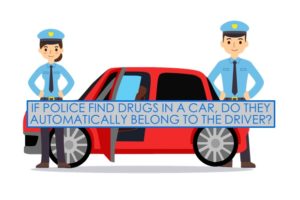
Drug Found in Car Driver Charged with Possession

Do Drugs Found in a Car Automatically Belong to the Driver?

By Drug Crimes

Between the Driver and Two Passengers, who is in Possession of the Drugs Found in the Middle Compartment in Plain View?

Drug Found in Car Driver Charged with PossessionThe Court of Criminal Appeals recently handed down an opinion dealing with legal sufficiency of evidence in the context of possession of a controlled substance when it was not found in the exclusive possession of the defendant. The issue facing the Court was whether Appellant Tate intentionally or knowingly possessed methamphetamine by exercising “control, management or care” of the methamphetamine and he knew it was methamphetamine. Tex. Penal Code §1.07(a)(39). The Court found that a rational jury could infer that the owner and driver of a vehicle possessed the controlled substance found in the vehicle in plain view even when there were two other passengers.

Tate v. State (Tex. Crim. App. 2016)

The Facts—Trial Court Found Sufficient Evidence

Tate was pulled over by Detective Beckham due to his outstanding warrants. When pulled over Tate had two passengers. Tate explained that he owned the vehicle but did not have any proof of ownership. Tate was arrested after officers confirmed his outstanding warrants. The police searched Tate, the two passengers, and their belongings, but did not find any weapons or contraband. During Officer Beckham’s inventory search of the vehicle, he found a syringe loaded with a substance later identified as .24 grams of methamphetamine. He found the syringe in “plain view” in a compartment underneath the air conditioner and heating controls.

Tate, the owner of the vehicle, was charged with possession of a controlled substance. At trial, Officer Beckham described the compartment as “directly to the right” of Tate, accessible to Tate and the front-seat passenger but not the backseat passenger. He also testified that even though he couldn’t tell exactly what the front-seat passenger was doing, he observed her moving a lot but never towards the compartment. Tate argued that one of the passengers put the syringe there when Tate was talking to Beckham at the rear of the vehicle. The trial court found Tate guilty, relying on Tate’s “self-purported” ownership of the vehicle and his proximity to the syringe.

The Court of Appeals Reversed the Trial Court’s Decision

The Court of Appeals held that there was “insufficient evidence to prove that Tate had intentionally and knowingly possessed methamphetamine.” The court rejected the proximity argument made by the trial court for two reasons:

  1. There was insufficient evidence to show the syringe was in the car before Tate got out.
  2. Officer Beckham observed the front-seat passenger moving a lot but couldn’t tell exactly what she was doing.

Additionally, the court said that since Tate’s ownership could not be proven it was insufficient evidence to prove possession.

The Court of Criminal Appeals Reverses the Court of Appeals—Holding Defendant’s Ownership and Control of Vehicle Where Controlled Substance was Found in Plain View and Within Defendant’s Reach is Sufficient Evidence to Convict for Possession of a Controlled Substance

The CCA held that a rational jury, with these facts, could reasonably infer that the syringe was in the car the entire time. In coming to that decision the Court relied on the fact that the jury believed Beckham’s testimony that he never saw her reach for the compartment, that the back-seat passenger could not reach it, Tate said he owned the vehicle, and that the syringe was found in plain view. Therefore, a rational jury could infer that Tate would be aware of items in his vehicle in plain view, thus find he intentionally or knowingly possessed the methamphetamine in the syringe.

In making this decision the Court relied on the Jackson standard: “Based on the combined and cumulative force of the evidence and any reasonable inferences therefrom, was a jury rationally justified in finding guilt beyond a reasonable doubt?Jackson v. Virginia, 443 U.S. 307, 318-19 (1979). The Court found that the court of appeals incorrectly applied this standard. The Court pointed to a few links that the jury could reasonably rely on to find Tate guilty, which include:

  1. the contraband was found in the vehicle that Tate owned and was driving;
  2. the contraband was in plain view and conveniently accessible to Tate; and
  3. the jury could reasonably believe Beckham’s testimony that the front-seat passenger did not reach over to the compartment and that the back-seat passenger could not reach the compartment.

Thus, when the standard is applied here a rational jury could find the evidence sufficient to find Tate intentionally or knowingly possessed the methamphetamine beyond a reasonable doubt.

Decision of the Criminal Court of Appeals—Evidence is Legally Sufficient Where a Rational Jury Could Infer Guild Beyond a Reasonable Doubt

The CCA found that the evidence at trial was sufficient for the jury to reasonably find Tate guilty beyond a reasonable doubt and that the court of appeals overstepped its bounds in assessing the legal-sufficiency of the evidence.

Searching for Evidence or Community Caretaking?

By Community Caretaking

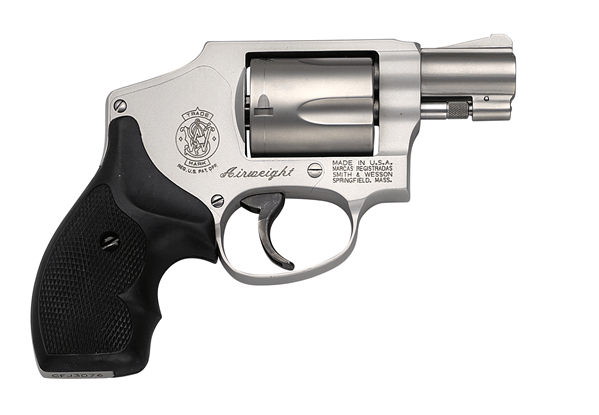
Handgun SearchUnited States v. McKinnon, 2012 U.S. App. LEXIS 7806, May 8, 2012

An officer stopped the car Appellant was driving because it had an expired registration sticker.  The officer arrested Appellant after he could not produce a valid driver’s license.  Based on the Houston Police Department’s (HPD) towing policy, the officer ordered the car to be towed.  During the “inventory search,” the officer found a handgun under the driver’s seat.  At trial, Appellant moved to suppress the handgun as being the fruit on an unlawful search in violation of the Fourth Amendment, arguing that:

[the officer’s] inventory search violated his Fourth Amendment rights because (1) the inventory search was merely a pretext for searching for evidence related to the burglaries that had recently taken place in the neighborhood where McKinnon was stopped; and (2) the inventory search was conducted pursuant to a policy that provided HPD officers with impermissible discretion in deciding when to tow a vehicle.

The trial court denied the motion.

The Supreme Court has recognized that the police may seize vehicles without a warrant in furtherance of their “community caretaking” function.  This usually occurs when officers impound damaged or disabled vehicles or vehicles that violate parking ordinances or impede the flow of traffic.  As long as an officer’s decision to impound a vehicle for community caretaking purposes is reasonable, it will not violate the Fourth Amendment.

Here, the court held that the officer’s decision to have the car towed was reasonable under the Fourth Amendment.  It was undisputed that the neighborhood in which the stop occurred had experienced a series of burglaries.  Although these were house burglaries, there was nothing to suggest that the vehicle would not have been stolen or vandalized if left parked and locked at the scene.  By impounding the car, the officer ensured that it was not left on a public street where it could have become a nuisance or where it could have been stolen or damaged.

In addition, while one of the passengers possessed a valid driver’s license, the car’s registration sticker was expired, so it could not have been lawfully driven away from the scene.  Finally, the HPD tow policy provides for the towing of vehicles when the owner is not able to designate a tow operator to remove the vehicle and no other authorized person is present.  The registered owner of the vehicle was not present to designate a tow operator and there was nothing to suggest that she had authorized either of the two passengers, who were present, to operate her car.

The Court further held that HPD’s inventory search policy was constitutional.  By its clear terms, the policy is consistent with preserving the property of the vehicle’s owner while ensuring that the police protect themselves against claims or disputes over lost or stolen property and protecting the police from danger.

Community caretaking…Hmmm.  Seems like alot of things could fit under that title.  I suppose that is the point.