Skip to main contentWhat is the Age of Consent in the United States?
Home » NEWS » What is the Age of Consent in the United States?
Is There a Uniform Age of Consent for all 50 States in the United States?
No, there is not a uniform age of consent. The “Age of Consent” is the minimum age at which a person may consent to participation in sexual intercourse. A person younger than the legal age of consent cannot legally consent to sexual activity. The age of consent in the United States ranges from 16 to 18 years old depending on the state, meaning that a person 15 years of age or younger cannot legally consent to sexual contact. Each state enacts its owns laws which set the age of consent. If someone engages in sexual activity with a person younger than the age of consent in that state, the person could be charged with Statutory Rape or other offenses depending on the nature of the contact.
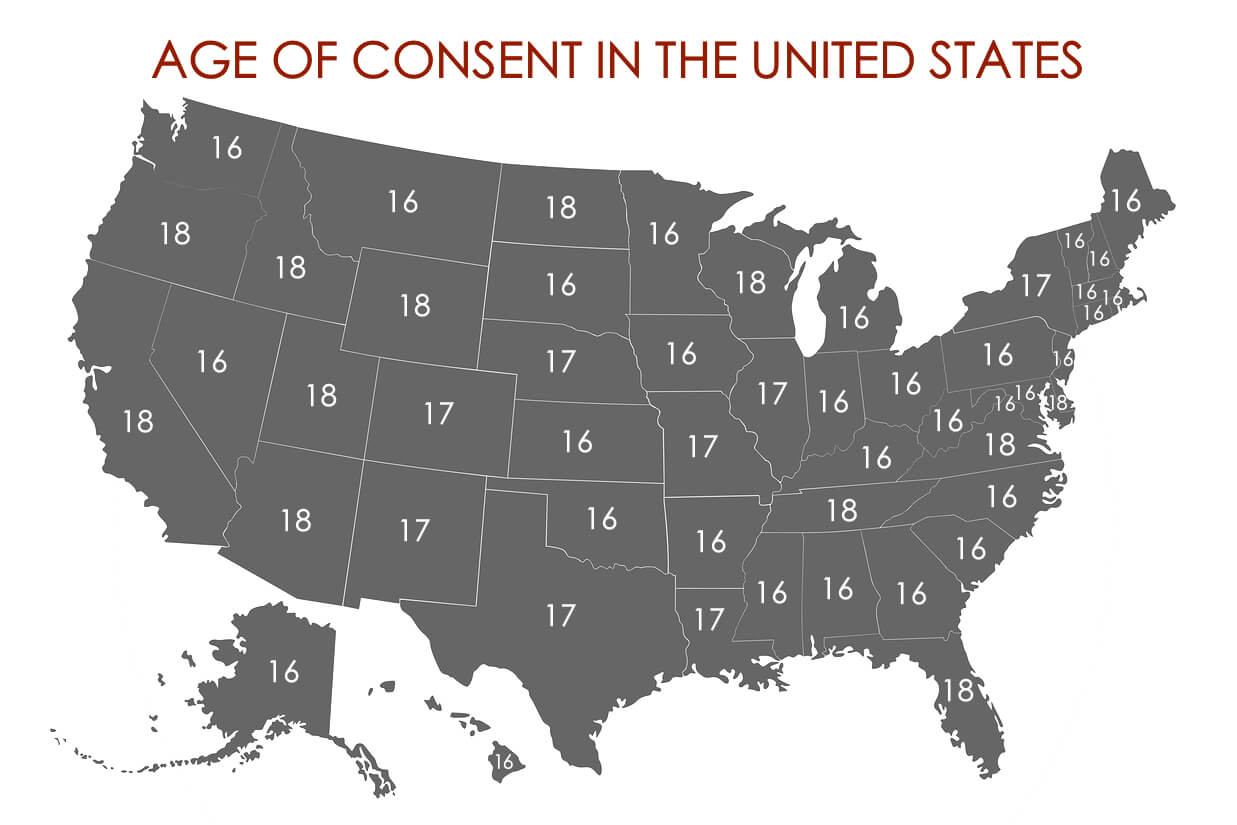
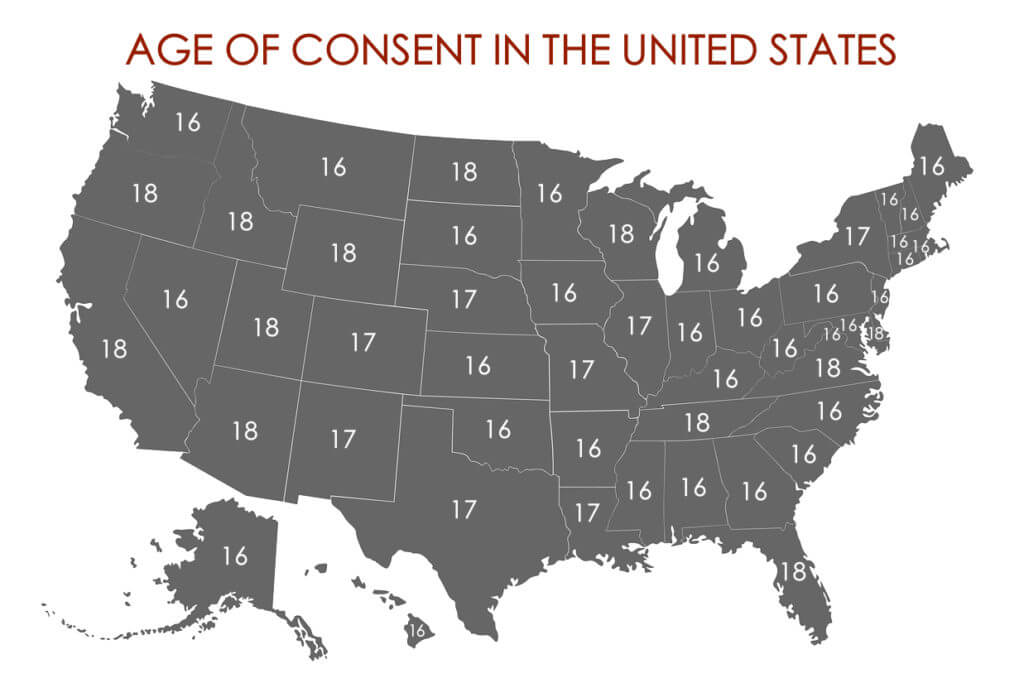
What follows is a map depicting the age of consent for all 50 states and a chart outlining the same.
*Note: This chart was current as of 2016, but could be subject to change over the years. Please do not rely on this chart to make any decisions that could impact your life. Check your own state’s age of consent laws to make sure you are fully informed, because ignorance of the law will not be a defense for you if charged with a child sexual offense.
United States Age of Consent Map
United States Age of Consent Chart
| STATE | LEGAL AGE OF CONSENT |
|---|
| Alabama | 16 |
| Alaska | 16 |
| Arizona | 18 |
| Arkansas | 16 |
| California | 18 |
| Colorado | 17 |
| Connecticut | 16 |
| D.C. | 16 |
| Delaware | 18 |
| Florida | 18 |
| Georgia | 16 |
| Hawaii | 16 |
| Idaho | 18 |
| Illinois | 17 |
| Indiana | 16 |
| Iowa | 16 |
| Kansas | 16 |
| Kentucky | 16 |
| Louisiana | 17 |
| Maine | 16 |
| Maryland | 16 |
| Massachusetts | 16 |
| Michigan | 16 |
| Minnesota | 16 |
| Mississippi | 16 |
| Missouri | 17 |
| Montana | 16 |
| Nebraska | 17 |
| Nevada | 16 |
| New Hampshire | 16 |
| New Jersey | 16 |
| New Mexico | 17 |
| New York | 17 |
| North Carolina | 16 |
| North Dakota | 18 |
| Ohio | 16 |
| Oklahoma | 16 |
| Oregon | 18 |
| Pennsylvania | 16 |
| Rhode Island | 16 |
| South Carolina | 16 |
| South Dakota | 16 |
| Tennessee | 18 |
| Texas | 17 |
| Utah | 18 |
| Vermont | 16 |
| Virginia | 18 |
| Washington | 16 |
| West Virginia | 16 |
| Wisconsin | 18 |
| Wyoming | 18 |
“Romeo and Juliet Law” in Texas | An Exception to the Age of Consent in Texas
As mentioned in the chart above, the age of consent in Texas is 17. Texas, as well as many other states, has created a so-called “Romeo and Juliet” law, an exception to the statutory rape and age of consent law. Romeo and Juliet laws are targeted toward teenagers and young adults who engage in sexual relations with someone under the age of consent (17 in Texas), but who are still close in age to the sexual partner. The Romeo and Juliet provision creates a close in age exemption and keeps these would-be offenders from being classified as sex offenders.
Under Texas law, if a person over the age of 17 has consensual sexual intercourse with someone under the age of 17, but there is also no more than a three-year age difference between the two partners, the Texas Romeo and Juliet law will not allow the older person to be charged with statutory rape or be classified as a sex offender.
Fort Worth Sexual Assault Defense AttorneyThank You BHW!
Their expertise and reputation helped us achieve the outcome we deserved. My cases were dismissed completely!
- Fort Worth Sexual Assault Defense Client (5 star review)
age of consent by state, age of consent usa, age of consent in america, what is the age of consent in america
Understanding the Legal Age of Consent: Variations Across States
The legal age of consent refers to the minimum age at which an individual is considered legally capable of consenting to sexual activity. In the United States, this age varies significantly from state to state, typically ranging from 16 to 18 years. Understanding these variations is crucial for both individuals and legal practitioners, as it impacts the legal definitions of statutory rape and consent in each jurisdiction.
For instance, while states like California and New York set the age of consent at 18, others like Alabama and Alaska allow individuals as young as 16 to engage in consensual sexual relationships. This disparity can lead to confusion and potential legal issues, making it essential for residents and visitors to be aware of the specific laws applicable in their state.
The Importance of Knowing the Age of Consent Laws
Understanding the age of consent laws is vital for safeguarding minors and ensuring that individuals are aware of their rights and responsibilities. These laws are designed to protect young people from exploitation and abuse, establishing a legal framework within which consensual relationships can occur. Being informed about these laws helps prevent legal repercussions that can arise from misunderstandings about consent.
Moreover, individuals involved in relationships with significant age differences must be particularly cautious, as the legal implications can vary widely. For example, a relationship that is lawful in one state may lead to serious legal consequences in another. Therefore, education on the age of consent is not only a matter of legal compliance but also a crucial aspect of personal safety and responsibility.
Consequences of Violating Age of Consent Laws
Violating age of consent laws can lead to severe legal consequences, including criminal charges, imprisonment, and lifelong implications such as being registered as a sex offender. These repercussions can significantly affect an individual's personal and professional life, making it essential to understand the laws governing sexual consent in your state.
For example, a conviction for statutory rape can result in lengthy prison sentences and mandatory registration as a sex offender, which can impact housing, employment opportunities, and personal relationships. Legal representation and understanding one's rights are crucial for anyone facing allegations related to age of consent violations, underscoring the importance of being informed about these laws.
How Age of Consent Laws Are Changing
Age of consent laws are not static; they can change due to shifts in societal norms, legal challenges, and advocacy efforts. In recent years, there has been increasing attention on the need to reassess these laws to better protect young people and address the realities of modern relationships. Understanding the evolving nature of these laws is essential for individuals and legal professionals alike.
For instance, some states have begun to implement "Romeo and Juliet" laws, which provide exemptions for individuals who engage in consensual sexual relationships when they are close in age. These changes reflect a growing recognition of the complexities surrounding teenage relationships and the need to balance protection with personal freedoms. Staying informed about these changes is crucial for navigating the legal landscape effectively.
age of consent by state, age of consent usa, age of consent in america, what is the age of consent in america
Understanding the Legal Age of Consent: Variations Across States
The legal age of consent refers to the minimum age at which an individual is considered legally capable of consenting to sexual activity. In the United States, this age varies significantly from state to state, typically ranging from 16 to 18 years. Understanding these variations is crucial for both individuals and legal practitioners, as it impacts the legal definitions of statutory rape and consent in each jurisdiction.
For instance, while states like California and New York set the age of consent at 18, others like Alabama and Alaska allow individuals as young as 16 to engage in consensual sexual relationships. This disparity can lead to confusion and potential legal issues, making it essential for residents and visitors to be aware of the specific laws applicable in their state.
The Importance of Knowing the Age of Consent Laws
Understanding the age of consent laws is vital for safeguarding minors and ensuring that individuals are aware of their rights and responsibilities. These laws are designed to protect young people from exploitation and abuse, establishing a legal framework within which consensual relationships can occur. Being informed about these laws helps prevent legal repercussions that can arise from misunderstandings about consent.
Moreover, individuals involved in relationships with significant age differences must be particularly cautious, as the legal implications can vary widely. For example, a relationship that is lawful in one state may lead to serious legal consequences in another. Therefore, education on the age of consent is not only a matter of legal compliance but also a crucial aspect of personal safety and responsibility.
Consequences of Violating Age of Consent Laws
Violating age of consent laws can lead to severe legal consequences, including criminal charges, imprisonment, and lifelong implications such as being registered as a sex offender. These repercussions can significantly affect an individual's personal and professional life, making it essential to understand the laws governing sexual consent in your state.
For example, a conviction for statutory rape can result in lengthy prison sentences and mandatory registration as a sex offender, which can impact housing, employment opportunities, and personal relationships. Legal representation and understanding one's rights are crucial for anyone facing allegations related to age of consent violations, underscoring the importance of being informed about these laws.
How Age of Consent Laws Are Changing
Age of consent laws are not static; they can change due to shifts in societal norms, legal challenges, and advocacy efforts. In recent years, there has been increasing attention on the need to reassess these laws to better protect young people and address the realities of modern relationships. Understanding the evolving nature of these laws is essential for individuals and legal professionals alike.
For instance, some states have begun to implement "Romeo and Juliet" laws, which provide exemptions for individuals who engage in consensual sexual relationships when they are close in age. These changes reflect a growing recognition of the complexities surrounding teenage relationships and the need to balance protection with personal freedoms. Staying informed about these changes is crucial for navigating the legal landscape effectively.