Obscure Texas Law #3 | Leaving a Child in a Vehicle

ByJust For Fun

Before my wife and I had children, I was used to running quick errands to the store in a matter of minutes.  When the rugrats arrived, the quick errands required carseats, strollers, diaper bags, etc.  While I am now somewhat of a pro at running errands with children, I didn’t adapt all that quickly.  The first time I took my son to the store with me it was dark outside and he was asleep in his car seat.  I pulled up to Best Buy and completely forgot that I had him with me.  About 5 minutes after walking through the aisles I realized what I had done.  I’m sure I resembled the mother from the movie Home Alone as I darted out of the store to get my baby and bring him back in with me.  I can only imagine what the employees that guard the doors must have thought.  Well, Texas doesn’t take kindly to idiot parents like me (correction: like I used to be).

Here’s obscure Texas law #3.

Section 22.10 – Leaving a Child in a Vehicle

Under this law, it is a class C misdemeanor for intentionally or knowingly leaving a child in a vehicle for longer than five minutes if that the child is younger than seven years of age; and not attended by an individual in the vehicle who is 14 years of age or older.

Okay, so I might not have been in trouble because (a) I did not intentionally leave my child in the car and (b) there is a decent argument that as a stupid new parent I also did not knowingly leave him in there, and (c) I didn’t leave him in there for more than 5 minutes, but others may not be so lucky.  In all seriousness, however, if you ever see a small child locked in a vehicle (especially in the Texas summer heat), call the authorities immediately.  This law exists because children have died from the heat or cold of being locked in a car.

Obscure Texas Law #2 | Purchase and Sale of Human Organs

ByJust For Fun

Continuing our weekly look at obscure Texas laws (in no particular order), here is one that gives a whole new meaning to the phase “Give me a hand.”

Section 48.02 – Prohibition of the Purchase and Sale of Human Organs

Under this law, it is a Class A mismedeanor if a person “knowingly or intentionally offers to buy, offers to sell, acquires, receives, sells, or otherwise transfers any human organ.”

Of course, there are exceptions for blood and plasma, and more exceptions for medical transplants.  I cannot imagine that this law is charged very often, but it would not be on the books if it hadn’t been a problem at some point in time.  Perhaps the lawmakers were concerned with the urban legend in which the person wakes up in the bathtub of ice and both kidneys missing.

Revisiting Michigan v. Bryant

ByConfrontation Clause

Back in February, we alerted you to the Supreme Court decision in Michigan v. Bryant regarding testimonial v. non-testimonial statements.  I wanted to re-post on this case and take a deeper look at what has changed as a result of the Supreme Court’s opinion.

The Bryant court came up with a new test to evaluate what types of statements made to law enforcement are testimonial.  Before Bryant, Crawford basically stated that statements made during interrogations qualified as testimonial.  But, Crawford was just the tip of the iceberg.  After Crawford, the Court in Davis v. Washington specifically addressed statements made to officers to enable them to respond to an ongoing emergency.  The Court held that those statements are non-testimonial.  The problem was that the Court in Crawford and Davis failed to give us a clear test to determine what types of statements would be non-testimonial.

Finally, the Court decided Bryant, giving us a test. Under the Bryant test, courts must consider three factors:

1) The circumstances of the encounter;

2) The questions and statements of the participants; and

3) The primary purpose of the interrogation as viewed by reasonable participants at the time.

The case was consistent with Crawford.  Analyzing the facts in Crawford, we can see that a 911 call reporting an ongoing assault would still be held non-custodial under the Bryant test.  The circumstances of the encounter was that there was an ongoing emergency taking place, the questions and statements of the participants were specifically in relation to the 911 call and the primary purpose of the 911 call was to report an emergency.  The Bryant court ultimately held that if the primary purpose of the statement is not for the purpose of creating a substitute for trial testimony, then the Confrontation Clause does not apply.

For all practical purposes, Crawford seemed to give a blanket exception for all 911 calls as being non-testimonial.  By giving us a test, the Supreme Court left each statement to be evaluated on a case-by-case basis.  Could a 911 call be considered testimonial?  If evaluated under the Bryant test, and the right circumstances exist, we think it could be.  This argument could have been made even after the Crawford decision came down, but it may be easier to point the court to the Bryant test when arguing that statements made were subject to the confrontation clause – even if there is an emergency situation taking place.

Michigan v. Bryant, 131 S. Ct. 1143 (2011)
Crawford v. Washington, 541 U.S. 36 (2004)
Davis v. Washington, 547 U.S. 813 (2006)

Use Caution When Arguing Ineffective Assistance of Counsel

ByIneffective Assistance

Last week, Justice Quinn of the 7th District Court of Appeals (Amarillo) very thinly masked his disgust in a three-page opinion (designated for publication) aimed at an appellant and his attorney who claimed that the trial defense counsel had been ineffective.  A shot across the bow to other would-be appellate attorneys who might be considering an ineffective assistance challenge, Justice Quinn warns “It ain’t a game folks; it’s real lives we are dealing with.”

The opinion (Nanez v. State) is short enough to read in about two minutes so I won’t reprint much of it, but here is, IMO, the best paragraph:

Counsel is not ineffective simply because he did not do that which his accuser thought he should have done. Nor is he legally deficient simply because some attorney who enjoys the benefit of hindsight and cool reflection would have taken a different tact. Indeed, appellate counsel should not only recognize what is required by law but also use caution when calling someone ineffective. Those before us today should heed that admonishment when next they think about invoking the theory. Unfounded and undeveloped accusations like those uttered at bar needlessly belittle their human target and do little to serve a client’s interests. It “ain’t” a game folks; it’s real lives we are dealing with.

Obscure Texas Law #1 | Use of Laser Pointers

ByJust For Fun

Texas has plenty of laws on the books that are obscure to the average Texan (including lawyers like me).  In an effort to educate the general public (since ignorance is no defense), I have decided to post one obscure Texas law (from the Texas Penal Code) every week, until I run out of (what I consider) obscure laws.  Here’s the first one:

Section 42.13 – Use of Laser Pointers

Under Section 42.13 of the Texas Penal Code, it is a Class C misdemeanor to knowingly point the “light from a laser pointer at a uniformed safety officer, including a peace officer, security guard, firefighter, emergency medical service worker, or other uniformed municipal, state, or federal officer.”

So I’ve never violated this law (to the best of my knowledge), but I am definitely guilty of making the family dog run around in circles chasing a laser light.  Perhaps there is another obscure Texas law that covers that.  We’ll find out in the coming weeks.

Fort Bend County Loses the Dog Scent Lineup Issue Again

ByDog Scent Lineup

Last year, I posted about a murder case wherein a Fort Bend County dog handler used three bloodhounds to conduct a “dog scent lineup” to match a suspect’s body scent to the scent of certain evidence from the crime scene.  In that case, the CCA ruled that the scent evidence was not enough to establish that the suspect had committed the murder.  The CCA did not comment on the admissibility of scent lineup evidence.

Today, the First District Court of Appeals (Houston) issued an opinion in State v. Dominguez, another case involving the Fort Bend County dog handler.  Much like the last case I posted about, the dog handler was used to match a murder suspect’s scent with the scent of certain evidence from the crime scene.  This time, however, the scent lineup evidence did not even make it to the trier of fact.  After hearing the views of competing experts, the trial judge ruled that the evidence was inadmissible as unreliable.  Some of the flaws in the dog handler’s methodology that the court noted were:

  • He carries around his “blind” non-suspect scent samples (called foil samples) in ziplock bags;
  • His foil samples are old samples, while the scent sample of the suspect is fresh;
  • He does not do negative runs where the sample of the suspect is excluded;
  • He uses multiple dogs during each test rather than allowing the dogs to work alone; and
  • He is mostly self-taught and his methodology is something he created.

On appeal, the State argued that the trial judge abused his discretion in refusing to admit the evidence.  The First District upheld the trial judge’s ruling, holding that it was reasonable for the trial court of conclude that the scent lineup evidence was unreliable.

Now the courts have intervened twice to smack down the Fort Bend County dog handler’s “dog scent lineup” evidence.  The question is: will they keep using the dogs in Fort Bend or will there be three former police bloodhounds on Craigslist by the end of the week?

Second Amendment Not Written For an Illegal Alien

ByImmigration

The Second Amendment to the United States Constitution provides:

…the right of the people to keep and bear Arms, shall not be infringed.

But who are “the people?”  Does that include everyone, even illegal aliens?  Nope, says the 5th Circuit.

In a recent case, the Appellant argued that his conviction for being an illegal alien in possession of a firearm, in violation of 18 U.S.C. § 922(g)(5) violated the Second Amendment. The court held that “the people” referenced in the Second Amendment does not include aliens illegally in the United States. The court noted that the Constitution does not prohibit Congress from making laws that distinguish between citizens and aliens, and between lawful and illegal aliens, and as a result 18 U.S.C. § 922(g)(5) is constitutional under the Second Amendment.

U.S. v. Portillo-Munoz, (5th Circuit) decided June 13, 2011.  See the full opinion in United States v. Portillo-Munoz.

Read about a different case (with a different conclusion) in Breitbart’s article.

Wanna-be Texas Cheerleader’s Lawsuit Falls Off the Pyramid

ByJust For Fun

While the 5th Circuit case linked below has nothing to do with criminal law and procedure, it has everything to do with ridiculous Texas shenanigans.  Volokh linked it first.  I found it too good not to note.  Read the case for yourself.  Don’t pass up the footnotes.  It is utter greatness.

Samantha Sanches v. Carrollton-Farmers Branch ISD (5th Circuit – Civil)

Here a teaser:

Samantha Sanches appeals summary judgment on her claims of sex discrimination and retaliation under 20 U.S.C. § 1681(a) (“title IX”) and 42 U.S.C. § 1983. Reduced to its essentials, this is nothing more than a dispute, fueled by a disgruntled cheerleader mom, over whether her daughter should have made the squad. It is a petty squabble, masquerading as a civil rights matter, that has no place in federal court or any other court.

And it only gets better from there.

Feet of a deceased individual on a morgue table, with a tag labeled "Jane Doe" indicating the body is subject to examination, relevant to discussions on medical examiner testimony in capital murder cases.

CCA Refuses to Grant New Trial in Capital Case After Medical Examiner Recants Trial Testimony and Trial Court Recommends New Trial

ByMurder

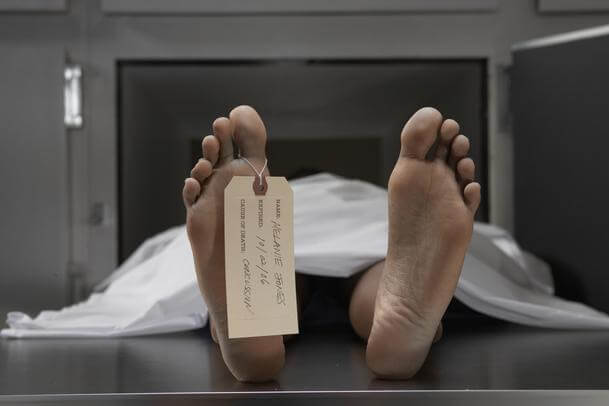
Feet of a deceased individual on a morgue table, with a toe tag, relevant to the legal case involving medical examiner testimony and capital murder.Ex Parte Neal Hampton Robbins – Tex. Crim. App. , June 29, 2011

In 1999, Neal Robbins was convicted of capital murder and sentenced to life in prison for the death of his girlfriend’s 17 month-old child. The cause of death as reported by the medical examiner was asphyxiation by compression. The medical examiner testified to her theory at trial and despite contrary evidence that the compression wounds may have resulted from adult administered CPR, the jury convicted Robbins of capital murder.

In 2007, at the urging of one of Robbins’s acquaintances, the original findings of the medical examiner were reviewed by the Harris County Medical Examiner’s Office. The Deputy Chief Medical Examiner disagreed with the findings and the trial testimony of the original medical examiner. The autopsy report was then amended to reflect that the cause and manner of death was “undetermined.” Eventually, the original medical examiner was asked to review her prior findings. In a letter to the district attorney, she stated:

I believe that there are unanswered questions as to why the child died, and I still feel that this is a suspicious death of a young child. Given my review of all the material from the case file and having had more experience in the field of forensic pathology, I now feel that an opinion for a cause and manner of death of “undetermined” is best for this case.

She went on to explain that the bruises she originally equated with asphyxiation by compression could have resulted from aggressive CPR and other efforts to assist the child.

Armed with the recantation of the chief government witness, Robbins filed an application for writ of habeas corpus in June of 2007. The State did not oppose the application and recommended that Robbins be given a new trial “because his due process rights to a fair trial and impartial jury were violated.” In response, the trial court appointed yet another medical to review the evidence and offer an opinion. This time, the chairman of the Department of Pathology at Baylor College of Medicine opined that the original determination of the cause of death, as presented in the capital trial, could not be supported by the evidence.

Not satisfied with this opinion, the trial court ordered one last review by another pathologist. This last and final pathologist stated that it was her opinion that the child’s death was a homicide and that the manner of death was asphyxia by suffocation (a theory not presented at the original trial). After this finding, the State withdrew its recommendation that a new trial be granted, but agreed not to oppose the request for a new trial.

After an evidentiary hearing into the cause of the child’s death, the trial court recommended that the Texas Court of Criminal Appeals grant Robbins’s request for a new trial.

A slim majority (5-4) of the CCA was not equally convinced. Characterizing Robbins’s application as a “bare innocence claim,” the CCA explained that it must “look to see whether there is ‘clear and convincing evidence that no reasonable juror would have convicted him in light of the new evidence.’”

The CCA concluded that:

[The original medical examiner] did not entirely repudiate her testimony. Although she can no longer stand by her more definite trial testimony, it remains at least possible that [the child’s] death could have occurred as [the medical examiner] originally testified. Thus, [her] re-evaluation does not void her trial testimony. The jury could have considered [her] “undetermined” opinion and still found Applicant guilty, especially in light of all of the other evidence adduced at trial. Applicant has, therefore, failed to make the requisite showing “by clear and convincing evidence that no reasonable juror would have convicted him in light of” [the medical examiner’s] re-evaluation.

Application for writ of habeas corpus is denied.

Judge Price Concurred.

Judge Cochran, joined with Judges Womack and Johnson dissented, stating:

I certainly agree [that]…applicant has not established his actual innocence-not even close. But, given the inexperienced trial and habeas judge’s legitimate and serious concerns about the impact of [the medical examiner’s] testimony at trial on the critical and hotly disputed issue of [the child’s] cause of death, I agree that applicant did not receive a fundamentally fair trial based upon reliable scientific evidence (or the honest admission that science cannot resolve the critical issue.)

Judge Alcala also dissented in a separate opinion, stating that she would grant relief because Robbins “was denied due process of law by the State’s use of false testimony to obtain his conviction.”

If only Robbins had been tried in Florida by Casey Anthony’s jury, this entire appeal could have been averted.

CCA Upholds DWI Search Warrant, Overturns Lower Courts

BySearch & Seizure

In a recent case, the Texas Court of Criminal Appeals, encourages trial judges to take off the hypertechnical blinders and consider the totality of the circumstances when reviewing the propriety of search warrants and their accompanying affidavits.

State v. Jed Jordan – (29 June 2011) Judge Womack writing for a unanimous court:

An affidavit for a DWI search warrant to search an accused’s blood began with a statement that the officer had “good reason to believe that heretofore, on or about the 6th day of June, 2008, [the suspect] did then and there commit [the offense of DWI.] The affidavit then went on to describe the specific conduct that the suspect exhibited that gave rise to the DWI arrest. However, when describing the conduct, the officer did not state that the conduct also occurred on the 6th of June, 2008. The magistrate issued the warrant and blood was drawn indicating that the suspect had, indeed, driven while intoxicated.

At trial, the court suppressed the results of the blood test, ruling that the DWI search warrant was deficient as it failed to allege the specific date and time the officer observed the conduct giving rise to the arrest. The 3rd District Court of Appeals (Austin) affirmed.

The CCA took the time in its opinion to distinguish prior caselaw on this subject and held:

The observations of driving and intoxication described in the second part of the affidavit were the elements of the offense alleged in the first part of the affidavit (where the time of the offense was alleged). Under the circumstances of this case, it was a reasonable inference that the observations occurred on the same day that the offense was alleged to have occurred. We therefore hold that the Court of Appeals erred in failing to consider the totality of the circumstances contained within the four corners of the affidavit in reviewing the magistrate’s basis for determining probable cause.

The CCA went on to do some “math for lawyers” that was apparently missing at the trial level:

We also find that the magistrate had a substantial basis for determining probable cause despite the failure of the affiant to specify that time of the stop. Because the warrant was issued on June 6th at 3:54 am, less than four hours could have elapsed between the observation of the offense, and the issuance of the warrant.

Calling on the trial court (and the 3rd Court below) to focus on the totality of the affidavit, the CCA remanded the case to the trial court, where, they might just have themselves a DWI trial after all.