Was it an Unlawful Warrantless Search Under the 4th Amendment for the DA to Obtain Cell Tower Records From a Third Party and Use Them Against a Defendant Charged with Murder?
Ford v. State (2015) | San Antonio Murder Mystery
J on Ford and Dana Edwards dated off and on for two years in the small town of Alamo Heights, Texas. After a long break-up, the former couple saw each other at a friend’s New Year’s Eve party. The group of friends drank heavily and played “Apples to Apples,” an interactive game that required the participants to reveal their thoughts on personal topics. During the game, the subject of marriage came up and Ford was singled out about his on-again-off-again relationship with Edwards. Angry, Ford left the party before everyone else.
The next day, Edwards’s parents were expecting her in Fredericksburg, but she never showed. Worried, her parents drove to her condo, where they found her dead. Because she sustained lacerations and trauma to her head, the police opened up a murder investigation.
The State Gathers Evidence
On January 2nd, Ford volunteered to give a statement. In his statement, Ford said he left the party around 11:30 pm, went home, and fell asleep. Ford said that his new cell phone had been in his possession the entire night.
The investigators obtained video footage of the streets bordering Edwards’s condo, footage that conflicted with Ford’s official statement. At 11:24 pm, the camera captured a white SUV, similar to Ford’s vehicle, turn into the victim’s condo complex. At 1:00 am, Edwards’s car entered the complex. At 3:16 am, with the headlamps turned off, the white SUV exited the complex. No one could definitively say the white SUV belonged to Ford, as the license plate and registration stickers could not be determined because of the quality of the video.
A week later, the San Antonio District Attorney’s Office filed an application under Article 18.21 § 5(a) of the Texas Code of Criminal Procedure, and in compliance with Communications Act, to obtain Ford’s historical cell-site-location records from AT&T Wireless.
Ford’s Case Goes to Trial
At trial, a radio network engineer from AT&T Wireless testified about the records. The engineer said that AT&T can tell where a cell phone is located by examining the sector information. He explained, “when a person sets up a call, receives a call, or sends a text, the person does so in communication with…sectors in the cell-phone network…[which] enables [AT&T] to look up the records for a particular phone number…determin[ing] [the] cell phone’s proximity to a cell…tower.” Ford v. State, 444 S.W.3d 171, 190 (Tex. App.—San Antonio 2014). This is also true when the phone is not being actively used, as “unanswered texts and calls…automatic downloads….cause the [phone] to…ping the network to alert the network that the [phone] is in a particular…area.” Id.
According to AT&T, Ford’s cell records indicate that the numerous pings place Ford at the party, then at the victim’s condo complex and finally, at his home. The “ping” time frame also matches the timestamps from the camera footage for the unknown white SUV. Id.
The jury found Ford guilty of murder, sentencing him to forty years in prison. Ford appealed, and the court of appeals affirmed the verdict and sentence, relying upon the third party doctrine. Justice Chapa dissented in the court of appeals case, stating, in a nutshell, that Ford retained a reasonable expectation of privacy in his physical movements and location; he did not voluntarily surrender his expectation of privacy; and because the State did not secure a warrant before obtaining the records, Ford’s Fourth Amendment rights were violated. Ford appealed to the Criminal Court of Appeals (“CCA”).
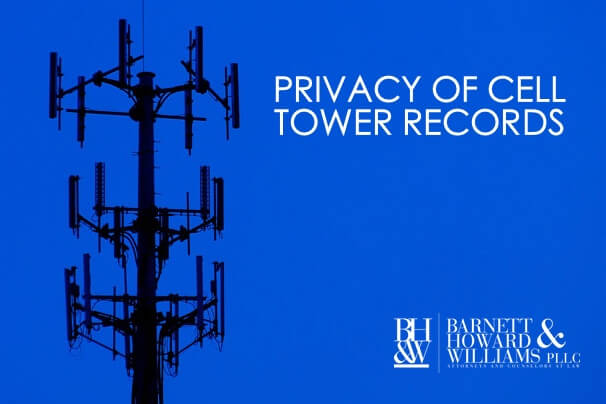
The Big Issue | Privacy of Cell Tower Records
Did the State of Texas’ warrantless acquisition of historical cell-site-location information—recorded by a 3rd party cell-phone service provider—violate the Fourth Amendment? Did Ford have a reasonable expectation of privacy in his movements and location?
What does the law say about the expectation of privacy in cell phone records? What is the Third Party Doctrine?
The Fourth Amendment Guarantees , “the right of the people to be secure in their persons, houses, papers, and effects, against unreasonable searches and seizures.” U.S. CONST. amend. IV. A person may appeal a verdict under a privacy theory if (1) he has a subjective expectation of privacy in the place or object searched, and (2) society…recognize[s] that expectation as reasonable. State v. Granville, 423 S.W.3d, 399, 405 (Tex. Crim. App. 2014).
The Third Party Doctrine allows for acquisition of information revealed to a third party (such as a cell phone company or a bank). Case law reflecting this doctrine suggests that information that must be disclosed [in the normal course of business] for the phone company to provide the requested service, is not off-limits to law enforcement and is not a violation of the Fourth Amendment. However, courts across the United States remain divided on this issue.
The Texas Court of Criminal Appeals Weighs in on Cell Phone Records and the Third Party Doctrine
Here, the CCA says that the DA’s office did not violate Ford’s Fourth Amendment rights because Ford had no legitimate expectation of privacy in records held by AT&T, records kept in the normal course of business, pointing to his location and movements in the past. AT&T uses the records for its own business purposes to improve network functionality. Moreover, phone service providers are required, by the FCC to locate a cell phone when a 911 call is placed. In re Application (Fifth Circuit), 724 F.3d at 611-12. Therefore, “The type of non-content evidence, lawfully created by a third-party telephone company for legitimate business purposes, does not belong to defendant[s], even if it concerns [a defendant].” United States v. Davis, 785 F.3d 498, 511 (11th Cir. 2015) . Acknowledging that Fourth Amendment claims may survive with in the case of GPS devices, or in long-term monitoring of individuals, the CCA affirms, holding, “In the circumstances [of this case], we do not see a jurisprudential reason to stray from the third-party doctrine.”
What could Ford v. State mean for you?
Generally speaking, your cell phone records, by way of the third-party doctrine, are subject to review by law enforcement and could be used against you in criminal proceedings in Texas. The CCA is saying that a reasonable person does not have a reasonable expectation of privacy in his or her cell tower records.
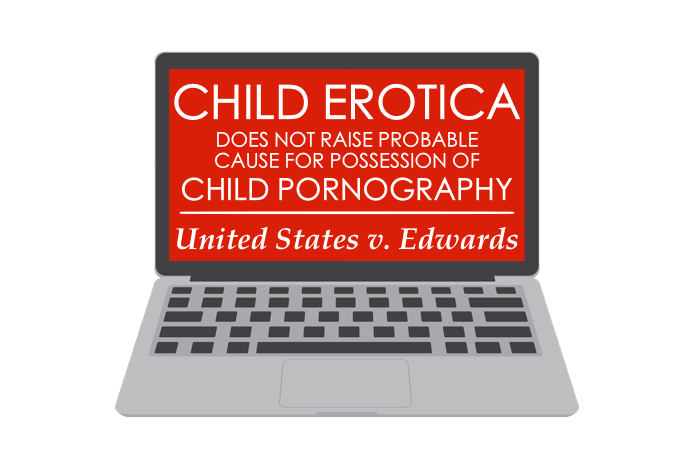
 Paul Edwards was charged with
 In
In 





 Glen. R. Hines (
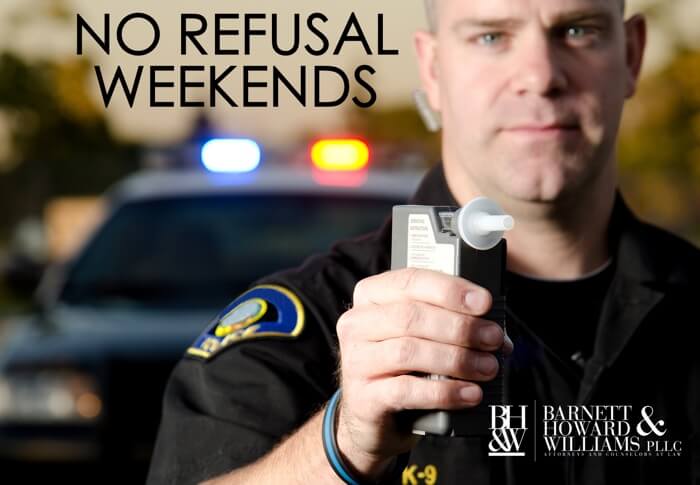
 Throughout the year, as various holidays approach (Christmas, New Year’s, Super Bowl weekend, 4th of July, etc.), we receive questions about “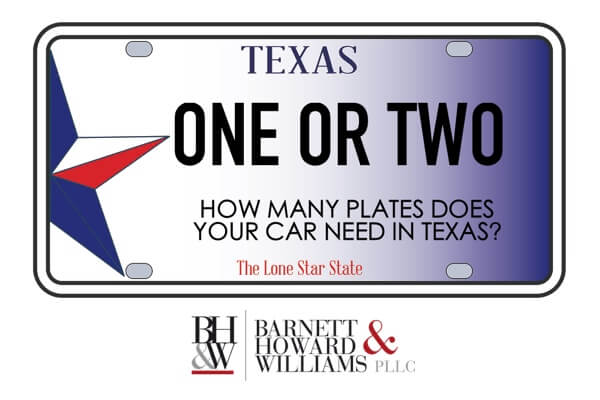
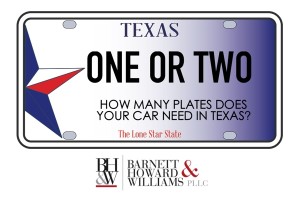 How many license plates does your vehicle need in order to comply with Texas law? Do you need one or is there a two plate rule? Should you drill holes into the front bumper of your car to install a front license plate, or will you be alright with a rear plate only? If you are reading this article, perhaps you have exhaustively Google-searched license plate laws out of frustration. Find out what the Texas Transportation code says about license plates and what the implications are for you, the Texas motorist.
 A district court convicted Renee Pratt, a prominent Louisiana politician, of conspiracy to violate the federal Racketeer Influenced and Corrupt Organizations Act (“RICO”). 18 U.S.C. § 1962(d). Pratt’s conviction resulted from a thorough investigation of her long-time friend, Mose Jefferson, a well-known Louisiana community organizer and politician, as well as his family. United States v. Pratt, 728 F.3d 463 (5th Cir. 2013), cert. denied, 134 S. Ct. 1328 (2014). The Jefferson family and Pratt were accused of obtaining community-service grants, and using the money for personal gain. Id. Pratt timely appealed, citing new evidence that several prosecutors from the U.S. Attorney’s Office (“USAO”), made negative and persuasive online comments in public forums, including a local newspaper’s website, regarding her case around the time of trial. Pratt claims that the jury rendered a guilty verdict because of the disparaging and prejudicial comments.
 Be it
Be it 
 In February 2014, David Schumm and his wife were arguing in their home when she tried to place a 911 call. His wife testified that he prevented her from making the call by taking her cell phone. Fearing an assault, she ran outside, screaming for help. Schumm allegedly followed her outside, dragged her onto their porch and “strangled” her. At trial, Schumm denied all assaultive conduct and denied taking her cell phone. Schumm was charged in two separate cases with Interference with 911 Call and with Assault Family Violence with Impeding Breath. Tex. Penal Code Ann. § 42.062 and § 22.01(b)(2)(B) (West Supp. 2015). Schumm was acquitted of the felony assault charge at trial.