Category

Criminal Defense Archive & Resources | HLAW PLLC

Trophy symbolizing the 2025 scholarship winners from Howard Lotspeich Alexander & Williams, PLLC, featuring a laurel wreath and "WINNER" banner.

2025 HLAW Scholarship Winners

By Criminal Defense

2025 HLAW Military & Dependent Scholarship Winners

Trophy symbolizing the 2025 Howard Lotspeich Alexander & Williams, PLLC Scholarship Winners, featuring laurel leaves and a red ribbon with the word "WINNER."

Congratulations to this years Scholarship Winners!

HLAW is thrilled to continue our two scholarships for 2025. In honor of the sacrifices of our military veterans, we decided to that the scholarships should be connected to military service. The first scholarship is a $500 award for a Military Veteran Law Student and the second scholarship is a $500 award for a Military Dependent undergraduate student. Throughout the year, we received several applications from very deserving students. We appreciate all of the students that took the time to apply for the scholarships and wish them all the best in their studies. For those students that were not selected, we invite you to apply again next year as we plan to continue the scholarship offers as an annual award.

2025 Winner – Military Veteran Law Student Scholarship

The winner of the 2025 Military Veteran Law Student Scholarship is:

GRACE MAY

Grace May is a Marine Corps veteran. Ms. May currently attends Trinity Law School in Santa Ana, California. Congratulations Grace May. Best wishes as you continue toward your law degree!

2025 Winner – Military Dependent Scholarship

The winner of the 2025 Military Dependent Undergraduate Scholarship is:

ASHLEY BREWER

Ashley Brewer is a US Navy dependent whose parents are both veterans (Mom, Air Force and Dad, Army). Ms. Brewer is attending High Point University in High Point, North Carolina and is pursuing a degree in Theatre and Finance. Congratulations Ashley and best wishes as you continue in your studies!

More Information About Our Scholarship Opportunities:

For more information about how to apply for these scholarships in future years, please visit the scholarship pages:

Military Veteran Law Student Scholarship

Military Dependent Scholarship

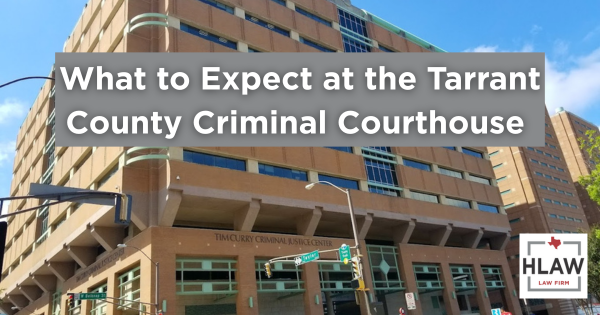
Tarrant County Criminal Courthouse exterior with sign, emphasizing legal guidance and expectations for criminal court proceedings.

What to Expect at the Tarrant County Criminal Courthouse

By Criminal Defense
Tarrant County Criminal Courthouse exterior with text overlay "What to Expect at the Tarrant County Criminal Courthouse" and HLAW logo, relevant to criminal defense and legal guidance in Texas.

Understanding what to expect during your criminal court settings at the Tarrant County Courthouse can help reduce anxiety and prepare you for each step in the legal process.

When someone is facing criminal charges, after an arrest and getting out of jail, one of the next events that causes someone in this situation a good amount of anxiety is having to navigate through the often-foreign process of the criminal courts system. Knowing more about how this process works can ease your mind a bit and help you focus on the substance of what you and your attorney will work towards in your case. 

This article aims to give you what you need to know and expect at the Tarrant County Criminal Courthouse and attending court settings.

Types of Court Settings


The Initial Appearance Court Setting (IA)

When a case has been filed by the District Attorney, a court is assigned to that case. In Tarrant County, the first thing that the court will do is set what is called an Initial Appearance (IA) court date. The sole purpose of the IA is for the court to determine what the status is of you being represented. The court is ordering you to come to the IA to either inform the court 1) whether you have an attorney or will be hiring one or 2) if you would like to apply for a court-appointed attorney. Typically, the court informs you of this setting via text message. Because most people are not familiar with what an IA is, they typically get concerned about having to go to court for this and assume that something more significant is going to take place in this setting. However, the IA is not a trial, and not a setting where anything other than addressing a person’s attorney situation is addressed. 

The good news is that if you hire an attorney before this setting, then the attorney should enter a Letter of Representation with the court. Once the court receives that Letter of Representation, then the court will typically cancel that setting and reset the case to a later date to allow time for the attorney to obtain discovery and start working on your case.

The IA is a formal setting and if you receive notice to be at court and you haven’t retained an attorney, you must attend this setting. Important: For any setting notice that you receive from Tarrant County, you must be there unless notified otherwise by the court or your attorney. Failure to appear to court after being notified of a setting can and will result in a warrant being issued for failure to appear.

Routine Court Settings (Pre-Trial, Evidence Exchange, Motions Docket)

After the IA has either been rescheduled or held, then you should have an attorney (either by retaining one or by receiving court-appointed counsel). From that point, the court will set routine settings approximately every 30 days (although this time period varies depending on the size of the court’s dockets at a given time). Some courts have different names for these settings and will schedule them in different orders. In general though, regardless of whether the setting is called a pre-trial setting, evidence exchange, or even sometimes a motions docket, these settings all typically proceed in the same manner (explained below). 

At all of these settings, the Judge, you, your attorney and the State’s prosecutor assigned to your case will be present for court. And, at any of these settings the case can be disposed of either by way of a dismissal or guilty plea. If a guilty plea is worked out, then you will go in front of the Judge with your attorney to formalize the plea and conclude the case. If a dismissal is obtained, then the prosecutor can file their Motion to Dismiss with the Judge on any of these settings as well. If further negotiations are going to be required and nothing is resolved, then the court will continue to move the case forward by resetting the case to the next setting to continue to give your attorney and the State an opportunity to resolve the case without having to set the case for trial.

Status Conference and Trial Settings

As the case moves through the order of settings, the court will not allow the case to simply be reset over and over again inevitably. In general, a case will be given around 3 settings before the Court sets the case for what is called a Status Conference setting. The Status Conference setting is regarded as the final setting before the case is set for trial and is the setting where the Court is looking for either the case to be pled out or set on a trial docket. 

If the case is not either dismissed or pled, then the court will set the case for a Trial docket. The routine settings and status conference setting generally proceed in the same manner (explained below). The Trial Setting is unique and is the setting that most people think of as far as what Court looks like from what they’ve seen on television and movies. 

Again, for all court settings that you receive notice of, you must be present or the court will issue a warrant for failure to appear. You should keep in close contact with your attorney regarding all settings to confirm the setting. Sometimes things do change, and your attorney should have a direct line to the court to be able to confirm that the setting is scheduled and to confirm that you will be required to come to court for that particular setting.

What To Expect at Court Settings


What Happens at a Court Setting (Routine Settings and Status Conference)

At routine court settings, there are generally 20-40 people set on the same docket (list of cases scheduled for that day) all at the same time. Some people have this idea that when they go to court it will just be them and their attorney alone in the courtroom with the prosecutor and Judge. However, this is far from the case. With up to 40 (sometimes even more) people all set at the same time on the same docket, the routine court settings are often extremely crowded and busy. Your notice for your setting will typically tell you that the setting is scheduled for 8:30 or 9:00 a.m. (this too can vary). Regardless of when the setting is scheduled for, the court’s text-message notice will usually tell you to be at court an hour to an hour and a half early. The reason for this is because (with the amount of people all coming at the same time to the courthouse for docket) parking and getting to your individual court on packed elevators can significantly delay you actually getting to your court. It’s good advice to follow that direction and come to court early. The primary reason you want to do this is because the Judge in the court will often call “roll” for everyone on the docket at exactly the time when court is scheduled for (think “roll-call” like when you were in school). In addition, almost every court has you check in with the bailiff (as you will see others doing) right when the courtroom doors open (and they often don’t open them until right before the scheduled start time). The court/bailiff will note what time you have arrived at court. Being late to court can also potentially result in you being taken into custody. So, get to your setting early and immediately go into the courtroom when the doors open and check in with the bailiff that will be sitting at his/her desk in the courtroom. 

We often tell our clients that their most important job for these routine court settings is to be there and be there on time. Other than that, your attorney should be taking the lead from there and will inform you on what’s going on with the case and what to expect moving forward. 

During these routine settings, everyone scheduled for court will sit in the audience-portion of the courtroom while their attorney’s are speaking with the prosecutors about the cases (either in the courtroom or in a room behind the courtroom). Your attorney will usually get you after they’ve spoken with the State and take you into the hall to update you on the case. Once that is done, your attorney will update the court with the status of the case and the case will either be reset or if a plea has been worked out your attorney will go over plea paperwork and talk to you about what happens next. If the case is just going to be reset, then your attorney should inform you of this and let you know when you can go. 

All routine settings and even the Status Conference setting proceed in this same general manner. However, if you attend the Status Conference and don’t enter a plea on your case, then the case will be placed on a Trial Docket for a Trial setting explained below.

What Happens at a Tarrant County Trial Setting

If the case was not resolved (by way of a dismissal or plea) during one of the routine settings, then the case will be set for Trial. You should be maintaining good contact with your attorney after the Status Conference (if the case is set for trial), because the Trial setting means that your case very likely will be actually going to trial on that date. 

While courts do typically set multiple cases for trial on the same date, you and your attorney should anticipate that your case will be going to trial on that date regardless. Your attorney will be in contact with the State to gauge a little more about whether you’re the #1 case on the docket or not. But, even if you’re not the #1 case on the trial docket that doesn’t mean that the cases set in front of you won’t all get pled out leaving your case to be up for trial. 

Trial will proceed on the Trial Date by way of picking the jury, opening statements, presentation of evidence and closing statements. Trial can take a day for some simple misdemeanors or it can take weeks or even months (for capital felonies). Regardless, that process starts on the day of the Trial setting and continues until a verdict (and potential sentencing) occurs in the case.  

Conclusion


If you’ve never been through the criminal justice system in Tarrant County, the prospect of “going to court” can be frightening and certainly foreign. But, knowing what to expect hopefully eases some of that anxiety. Ultimately, the best way to manage this stress is to retain an experienced attorney who has the knowledge, background and communication with you to keep you informed as to what to expect every step of the way. 

At the HLAW law firm, we are committed to walking side-by-side with our clients and always being mindful of the stress you’re under when facing criminal charges. We take as much time as we need to make sure you’re fully informed every step of the way and to make sure you understand the process and what to expect.

If you’re facing criminal charges, contact the HLAW firm today for a free consultation to start getting prepared for your defense and to learn what more you might need to expect  at the Tarrant County Criminal Courthouse.

Understanding assault under Texas criminal law with HLAW logo, emphasizing legal context and implications.

Understanding Assault Under Texas Criminal Law

By Criminal Defense
Understanding Assault Under Texas Criminal Law title with a graphic of a confrontation, HLAW Law Firm logo, and emphasis on Texas legal context.

An accusation of assault in Texas can have serious and life-altering consequences. Our latest blog post breaks down the different degrees of assault charges, potential penalties, and possible legal defenses. Learn more about protecting your rights.

When people hear the phrase “assault and battery,” they often envision two distinct criminal offenses: one encompassing threats of harm and the other involving actual physical violence. However, it’s crucial to understand that under Texas law, the legal landscape is structured differently. The term “battery” is not used to define a separate criminal offense. Instead, both the act of threatening harm and/or the act of causing physical harm are typically consolidated under the broader legal definition of assault. This fundamental difference is key to comprehending how such charges are prosecuted in the state.

This post aims to provide a comprehensive breakdown of what constitutes assault under the Texas Penal Code, delve into the varying degrees of severity and their classifications, and outline the potential penalties that individuals accused of these offenses may face. We will also explore related offenses like aggravated assault and common legal defenses.

Defining Assault in Texas: A Three-Pronged Approach

The Texas Penal Code § 22.01 provides a specific and multifaceted definition of assault. A person commits assault if they engage in any of the following actions:

  • Causing Bodily Injury: Intentionally, knowingly, or recklessly causing bodily injury to another person. This includes a spouse, and the term “recklessly” implies a conscious disregard of a substantial and unjustifiable risk that the injury will occur. Bodily injury itself is defined broadly as physical pain, illness, or any impairment of physical condition. This means even an act causing temporary pain, without visible marks, could qualify.
  • Threatening Imminent Bodily Injury: Intentionally or knowingly threatening another person (including a spouse) with imminent bodily injury. The key here is the “imminent” nature of the threat; it must be a threat of harm that is about to happen. The threat can be conveyed through words, gestures, or a combination of both.
  • Causing Offensive or Provocative Physical Contact: Intentionally or knowingly causing physical contact with another person when they know—or should reasonably believe—that the other person will regard the contact as offensive or provocative. This prong does not require any injury. Examples could include an unwanted touch, a shove that doesn’t cause pain but is clearly offensive, or spitting on someone.

Because this statutory definition of assault encompasses both verbal or gestural threats (with no physical harm necessarily resulting) and actual physical contact that might or might not cause bodily injury, Texas law effectively subsumes what many other jurisdictions would categorize separately as “battery” into its singular assault statute.

Degrees of Assault and Their Corresponding Penalties: A Spectrum of Severity

Assault charges in Texas are not one-size-fits-all. The severity of the charge and the potential penalties depend heavily on the specific circumstances of the incident, the harm caused, the identity of the victim, and the defendant’s prior criminal history.

  • A. Class C Misdemeanor Assault
    • What It Is: This is the lowest level of assault. It typically involves situations where an individual threatens someone with imminent bodily injury but does not actually cause any physical harm, or where they cause physical contact that is deemed offensive or provocative but does not result in bodily injury. Examples could include a verbal threat of immediate harm or an unwelcome, offensive touch.
    • Penalties: A Class C misdemeanor is punishable by a fine of up to $500. While there is no jail time associated with a Class C misdemeanor conviction itself, failure to pay the fine or adhere to court orders can lead to further legal complications.
  • B. Class A Misdemeanor Assault
    • What It Is: This is a more serious charge and is often filed when the assault results in actual bodily injury to another person, and the circumstances do not elevate it to a felony. As previously noted, bodily injury is defined as physical pain, illness, or any impairment of physical condition. This could range from a bruise or scratch to more significant, but not life-threatening, injuries.
    • Penalties: A Class A misdemeanor carries significantly steeper penalties, including potential confinement in county jail for up to one year and/or a fine of up to $4,000.
  • C. Enhanced Misdemeanors and Felony Assault: When Circumstances Escalate the Charge The gravity of an assault charge can be substantially increased, elevating it from a lower-level misdemeanor to a higher-level misdemeanor or even a felony, based on several critical factors. These factors often relate to the identity of the victim, the defendant’s prior criminal record, or the specific nature and context of the incident.
    • Assault Against a Public Servant:
      • If the victim of the assault is a public servant (such as a police officer, firefighter, emergency medical services (EMS) personnel, correctional officer, or even a process server) who is lawfully discharging an official duty, and the defendant knows the person is a public servant, the charge can be enhanced. An assault that might otherwise be a Class A misdemeanor can become a third-degree felony if it results in bodily injury to a public servant.
      • Penalties for a third-degree felony include imprisonment for 2 to 10 years and a fine of up to $10,000.
    • Assault Involving Family Violence:
      • Texas law takes domestic violence very seriously. If an assault involves a family member, household member, or someone with whom the defendant has or had a dating relationship, the penalties can be enhanced, especially with prior convictions.
      • A first offense of assault causing bodily injury to a family member is typically a Class A misdemeanor. However, if the defendant has a previous conviction for an offense involving family violence (including assault against a family member, violation of a protective order, or stalking), a subsequent assault against a family member causing bodily injury can be charged as a third-degree felony.
      • Furthermore, if the assault involves impeding the normal breathing or circulation of the blood of a family member or household member by applying pressure to the throat or neck (strangulation or choking) or by blocking the nose or mouth (suffocation), this act itself can elevate the charge. Such an offense can be a third-degree felony, or even a second-degree felony if the defendant has a previous conviction for a similar offense.
      • Penalties for a second-degree felony range from 2 to 20 years in prison and a fine of up to $10,000.
    • Assault Against Elderly& or Disabled Individuals:
      • Assault committed against an elderly individual (defined as someone 65 years of age or older) or a disabled individual can also lead to enhanced charges. Depending on the severity of the injury and the defendant’s intent, these offenses can be prosecuted as felonies, reflecting the state’s interest in protecting vulnerable populations.

Aggravated Assault: A More Serious Offense

Distinct from simple assault, though closely related, is the offense of aggravated assault, as defined under Texas Penal Code § 22.02. This charge signifies a more severe form of assault. A person commits aggravated assault if, during the commission of an assault (as previously defined), they either:

  • Cause serious bodily injury to another person (including their spouse). Serious bodily injury means bodily injury that creates a substantial risk of death or that causes death, serious permanent disfigurement, or protracted loss or impairment of the function of any bodily member or organ.
  • Use or exhibit a deadly weapon during the commission of the assault. A deadly weapon can be a firearm or anything manifestly designed, made, or adapted for the purpose of inflicting death or serious bodily injury; or anything that in the manner of its use or intended use is capable of causing death or serious bodily injury.
  • Penalties for Aggravated Assault:
    • Generally, aggravated assault is classified as a second-degree felony. This carries a potential punishment of 2 to 20 years in prison and a fine of up to $10,000.
  • Enhanced Aggravated Assault Charges:
    • Similar to simple assault, aggravated assault charges can be further enhanced under specific circumstances. For instance, if the aggravated assault is committed against a public servant acting in their official capacity, or involves discharging a firearm from a motor vehicle towards a habitation, building, or vehicle and causing serious bodily injury, the charge can be elevated to a first-degree felony.
    • A first-degree felony is punishable by imprisonment for 5 to 99 years, or life, and a fine of up to $10,000.

Exploring Possible Legal Defenses in Assault Cases

Facing an assault charge does not automatically mean conviction. The Texas legal system provides for due process and various defenses that, if applicable to the facts of the case, could lead to charges being reduced or dismissed. Common defenses in assault cases include:

  • Self-Defense (Texas Penal Code Chapter 9): This is one of the most common defenses. A defendant may argue that their actions were justified because they reasonably believed that the force they used was immediately necessary to protect themselves from the other person’s use or attempted use of unlawful force. The amount of force used in self-defense must be reasonable in relation to the perceived threat.
  • Defense of Others (Texas Penal Code Chapter 9): Similar to self-defense, a person is justified in using force to protect another individual if they reasonably believe the other person would be justified in using force to protect themselves, and the defendant reasonably believes their intervention is immediately necessary.
  • Lack of Intent (Mens Rea): For most assault charges, the prosecution must prove a culpable mental state (intentionally, knowingly, or recklessly). If the contact or threat was purely accidental, and the defendant did not possess the requisite intent to cause harm, threaten, or make offensive contact, this could be a defense. For example, if bodily injury occurred due to an unforeseeable accident rather than intentional or reckless conduct.
  • Mistaken Identity / Alibi: The defendant may argue they are not the person who committed the act in question or were wrongly identified by witnesses. An alibi defense would involve presenting evidence that the defendant was elsewhere when the alleged assault occurred.
  • Consent: While not applicable in many assault scenarios (one cannot generally consent to serious bodily injury), in limited circumstances involving offensive contact or minor bodily injury (e.g., a contact sport), consent might be a factor.

It is absolutely critical to understand that the viability and success of these defenses are highly dependent on the specific, unique facts and circumstances of each individual case. Gathering evidence, witness testimony, and understanding the nuances of Texas self-defense laws (including the Castle Doctrine and Stand Your Ground principles, where applicable) are vital. Therefore, consulting with an experienced criminal defense attorney is paramount to thoroughly investigate the case, identify all possible defenses, and develop an effective and tailored defense strategy.

Consequences Beyond Criminal Penalties: The Ripple Effect of an Assault Conviction

A conviction for assault in Texas can have profound and lasting repercussions that extend far beyond court-imposed fines and potential imprisonment. These collateral consequences can significantly impact a person’s future:

  • Permanent Criminal Record: An assault conviction, particularly a felony, creates a permanent criminal record that is accessible through background checks. This can severely limit opportunities for employment (especially in certain professions like teaching, healthcare, or law enforcement), housing (as landlords often run checks), and higher education.
  • Issuance of Protective Orders: Victims of assault, especially in family violence cases, may seek and obtain protective orders (also known as restraining orders) against the defendant. These orders can legally prohibit the defendant from contacting the victim, going near their residence or workplace, or possessing a firearm, often for extended periods (e.g., two years, or sometimes longer). Violating a protective order is a separate criminal offense.
  • Loss of Civil Rights: Certain convictions, predominantly felonies, can lead to the loss or restriction of fundamental civil rights. This includes the right to vote (until the sentence, including parole or probation, is fully discharged) and the right to possess firearms under both federal and state law.
  • Immigration Consequences: For non-U.S. citizens, an assault conviction can have severe immigration consequences, potentially leading to deportation, denial of naturalization, or inability to re-enter the United States.
  • Professional Licensing Issues: Many professions require state licenses (e.g., doctors, nurses, lawyers, teachers, real estate agents). An assault conviction can jeopardize an existing license or prevent an individual from obtaining one.
  • Social Stigma: The social stigma associated with an assault conviction can affect personal relationships and standing in the community.

Conclusion: Navigating Assault Charges in Texas Requires Expertise

In summary, under Texas law, the traditional concept of “battery” is effectively integrated within the broader offense of “assault”. This legal framework makes it essential for anyone facing such allegations to understand precisely how Texas law defines and penalizes a wide array of threatening or harmful behaviors.

Whether an assault charge is classified as a misdemeanor or a felony, it invariably carries the potential for serious penalties, including substantial fines, incarceration (in county jail or state prison), and a host of long-term collateral consequences that can shape an individual’s future. Given the complexities of the law, the nuances of evidence, and the severity of potential outcomes, facing an assault charge alone is a daunting prospect.

Facing assault charges in Texas can be overwhelming, with serious consequences that can impact your life for years to come. Don’t navigate this complex legal challenge alone. If you or someone you know is confronting assault charges, the time to act is now. It is absolutely imperative to secure the counsel of a qualified and experienced criminal defense attorney immediately.

At Howard Lotspeich Alexander & Williams, PLLC (HLAW), our knowledgeable attorneys are ready to:

  • Meticulously analyze the specific details of your case.
  • Clearly explain your rights and the charges you face.
  • Thoroughly explore all available defenses.
  • Skillfully navigate the intricate Texas legal system on your behalf.
  • Advocate zealously to protect your rights and fight for the best possible outcome.

Your future is too important to leave to chance. Contact Howard Lotspeich Alexander & Williams, PLLC (HLAW) today for a confidential consultation. Let our experience work for you.

Man standing at a crossroads in a foggy landscape, with text overlay "Plea Bargaining in Texas Criminal Law" and HLAW logo in the bottom right corner.

The Process of Plea Bargaining in Texas Criminal Law: Benefits, Drawbacks, and Practical Application

By Criminal Defense

Plea bargaining is a pivotal part of Texas’s criminal justice system. In fact, the vast majority of criminal cases in Texas are resolved through plea deals rather than jury trials. This process allows for negotiated resolutions

Man standing at a crossroads in a misty landscape, with text overlay "Plea Bargaining in Texas Criminal Law" and HLAW logo, symbolizing choices in legal processes related to DWI defense.

Choosing a legal path: Understanding how plea bargaining works in the Texas criminal justice system.

between the defense and prosecution, potentially sparing both parties the cost, uncertainty, and emotional toll of trial. But while plea bargaining offers efficiency, it also raises concerns about fairness and justice.

Let’s take a closer look at how plea-bargaining works in Texas, its advantages and disadvantages, and what it means in real-world criminal cases.

How Plea-Bargaining Works in Texas

  1. Initiation of Negotiations

Plea negotiations usually begin after the defendant has been formally charged and the discovery process has begun. Either side—prosecution or defense—can initiate the discussion.

  • In misdemeanor cases, plea offers often come early, sometimes during the first court appearance.
  • In felony cases, especially serious ones, offers typically follow initial case assessments and evidence review.
  1. Offer and Counteroffer

The prosecutor presents a proposed deal, which might involve:

  • Reducing charges (e.g., felony to misdemeanor),
  • Recommending probation instead of jail,
  • Offering deferred adjudication or pretrial diversion.

The defense attorney evaluates the offer and may negotiate modifications or propose alternatives based on the strength of the evidence, the defendant’s background, and mitigating factors.

  1. Judicial Review and Approval

Once both sides reach an agreement, the judge must review the plea. Texas judges ensure:

  • The plea is made voluntarily,
  • The defendant understands their rights and the consequences,
  • The agreement is not contrary to law or public interest.
  1. Entry of Plea and Sentencing

The defendant appears in court, formally enters a guilty or no-contest plea, and is sentenced according to the deal. In some cases, sentencing may be delayed for further hearings or pre-sentence investigations.

Potential Benefits of Plea Bargaining

Efficiency – Court dockets in Texas are crowded. Plea deals expedite resolution, reduce backlogs, and allow courts to focus resources on more complex or contested trials.

Certainty and Predictability – Trials carry risk. Even strong defenses can falter before a jury. A plea deal provides a known outcome, which can be critical for defendants concerned about family, employment, or immigration status.

Reduced Sentences – Defendants often receive a more lenient sentence through a plea than they would if convicted at trial. This might include:

  • Reduced jail or prison time,
  • Avoidance of certain charges that carry collateral consequences (like license suspension),
  • Possibility of record sealing later through deferred adjudication.

Protection for Victims – Plea deals can spare victims from testifying in open court, which may be especially important to the prosecution in sensitive cases such as assault, domestic violence, or sexual offenses.

Drawbacks and Controversies

Risk of Coercion – Defendants may feel pressure to accept a plea—even if innocent—because the risk of trial (e.g., decades in prison) is too great. This is especially true when bail is denied, or pretrial detention continues.

Unequal Justice – Outcomes can hinge on legal representation. Those with experienced defense attorneys may secure better deals than unrepresented or underrepresented defendants.

Lack of Transparency – Plea deals occur behind closed doors. Unlike trials, they are not public proceedings, leading to concerns about accountability and consistency.

Limited Appeal Options – Once a plea is entered and accepted, the right to appeal is typically waived. This means defendants lose the ability to challenge errors in evidence gathering, charging decisions, or constitutional violations.

Plea Bargaining in Practice: Common Texas Scenarios

Here are a few examples of how plea bargaining might play out in everyday criminal cases:

DWI Cases – A first-time DWI defendant might be offered a plea to “obstruction of a highway,” a Class B misdemeanor with less stigma and fewer long-term consequences.

Drug Possession – Non-violent offenders may be offered pretrial diversion or deferred adjudication in exchange for counseling, community service, and clean drug tests.

Family Violence – In some cases, a charge may be reduced from a family violence assault to simple assault without the “affirmative finding,” avoiding future firearm bans or enhanced penalties.

Felony Theft or Assault – A felony may be reduced to a state jail or misdemeanor offense, especially if restitution is made or the victim supports leniency.

Tips for Navigating a Plea Bargain in Texas

If you’re considering a plea deal, keep these practical tips in mind:

  • Hire a Skilled Defense Attorney: Your attorney can assess the evidence, negotiate effectively, and protect your rights.
  • Understand the Consequences: Will the plea result in a conviction? Will it affect your job, license, or immigration status?
  • Weigh the Strength of the Case: If the prosecution’s case is weak, trial may be worth the risk. Don’t accept a deal out of fear alone.
  • Take Your Time: Don’t rush. Judges rarely require immediate answers—most give time to consult with your lawyer and family.

Final Thoughts

Plea bargaining isn’t about guilt or innocence alone—it’s a legal strategy shaped by risk, opportunity, and the facts of each case. While plea deals offer a path to resolution and can be in the best interest of many defendants, they should never be entered into lightly.

If you or someone you love is facing criminal charges in Texas, don’t navigate this alone. An experienced defense attorney can help you make informed decisions, protect your rights, and find the best path forward.

A judge’s gavel in front of cannabis containers, representing legal possession laws in Texas.

Understanding Possession in Texas Criminal Law

By Criminal Defense, Drug Crimes
A judge’s gavel in front of cannabis containers, representing legal possession laws in Texas.

Understanding what counts as “possession” in Texas can make all the difference in a criminal case.

In Texas, the concept of “possession” can sometimes be a little tricky when we think about it in terms of the law as opposed to what we all commonly define as “possession”. Whether it’s related to controlled substances, firearms, or stolen property, possession is a key element in many criminal offenses. But what does possession actually mean in the eyes of Texas law? This post will break down the definition, legal standards, and consequences of possession in the Lone Star State.

Definition of Possession in Texas Law

Under Texas Penal Code §1.07(a)(39), possession is defined as having “actual care, custody, control, or management.” This broad definition means that possession isn’t limited to physical ownership. Instead, it can include situations where a person has any access to or control over an object, even if they don’t physically hold it at the moment.

Possession can be categorized into two types:

  1. Actual Possession: This occurs when the individual has physical custody of the item. For instance, if someone is holding a bag containing illegal drugs, they are in actual possession.
  2. Constructive Possession: This arises when an individual does not have physical custody but still has control or the right or ability to excersise control the item. For example, if illegal drugs are found in the glove compartment of a car that a person owns and operates, they may be deemed to have constructive possession. Even if they don’t own or are operating the vehicle, police officer’s may deem a passenger in the vehicle as having the ability to exercise care, custody, control or management of the illegal item.

Establishing Possession in a Criminal Case

To prove possession in a criminal case, the prosecution must demonstrate two key elements:

  1. Knowledge: The accused must have known about the presence of the item, and;
  2. Control: The accused must have exercised, or had the ability to exercise, control over the item.

Merely being near an illegal item is not enough to establish possession. For example, if drugs are found in a house shared by multiple roommates, the prosecution must show evidence linking the accused to the drugs specifically—such as fingerprints, ownership of the container, or incriminating statements.

Joint Possession

Texas law also recognizes the concept of joint possession. This means that more than one person can be found to have possession of the same item. For example, if two people are in a vehicle and illegal contraband is found in a location accessible to both, they could both potentially be charged with possession.

Consequences of Possession Charges

Possession charges can carry serious consequences in Texas, varying based on the type and quantity of the item in question. For instance:

  • Drug Possession: Penalties depend on the type of drug and the amount, with punishments ranging from misdemeanors to first-degree felonies.
  • Firearm Possession: Certain individuals, such as convicted felons, are prohibited from possessing firearms, and violating this prohibition can result in severe penalties.
  • Stolen Property: Possession of stolen property can lead to theft charges, with penalties depending on the value of the property.

Defenses to Possession Charges

There are several potential defenses to possession charges in Texas, including:

  • Lack of Knowledge: Demonstrating that the accused was unaware of the item’s presence.
  • Lack of Control: Arguing that the accused did not have the ability to exercise control over the item.
  • Mistaken Identity: Showing that the item belonged to someone else and the accused had no connection to it.
  • Violation of Constitutional Rights: If law enforcement obtained evidence through an illegal search or seizure, that evidence may be suppressed.

Conclusion

“Possession” is a nuanced legal concept in Texas, encompassing both actual and constructive control over items. Understanding the intricacies of possession is crucial for anyone facing criminal charges. What you think may or may not be possession may be different than what the law defines it as. If you or someone you know is dealing with a possession-related charge, consulting an experienced criminal defense attorney is essential to ensure your rights are protected and to navigate the complexities of the legal system effectively.