
Direct Evidence at Trial Must Reflect “Manner of Use” to Support Deadly Weapon Finding | Couthren v. State
 One of the common factors in any DWI case is that there must be a motor vehicle involved. Every time. When someone who is under the influence of drugs and/or alcohol chooses to drive a motor vehicle, should the car itself be considered by Texas courts to be a “deadly weapon?” When do ordinary, daily objects, such as cars, become “deadly weapons” for the purpose of charging enhancements and raising the stakes in a criminal case?
Slip Opinion: Couthren v. State (Tex. Crim. App. 2019)
Driver Hits Pedestrian after Drinking
Donald Couthren was driving on a frontage road in Bryan, Texas early one morning in 2012. He had been drinking Four Loko earlier in the evening and was impaired. Frank Elbrich was walking along the same road and stepped out in front of Couthren’s vehicle. Elbrich’s head hit the windshield and he landed on the ground. Couthren stopped his vehicle, scooped up Elbrich, and put Elbrich into his car, with the idea of taking him to the hospital. In a strange turn of events, Couthren, instead, drove to a house to exchange cars, and ended up in altercation with the people in the house. The police were called as a result. When police arrived, they noticed that Elbrich was bleeding and non-responsive. They saw that the windshield was broken, as well. The police noted that Couthren smelled of alcohol and swayed from side to side when he walked. Couthren admitted to hitting Elbrich when “[he] stepped in front of his vehicle.” Couthren did not consent to a blood draw and refused to comply with field sobriety tests. Police arrested Couthren for driving while intoxicated (DWI).
Felony DWI Trial with Deadly Weapon Enhancement
Couthren was indicted and tried for felony DWI. The State alleged a “deadly weapon” finding, claiming that the Couthren’s vehicle was a deadly weapon. A deadly weapon finding enhances the charge, increasing the term of imprisonment. Accordingly, the jury convicted Couthren and agreed with the deadly weapon finding and assessed a punishment of six years imprisonment. On appeal, Couthren argued that there was not enough evidence to support the deadly weapon finding. The lower appeals court upheld the trial court’s finding, utilizing a “two-step” approach to determine whether the evidence was sufficient. The two-step approach consisted of (1) an evaluation of the manner in which Couthren used his car during the felony and (2) an analysis of whether vehicles are capable of causing death or serious bodily injury. Couthren v. State, No. 13-16-00543-CR, 2018 WL 2057244, at 5 (Tex. App.—Corpus Christi, May 3, 2018) (mem. op., not designated for publication).
Appeal to the Texas Court of Criminal Appeals | Is a Vehicle Always a “Deadly Weapon?”
Couthren appealed the lower appeals court’s ruling, to the Court of Criminal Appeals to determine whether the first step (“manner of use”) was a proper evaluation. Specifically, Couthren argued that the lower appeals court relied on the fact that there was a collision and that he had been drinking, to uphold the deadly weapon finding. Further Couthren argued, there must be evidence of a dangerous or reckless operation to support a finding that a car was used as a deadly weapon.
The CCA examined several laws, that when applied together, could create a deadly weapon finding in a DWI collision scenario. Texas Penal Code Section 49.04(a) which prohibits a person from operating a motor vehicle in public while intoxicated. TEX. PENAL CODE §49.04(a). Further, other statutes in Texas provide for a third-degree felony enhancement if it can be proven that a defendant had to prior DWI convictions. TEX PENAL CODE §49.09(b)(2). The Texas Code of Criminal Procedure, Section 42.12 states that, “When it is proven that a defendant used or exhibited a deadly weapon, a trial court shall consider a deadly weapon finding in the judgment.” Moore v. State, 520 S.W.3d 906, 908 (Texas Crim. App. 2017).
The CCA looked to precedent cases to guide their analysis. The CCA determined that there must be evidence that the manner of driving was capable of causing death or serious bodily injury apart from the fact of a collision and a defendant’s intoxication. Brister v. State, 449 S.W.3d 490, at 495 (Tex. Crim. App 2014). Further, the CCA noted that it has “expressly rejected the argument that all felony DWI cases warrant an automatic deadly weapon finding.” Id.
Deadly Weapon Finding Reversed for Lack of “Manner of Use” Evidence to Support it
Here, the CCA noted that there was very little evidence showing the manner in which Couthren used his car during the DWI offense. For example, “we do not know if he applied his brakes…or…if there were other cars on the road.” The CCA stated that the arguments put forth by the State regarding “manner of use” on appeal were conclusions inferred from underlying facts. The CCA stated, “reasonable inferences must be supported by the evidence presented at trial.” Tate v. State, 500 S.W.3d 410 (Tex. Crim. App. 2016). In this case, “the only direct evidence of Couthren’s manner of driving before and at the time of impact was Couthren’s testimony at trial that he was driving 30 miles per hour and that he swerved to avoid hitting Elbrich.” Accordingly, the CCA determined that the facts as presented at trial did not amount to a deadly weapon finding, “in this case we lack specific testimony in the record about manner of use.” The CCA reversed the deadly weapon finding.
While the case before the CCA was decided in Couthren’s favor, it is important to note that it was not without controversy. Four justices joined in a strong dissent. Distinguishing the case at bar from the case law relied upon for the decision, Cates v. State and Brister v. State, the dissenting justices pointed out that because “the offense [in Cates] was failure to stop and render aid and the collision occurred before the offense occurred,” the collision itself could not “be the basis for a finding that a deadly weapon was used during the later offense.” The dissenting opinion states, “the collision did occur during Couthren’s DWI offense and the collision caused serious bodily injury to Mr. Elbrich.”

 You’ve seen the blue and white signs posted all over Texas roadways that read “DWI – You Can’t Afford It.” The signs offer a simple warning, but they don’t detail the actual costs related to a DWI arrest. So, we thought we’d help give you a general idea of what to expect financially if you or someone you know is faced with a DWI charge in Texas. The figures that we provide may not be 100% accurate for every case or situation but are drawn from our experience in representing well over 500 Texans charged with all types of DWI offenses.
 If you’ve received an occupational license related to a DWI ALR suspension (blood or breath test refusal or failure) in Texas, the judge who granted you that license likely included several restrictions and requirements you must follow. Those requirements can be found in the order granting your occupational license. You should have that order handy because Texas Transportation Code Section 521.250 requires you to possess a certified copy of the order when you drive. In fact, it’s a criminal offense not to possess a certified copy (we’ll revisit that below.)

 On April 20, 2016, the Supreme Court of the United States (“SCOTUS”) heard
 We’ve all signed the “HIPAA” privacy statements at the doctor’s office before treatment. The HIPAA Privacy Rule mandates nationwide standards to protect our medical records and personal health information by establishing safeguards, such as disclosure rules, patient authorization, and uniform protocols for the electronic transmission of medical data. HIPAA also grants patients the right to their own health information, but what about others? Does HIPAA prohibit the release of health information in a criminal investigation? What if that information is obtained via a grand jury subpoena?
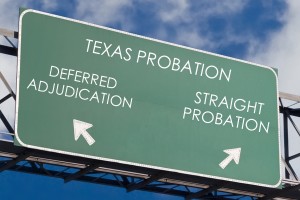 When we are counseling new clients, we routinely address the punishment range that is available for the charged offense and whether probation is an option in their case. It is important to note that all criminal offenses (except class C citations) are punishable by incarceration. However, first-time offenders and those charged with misdemeanors and non-aggravated felonies will often receive probation when prosecutors, judges, and juries agree that community supervision (probation) is a better alternative to jail time in the given situation. For some offenses, however, probation is not an option (see our previous article on
 Our Fort Worth criminal defense attorneys are routinely asked by family and friends of clients charged with State Jail Felony offenses about 12.44(a) and 12.44(b). Although it is sometimes elusive, our attorneys have had success in reducing State Jail Felony cases under Section 12.44. This article will discuss Sections 12.44(a) and 12.44(b) of the Texas Penal Code and explain why they are important to the State Jail Felony defendant.