
All Posts By

Luke Williams: Criminal Defense & Legal Insights

Police officers beside a red car with a question about drug possession and driver responsibility.

Do Drugs Found in a Car Automatically Belong to the Driver?

ByDrug Crimes

Driver vs. Passengers: Who Controlled the Middle-Compartment Drugs?

Illustration of two police officers standing beside a red car with text overlay questioning if drugs found in a car automatically belong to the driver, relevant to legal discussions on possession and drug laws.The Court of Criminal Appeals recently handed down an opinion dealing with legal sufficiency of evidence in the context of possession of a controlled substance when it was not found in the exclusive possession of the defendant. The issue facing the Court was whether Appellant Tate intentionally or knowingly possessed methamphetamine by exercising “control, management or care” of the methamphetamine and he knew it was methamphetamine. Tex. Penal Code §1.07(a)(39). The Court found that a rational jury could infer that the owner and driver of a vehicle possessed the controlled substance found in the vehicle in plain view even when there were two other passengers.

Tate v. State (Tex. Crim. App. 2016)

The Facts—Trial Court Found Sufficient Evidence

Tate was pulled over by Detective Beckham due to his outstanding warrants. When pulled over Tate had two passengers. Tate explained that he owned the vehicle but did not have any proof of ownership. Tate was arrested after officers confirmed his outstanding warrants. The police searched Tate, the two passengers, and their belongings, but did not find any weapons or contraband. During Officer Beckham’s inventory search of the vehicle, he found a syringe loaded with a substance later identified as .24 grams of methamphetamine. He found the syringe in “plain view” in a compartment underneath the air conditioner and heating controls.

Tate, the owner of the vehicle, was charged with possession of a controlled substance. At trial, Officer Beckham described the compartment as “directly to the right” of Tate, accessible to Tate and the front-seat passenger but not the backseat passenger. He also testified that even though he couldn’t tell exactly what the front-seat passenger was doing, he observed her moving a lot but never towards the compartment. Tate argued that one of the passengers put the syringe there when Tate was talking to Beckham at the rear of the vehicle. The trial court found Tate guilty, relying on Tate’s “self-purported” ownership of the vehicle and his proximity to the syringe.

The Court of Appeals Reversed the Trial Court’s Decision

The Court of Appeals held that there was “insufficient evidence to prove that Tate had intentionally and knowingly possessed methamphetamine.” The court rejected the proximity argument made by the trial court for two reasons:

  1. There was insufficient evidence to show the syringe was in the car before Tate got out.
  2. Officer Beckham observed the front-seat passenger moving a lot but couldn’t tell exactly what she was doing.

Additionally, the court said that since Tate’s ownership could not be proven it was insufficient evidence to prove possession.

The Court of Criminal Appeals Reverses the Court of Appeals—Holding Defendant’s Ownership and Control of Vehicle Where Controlled Substance was Found in Plain View and Within Defendant’s Reach is Sufficient Evidence to Convict for Possession of a Controlled Substance

The CCA held that a rational jury, with these facts, could reasonably infer that the syringe was in the car the entire time. In coming to that decision the Court relied on the fact that the jury believed Beckham’s testimony that he never saw her reach for the compartment, that the back-seat passenger could not reach it, Tate said he owned the vehicle, and that the syringe was found in plain view. Therefore, a rational jury could infer that Tate would be aware of items in his vehicle in plain view, thus find he intentionally or knowingly possessed the methamphetamine in the syringe.

In making this decision the Court relied on the Jackson standard: “Based on the combined and cumulative force of the evidence and any reasonable inferences therefrom, was a jury rationally justified in finding guilt beyond a reasonable doubt?Jackson v. Virginia, 443 U.S. 307, 318-19 (1979). The Court found that the court of appeals incorrectly applied this standard. The Court pointed to a few links that the jury could reasonably rely on to find Tate guilty, which include:

  1. the contraband was found in the vehicle that Tate owned and was driving;
  2. the contraband was in plain view and conveniently accessible to Tate; and
  3. the jury could reasonably believe Beckham’s testimony that the front-seat passenger did not reach over to the compartment and that the back-seat passenger could not reach the compartment.

Thus, when the standard is applied here a rational jury could find the evidence sufficient to find Tate intentionally or knowingly possessed the methamphetamine beyond a reasonable doubt.

Decision of the Criminal Court of Appeals—Evidence is Legally Sufficient Where a Rational Jury Could Infer Guild Beyond a Reasonable Doubt

The CCA found that the evidence at trial was sufficient for the jury to reasonably find Tate guilty beyond a reasonable doubt and that the court of appeals overstepped its bounds in assessing the legal-sufficiency of the evidence.

Clown holding finger to lips with text "DO NOT SHOOT THE CLOWNS!" emphasizing legal rights related to public clown appearances and self-defense issues.

Hold Your Fire…Don’t Shoot the Clowns! Yet.

BySelf-Defense

Evil clown holding a finger to lips with the text "DO NOT SHOOT THE CLOWNS!" and "YOUR RIGHTS IN THE FACE OF A NEW (AND NOT-SO-FUNNY) THREAT," relevant to legal discussions on public clown costumes and self-defense laws.Recently, a friend asked me if it was legal for individuals to dress as clowns and scare the public. He also wanted to know what would happen if he were frightened by one of these clowns and shot the clown. While not asking the latter in complete seriousness, these questions do bring up potential criminal law issues.
Is it Legal to Dress as a Clown in Public?

There’s no state law that we’re aware of that makes dressing up like a clown in public per se illegal.

The only potential laws that may be applicable to these situations would be individual city ordinances. A search of city codes in a handful of Texas towns around the Metroplex reveals no ordinance specifically prohibiting dressing like a clown in public. The only codes we are able to find related to costumes primarily had to do with a prohibition on costumes which fail to cover private areas in regards to sexually oriented businesses.

While dressing like a clown doesn’t appear to be per se prohibited, there is certainly the risk of breaking other laws while dressed as a clown. In addition, dressing like a clown in public and creating unnecessary alarm or panic could be deemed as disorderly conduct.

Texas Penal Code, Chapter 42 lays out a list of behaviors that could constitute up to a Class B misdemeanor. Class B misdemeanors can carry a penalty of up to 6 months in jail and up to a $2,000 fine. Sec. 42.01 (a)(2) states that a person commits an offense [of disorderly conduct] if he intentionally or knowingly makes an offensive gesture or display in a public place, and the gesture or display tends to incite an immediate breach of the peace. An offense of this nature is a Class C misdemeanor and carries the possibility of up to a $500.00 fine.

Can I use Deadly Force Against the Clown?

Let’s start with the simple answer of “NO”. While individuals may be suffering from coulrophobia (the fear of clowns), this condition does not give you a right to use deadly force – or any force for that matter – against an individual simply because he or she is standing in public dressed as a clown.

The more complex answer of “maybe” would have to do with the use of force for self-defense purposes. Section 9.31 of the Texas Penal Code provides for a justifiable defense at the time of trial for self-defense, so long as the type of force used is reasonable and necessary in the moment to protect against an attacker. Under this law, the actor must reasonably believe that the force is reasonably necessary to protect against the other’s use or attempted use of unlawful force. Simply observing a clown, with no weapon or threat to use a weapon, provides no grounds to use force – much less deadly force – against that clown.

In addition, the Penal Code does establish that force may be used to protect one’s own property. A person in “lawful possession” of real property or personal property is justified in using force if “the actor reasonably believes the force is reasonably necessary to prevent or terminate the other’s trespass on the land…” However, the use of deadly force to protect one’s own property is limited. “A person is justified in using deadly force against another to protect land or property if (1) he is justified under TPC §9.41; (2) he reasonably believes using the force is immediately necessary to prevent commission of arson, burglary, or robbery; and, (3) the actor reasonably believes that the land or property cannot be protected or recovered by any other means [such as by calling law enforcement]. Tex. Penal Code Section 9.42.

Using force for self-defense purposes is a serious response to dangerous and threatening situations – but certainly not an appropriate response to being “creeped” out.

Bottom Line | Do Not Shoot the Clown (Yet)

Dressing up as a clown and causing fear amongst the public is a stupid (and perhaps even illegal) idea. Our attorneys would advise you strongly against it. You certainly place yourself in the position of having your behavior scrutinized by law enforcement for any potential illegal activity. And, if you’re simply afraid of clowns, do your defense attorney a favor and please do not shoot them.  BUT…If the clown lays a hand on you or chases you through a park, all bets are off. You may use force against the clown to avoid an assault.

Stop and Frisk sign illustrating legal concepts related to reasonable suspicion and law enforcement actions, relevant to Furr v. State case discussion.

Reasonable Suspicion to Stop and Frisk Upheld | Furr v. State (2016)

ByReasonable Suspicion, Search & Seizure

Texas Court of Criminal Appeals Upholds a Stop and Frisk Case

Stop and Frisk sign highlighting legal implications of reasonable suspicion in criminal defense context.Furr v. State (Tex. Crim. App. 2016)

On September 21st the Criminal Court of Appeals decided Furr v. State. In Furr, the Court held that an anonymous tip was sufficiently corroborated to establish reasonable suspicion to stop and frisk Appellant Furr. To support the stop and frisk, the court noted that Appellant:

  • watched the officer as he drove by,
  • repeatedly looked at the officer as he walked away,
  • was nervous, anxious and sort of out of it,
  • appeared under the influence of drugs, and
  • did not initially respond as to whether he was armed.

Further, the Court stated it is not per se objectively reasonable for a police officer to execute a pat down of a suspect for weapons simply because they are accused of drug possession.

The Facts of Furr v. State

Corpus Christi Police Department received an anonymous tip that two men were doing drugs on a particular street corner, one dressed in all black and the other in a black shirt carrying a brown backpack. In response, an officer drove past the street corner. He observed two men that fit the description from the tip and noticed in his rearview mirror that the men were watching him as he drove by. The officer then approached the two men but one of the men, Furr, walked away into the nearby shelter, repeatedly looking over his shoulder at the officer. The officer described Furr’s actions as furtive, “like he was trying to get away.”

When another officer arrived, the officers made contact with Furr. Furr was described as nervous, anxious, evasive, and was sweating excessively. Furr did not respond when the officers initially asked if he had any weapons on him. Officers said he appeared “kind of out of it” and “like he was under the influence of a drug. As a result, for safety reasons, officers frisked Furr for weapons and found a glass crack pipe in Furr’s front pocket. When removing the pipe, the officer also found two syringes, and after arrest, two small balloons of heroin.

Furr was charged with possession of a controlled substance. He pled guilty, reserving his right to appeal after his motion to suppress was denied. Furr argued on Appeal that officers did not have reasonable suspicion to stop and frisk him and that the trial court erred by not granting the Motion to Suppress the search.

The Court of Appeals Affirmed the Trial Courts Decision

The court of appeals held that Furr’s nervousness coupled with the observation that he seemed to be under the influence of a drug sufficiently corroborated the tip to support the investigative detention and that Furr’s failure to initially respond about being armed coupled with the other circumstances justified the frisk.

The Criminal Court of Appeals Concluded that there Was Reasonable Suspicion to Detain and Frisk Furr.

1. The Analysis of the Detention

In order to detain a person, the police officer must have reasonable suspicion based on “specific articulable facts, when combined with rational inferences from those facts, would lead him to reasonably conclude that the person detained is, has been, or soon will be engaged in criminal activity.” Wade v. State, 422 S.W.3d 661, 668 (Tex. Crim. App. 2013). Anything that happens or that is observed before the detention will be considered in determining whether the officer indeed had reasonable suspicion to detain Furr.

Furr argued that the anonymous tip alone was not enough.  The Court, however, explains that if there had only been the anonymous tip, it would not have established reasonable suspicion, but here there was more. The Court identifies several independent observations:

  • Furr and the other man were at the specified location and matched the informant’s description.
  • The area was a “high drug, high crime” area.
  • Furr and the other man watched the officer as he drove past
  • When the officer approached the two, Furr walked away “furtively.”
  • When the officers came upon Furr in the shelter he was sweaty, nervous, anxious, and appeared out of it as if he was under the influence of a drug.

Thus, the reasonable suspicion here was not solely based on the informant’s tip, but instead that tip was corroborated by independent observations made by the police officers. Looking at the totality of these circumstances, the Court held that the officers had reasonable suspicion to stop Furr and investigate the information from the anonymous tip that Furr and the other man were using and possessing a drug.

2. The Terry Frisk

The Court rejected the State’s request to adopt a rule that it is, “per se, objectively reasonable for the police to pat down a suspect for weapons if they are accused of possessing drugs,” because reasonable suspicion to frisk a suspect cannot be established by accusations of drug possession alone.

The Court further rejects the State’s argument that the officer was objectively justified in patting Furr down for weapons because this was outside of a homeless shelter for two reasons: 1) Nothing in the record shows that the shelter was a homeless shelter; and 2) Even if it was a homeless shelter, the Court does not see a correlation between being armed and dangerous and being at a homeless shelter.

Even so, the Court ultimately agrees with the court of appeals that reasonable suspicion was established here because the anonymous tip was corroborated by all of the circumstances surrounding the officers’ interactions with Furr. Specifically, the Court noted the tip, personal observations by the officers and the high drug, high crime area would warrant a belief that the safety of officers and others was in danger.

DISSENT – Stop and Frisk Should Have Been Held Unlawful

Judge Meyers dissented from the majority and opined that the stop and frisk of Furr was unlawful and that the motion to suppress should have been granted. Judge Meyers concluded that neither Furr’s action of looking over his shoulder or the anonymous tip, alone or combined, were sufficient to establish reasonable suspicion. Thus, there was no need to analyze the legality of the frisk. Judge Meyers believes that the majority made its decision “not based on law but on the feeling that Furr should not get relief.”

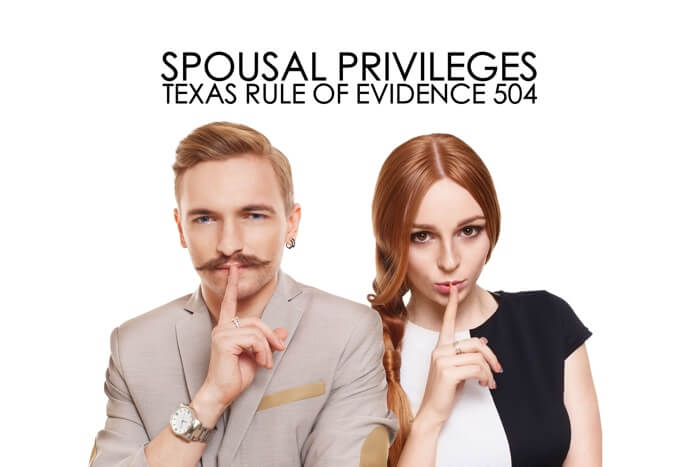
Spousal privileges and Texas Rule of Evidence 504 with a couple holding a finger to their lips, symbolizing confidentiality in marital testimony.

Can One Spouse be Forced to Testify Against the Other?

ByCriminal Defense, Jury Trial

Can My Spouse be Forced to Testify Against Me in a Criminal Trial in Texas?

Couple holding fingers to lips symbolizing confidentiality, with text "Spousal Privileges Texas Rule of Evidence 504," relevant to Texas marital communication and spousal immunity privileges in criminal trials.Everyone knows (or should know) of the attorney-client privilege which prohibits the calling of an attorney to testify as a witness against his client and protects the attorney-client relationship. But what about the husband-wife relationship? Are spouses afforded any protection from having their spouse testify against them in a criminal trial?
Yes. In Texas there are two “Husband-Wife” privileges that apply to the marital relationship: spousal immunity and the marital communication privilege. Many people are aware that certain privileges arise but often do not know exactly what protections these privileges provide. The following article discusses both of the matrimonial privileges in Texas.

See the full text of Texas Rule of Evidence 504 – Spousal Privileges

What is Spousal Immunity? How does Spousal Immunity work in Texas?

Spousal immunity is the privilege that exists in a criminal trial for the defendant’s spouse not to be called as a witness in certain situations.  Tex. R. Evid. 504(b). This privilege applies to spouses that are married to the defendant during trial and are asked to testify as to matters that occurred during the spouse’s marriage to the defendant. The non-defendant spouse holds this privilege; meaning he or she is the one who may invoke the privilege not to testify and it is ultimately his or her decision. Tex. R. Evid. 504(b)(3). Thus, if the spouse wants to voluntarily testify for the State, she may do so regardless of whether the defendant objects to the spouse’s testimony.

Spousal immunity does not stop the defendant from calling their current spouse as a witness. If a defendant chooses to do so the spouse cannot assert this privilege and will be required to testify. With that, if the defendant does not call the spouse and surrounding evidence suggests the spouse could testify to relevant matters the State is allowed to comment about that. 504(b)(2).

Exceptions to Spousal Immunity in Texas

There aretwo exceptions to spousal immunity in Texas.

  • First, the privilege does not apply in a criminal proceeding in which the defendant has committed against the spouse (e.g. Domestic Violence) or prosecution for bigamy.
  • Second, the privilege does not apply when the spouse is called to testify about matters that occurred before they were married to the defendant.

What is the Texas Marital Communication Privilege?

Under Texas Rule of Evidence 504(a), spouses have the privilege to prevent testimony of certain communications made during the marriage from one spouse to the other spouse.  Unlike the spousal immunity privilege, the marital communication privilege may be invoked by either the defendant or the spouse being called as a witness. Additionally, this privilege survives divorce; meaning it applies whether or not the defendant and the spouse are still married as long as the communications were made while they were married. Tex. R. Evid. 504(a)(2).

This privilege only applies to communications that were intended to be confidential, that is, they were made privately with no intent to disclose to anyone other than the spouse. A communication will still be confidential if someone overheard the conversation if the defendant spouse made the statement without knowledge or intent that the other person would hear the conversation. Basically, the requirement is that the communication made was intended for the spouse’s ears only.

Exceptions to the Marital Communications Privilege in Texas

There are two exceptions to the confidential communications privilege.

  • First, if the communication was made in whole or in part to aid in the commission of a crime the privilege does not apply.
  • Second, the marital communication privilege does not apply in prosecutions for crimes against the defendant’s spouse, any minor child, or a member of the defendant or defendant spouse’s household.

In conclusion, there are certain situations where matters occurring between spouses are kept within the sanctity of the marriage and will not come out in court. However, as you can see these privileges are very specific and it is important to be aware of what exactly is privileged and when such privileges apply.

See the full text of Texas Rule of Evidence 504 – Spousal Privileges

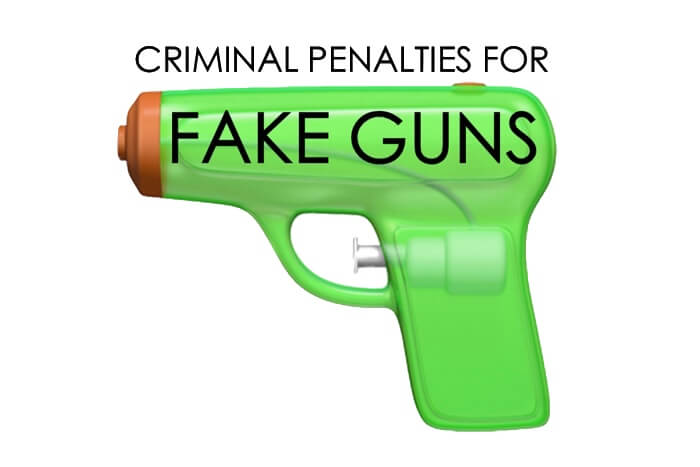
Green toy gun with text "CRIMINAL PENALTIES FOR FAKE GUNS," relevant to legal discussions on toy guns in Texas.

Is It a Crime to Use a Fake Gun or Toy Gun in Texas?

ByWeapons Charges

How Do Toy Guns or Fake Guns Fit Into the Criminal Justice System?

Green toy gun with text "CRIMINAL PENALTIES FOR FAKE GUNS," related to legal implications of using toy guns in Texas.In the wake of the recent rise in gun violence, Apple made a big announcement last week that the pistol emoji is being replaced with a water gun emoji. It is no secret that 2016 has been a year filled with gun violence from the shootings in Orlando to the police shootings in Dallas. As a result, gun control has become a hot topic.  While Apple has declined to comment on the change, many believe this is a conscious step for gun control advocacy and others believe this change was fueled because of the individuals facing criminal charges for the use of the gun emoji on social media or in text messages. This change poses the questions of whether, in Texas, it is a crime to point a fake gun at someone and whether you can be charged for a deadly weapon offense when you only used a fake gun or toy gun.
Can You Be Charged With A Deadly Weapon Offense For Pointing a Fake Gun or Toy Gun at Someone in Texas?

If you were to point an Airsoft gun out a car window towards a person in another car, would Texas law find that you committed assault or an aggravated assault? It depends. If there is uncontroverted evidence shown at trial that the “gun” used was actually a fake gun or toy gun then you could only be convicted of assault. However, if all that is presented at trial is your testimony that it was an Airsoft gun and the victim’s testimony that he was in fear because he believed it was a real gun, the issue can get more complicated.

Does a Toy Gun Fit Into the Definition of Deadly Weapon?

Under the Texas Penal Code, a defendant may be found guilty of aggravated assault if he “uses or exhibits a deadly weapon” for the purposes of threatening another with imminent bodily injury. TPC §22.01(a)(2) and §22.02(a)(2). The Texas Penal Code’s definition of deadly weapons includes “anything that in the manner of its use or intended use is capable of causing death or serious bodily injury.” To determine whether a fake gun or toy gun could possibly be found as a deadly weapon courts look to the broad definition of a “gun” which may include non-lethal devices. Arthur v. State, 11 S.W.3d 386, 389 (Tex. App.—Houston [14th Dist.] 2000, pet. refused). Such non-lethal devices are BB guns, blow guns, Airsoft guns, and water guns, among others. Id. A lot of these toy guns appear realistic or are easily modified to appear realistic which leads to confusion in a criminal case. So much so that in attempt to be proactive, New York’s gun laws require toy guns to be of bright color in order to avoid such confusion.

“A toy gun is not manifestly designed to inflict death or serious bodily injury.”

If uncontroverted evidence is presented that the “gun” used was simply a toy gun there cannot be a deadly weapon finding because “a toy gun is not manifestly designed to inflict death or serious bodily injury” no matter how realistic it appears to the victim and witnesses. Cortez v. State, 732 S.W.2d 713, 715 (Tex. App. 1987) . When it comes to BB guns and pellet guns it becomes more complicated. In Alonzo v. State, a trial for aggravated robbery, where a store manager was placed in fear when defendant brandished a BB gun, the Court found that there could be no deadly weapon finding because no evidence was produced to show that a BB fired from the gun was capable of causing death or serious bodily injury. Alonzo v. State, No. 07-12-00244-CR, 2014 Tex. App. LEXIS 3703, at *10 n.5 (App. Apr. 7, 2014). However, in Murray v. State, another trial for aggravated robbery, where an expert testified that the BB gun used by defendant was not a firearm but could potentially cause serious bodily injury, as warned in its manual, the court found that this evidence is sufficient to support an aggravated robbery conviction. Murray v. State, Nos. 05-13-00070-CR, 05-13-00084-CR, 05-13-00090-CR, 2014 Tex. App. LEXIS 6201, at *59 (App. June 9, 2014).

Ultimately, when it comes to carrying around toy guns, the best practice is to get one that looks as little like a real gun as possible to avoid any confusion. Because, as case law has shown us, if it looks like a deadly weapon, a court might find it to be a deadly weapon.

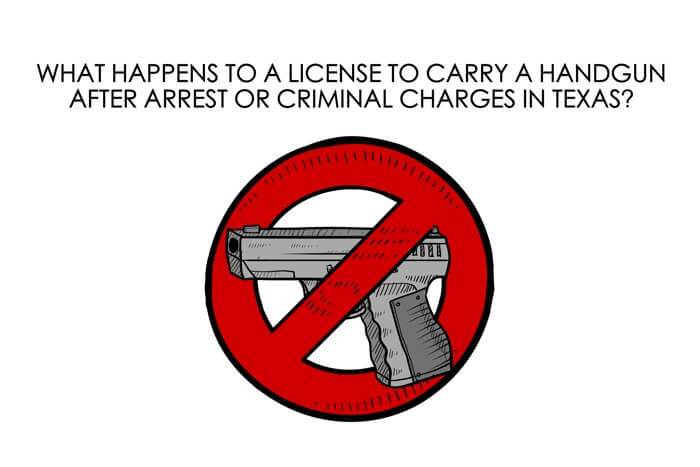
Image of a handgun inside a red prohibition circle with the text "WHAT HAPPENS TO A LICENSE TO CARRY A HANDGUN AFTER ARREST OR CRIMINAL CHARGES IN TEXAS?" relevant to legal implications of gun possession following criminal charges in Texas.

License to Carry a Handgun After Arrest or Criminal Charge in Texas

ByWeapons Charges

Image of a handgun inside a red prohibition circle with the text "What happens to a license to carry a handgun after arrest or criminal charges in Texas?" illustrating legal implications for handgun licensing in Texas.There are many consequences for persons arrested and charged with a crime in Texas.  One of the often overlooked considerations is whether and to what extent a criminal accusation impacts one’s authorization to carry a weapon with a License to Carry (LTC), formerly a Concealed Handgun License (CHL). The reality of gun possession in today’s political climate is that the restrictions are many and increasing.


Texas has very specific guidelines regarding qualifications for obtaining a License to Carry a Handgun. But, what most do not realize is that there are also strict regulations in place while a person possesses that license – especially if a person is arrested and charged with a crime.

What happens to my License to Carry or CHL if I’m arrested and charged with a crime?

Texas Government Code 411.187 spells out the scenarios that require the Texas Department of Public Safety (DPS) to suspend one’s LTC or CHL. In regards to criminal charges, the department SHALL suspend an LTC if the license holder is charged with the commission of:

  • a Class A or Class B Misdemeanor;
  • an offense under Section 42.01 of the Texas Penal Code (Disorderly Conduct); or
  • any Felony offense.

In addition, a person’s LTC or CHL will be suspended if a person is arrested for any offense involving family violence or disorderly conduct and is subject to an active protective order.

How long will my License to Carry be suspended if I’m arrested and charged with a crime?

Unfortunately, the law is clear that the suspension will remain in place until the dismissal of the charges or for the duration of the protective order (in a family violence case.) Texas Government Code 411.187(c)(3).

What happens to my LTC or CHL if I’m convicted of the charge?

If you are convicted of any felony or of the offense of “Unlawful Carrying of a Handgun by a License Holder,” your license to carry a handgun will be revoked permanently. Texas Government Code 411.186 (3) & (4).

If you are convicted of a class A or class B misdemeanor, your license will remain suspended and you will only be able to re-apply for a new LTC when you once again meet the initial eligibility requirements.

A person is eligible for a LTC if they have not, in the five years preceding the application, been convicted of a Class A or Class B misdemeanor or disorderly conduct. What this essentially establishes is a 5-year waiting period from the time of your conviction to the time when you can apply again for your handgun license.

What about being convicted of offenses involving family violence?

Offenses involving family violence carry more significant consequences. If you are convicted of a Class C, Class B or Class A misdemeanor involving family violence, then Federal Law prohibits you from owning or possessing a firearm. Also, under Federal Law, even a plea to deferred adjudication constitutes a conviction and bars a person from owning or possessing a firearm. Because of this, a conviction for any misdemeanor involving family violence would prohibit you from ever being eligible to obtain your concealed handgun license in Texas. See Texas Government Code 411.172 (a) (9).

Can Rougned Odor Be Charged With Assault for Punching Jose Bautista?

ByAssault

Did Rougned Odor Assault Jose Bautista Under Texas Law?

If you live in Texas, have a pulse and have absolutely any contact with the outside world, you are very aware of the incident that occurred between Texas Ranger’s infielder Rougned Odor and the Toronto Blue Jays’ Jose Bautista during last Sunday’s game. If you have no idea what I’m referring to, STOP reading, watch this video and then come back and finish reading. Bautista was attempting to break up a double play at second base by taking a hard slide at Odor’s legs (which Odor avoided). After the slide, Bautista quickly stood to his feet and squared up to Odor. Odor pushed Bautista and both men went to throw a punch, but Odor was quicker and landed a strike directly on Bautista’s jaw, causing Bautista’s sunglasses to fly and the benches to clear in an all-out brawl between both teams. Under Texas law, if Odor caused Bautista physical pain or even if this physical contact was offensive, Odor could theoretically be charged with assault.

Assault Under Texas Law

Some know (but most don’t) that it doesn’t take much to be charged with a Class A misdemeanor Assault in Texas, even less for a Class C Assault. A person commits the offense of assault in Texas if that person intentionally, knowingly or recklessly causes bodily injury to another. Bodily injury as defined by Texas law means physical pain, illness or any impairment of physical condition.

Theoretically, a simple pinch could result in a class a misdemeanor assault if it causes another pain. The law further goes on to provide that a person commits the offense of assault if a person causes physical contact with another when the person knows or should reasonably believe that the other will regard the contact as offensive or provocative (that is a Class C and is punishable by fine only).

What are Rougned Odor’s Defenses to a Charge of Assault?

While it is highly unlikely (and unprecedented in a sports context) that Odor would be charged with assault for his actions against Bautista on Sunday, he does have some viable defenses under Texas law.

Self-Defense

In analyzing the situation, it could be argued that Odor’s actions were a result of self defense. Texas law provides that a person can be justified in using force against another when and to the degree the actor reasonably believes the force is immediately necessary to protect the actor against the other’s use or attempted use of unlawful force. Watching the incident again, one can see that Bautista clearly committed an illegal slide by attempting to interfere with Odor’s legs. Had Odor not been able to dodge the attempt, it’s possible that this type of slide could have caused bodily injury to him, hence the reason this type of slide is illegal. Immediately upon rising to his feet, Bautista turns to face Odor in what could be perceived as a threatening stance. Odor, in an effort to distance Bautista from himself gives Bautista a shove to the chest. The shove results in Bautista winding his right hand back which could also be reasonably perceived as preparing to strike Odor. Odor, with reactions obviously much quicker than the sluggish Bautista, literally beats him to the punch and ensures that no further harm can befall him at the hands of Bautista. A reasonable jury could conclude that Odor’s reactions were justified and immediately necessary to protect himself from Bautista’s efforts to cause him harm.

Consent

In addition to the potential defense of self defense, Odor could also raise the defense of consent. Under Texas law, a victim’s effective consent or the actor’s reasonable belief that the victim consented to the actor’s conduct is a defense to an assault charge as long as the conduct did not threaten or inflict serious bodily injury. In addition, consent is a defense to assault if the victim knew that the conduct was a risk of his occupation. Could a jury reasonably conclude that Bautista consented to the assault due to the fact that he should have known that a solid right hook to the jaw was a risk of his occupation – especially following an illegal slide? There are unwritten customs in professional baseball. Anyone who’s followed professional baseball for any significant amount of time has witnessed a fight break out in the course of such extreme competition. Ultimately, a jury could conclude that under these laws there was consent and that Bautista should have known that this type of action was a risk of his occupation.

Will Rougned Odor be Criminally Charged with Assault?

No, he won’t. Fights like this happen on the field of professional sports on a fairly regular basis (even more so on the ice during professional hockey games). In addition to clear defenses, law enforcement has broad discretion to determine whether a crime has been committed and prosecutors have broad discretion whether to pursue cases or not. It’s clear that that discretion is used regularly when these things happen (and I’m sure my prosecutor friends will comment and give even more reasons why this type of thing would never warrant criminal charges). Regardless of the national media coverage of the fight, Odor is now a folk hero in DFW. No, the only indictment being issued from this fight is an indictment on Bautista’s prior behavior and unsportsmanlike conduct. I’m not sure if this saga is over, but I would have to say that Bautista’s sentence has now been served — right off the end of Rougned Odor’s right fist.

Johnny Manziel at press conference with text overlay announcing grand jury hearing for his domestic violence case.

Why is Johnny Football’s Case Going To The Grand Jury?

ByDomestic Violence, Grand Jury

Is it unusual for a misdemeanor case go to a grand jury? Simply put, YES.

Johnny Manziel at a press conference with text overlay announcing grand jury hearing for his domestic violence case.Most misdemeanor cases in Texas are charged by way of a document called an ”information.” An information does not have to be issued by a grand jury. The information can simply be prepared and reviewed by a District Attorney and then subsequently filed in a court with proper jurisdiction. Felony cases, on the other hand, must be indicted by a grand jury unless a defendant chooses to waive indictment and proceed without one.

What is a Grand Jury?

A grand jury in Texas is a group of 12 lay people qualified under the Texas Code of Criminal Procedure. These people must be citizens of the county in which the grand jury sits amongst other basic qualifications. Ultimately, the grand jury’s job is to listen to facts presented to them regarding the cases that they review and determine if probable cause exists for the State to continue forward to court. The grand jury does not have to be convinced beyond a reasonable doubt as to the person’s guilt; they simply need to determine whether it is probable that the person committed the alleged offense based on the facts and testimony presented.

People often mistake a grand jury for a petit jury like they see in movies and television. A grand jury is very different from the juries that hear and decide the final trial. During a grand jury proceeding, there are no arguing defense attorneys or heated opening and closing statements, and there is no judge that physically presides over the process. The grand jury meets together in private room with prosecutors and witnesses. A major distinction of the grand jury is that all grand jury proceedings are secret. The Texas code of criminal procedure clearly states that all grand jury proceedings “shall be secret.” Another basic distinction is that the grand jury is organized and run solely by the district attorney’s office. The grand jury is essentially a tool used by and for the district attorney.

Why is Johnny Manziel’s Misdemeanor Allegation Going Before the Dallas Grand Jury?

So – now that you know what a grand jury is and what they do – what does this mean for Johnny Football? If the filing of an “information” is the normal course of action for misdemeanor cases in Texas, why will Dallas County grand jurors review Johnny Manziel’s case tomorrow? That answer rests solely with the Dallas County District Attorney. We can only speculate as to why this may be.

Manziel’s case is obviously high profile for Dallas. If the Dallas DA’s office were to take the case and simply file it with an information or not reject it without the review of the grand jury, they face scrutiny from both sides of the aisle. If they file the case, Manziel’s supporters would claim that the DA’s office is trying to unfairly make an example of his celebrity status and constant publicized antics. However, if they refuse to file the case, Manziel’s critics and domestic abuse activists might claim that his popularity, money, and status are unfairly allowing him out of another sticky situation.

So, what better way to take the District Attorney’s name off of the ultimate decision than to let the Dallas County community – a.k.a. the grand jury – make it? More than likely this is precisely why, unlike most other misdemeanor cases in Dallas County, the grand jury will review Johnny Manziel’s case.

Does this make Johnny Manziel’s Case a Felony?

No. A grand jury can hear a misdemeanor case just like it can hear a felony case, we just do not see grand juries used for misdemeanor cases very often. If the grand jury votes to issue an indictment, Manziel only faces a misdemeanor charge for Assault (Bodily Injury) to a Family Member.  This offense is a Class A misdmeanor which carries a punishment range of 0-365 days in county jail and a fine up to $4,000.

Ultimately, this may just be the fairest way for the State to proceed and review Johnny Football’s case and precisely the right time to use the grand jury for a misdemeanor case. As a defense attorney, I wish all of my misdemeanor clients got the benefit of a grand jury review, but the volume of cases is just too high for the State to be expected to process all felonies and misdemeanors through a grand jury.

The jury is still out on Johnny Football’s NFL career, but tomorrow the Dallas county grand jury gets to decide if even more juries lie ahead for this once seemingly-invincible Heisman Trophy winner.

Links to more Manziel Grand Jury Articles:

Facebook logo on smartphone with text highlighting social media as evidence in criminal cases.

Facebook Likes and Twitter Tweets as Evidence in a Criminal Case

ByCriminal Defense

Smartphone displaying Facebook logo, emphasizing social media's role as evidence in criminal cases, relevant to legal discussions by Howard Lotspeich Alexander & Williams, PLLC.In the age of social media it seems more and more that our identities are being fast tied to what we post, like, love, or retweet on social media. Our firm handles criminal cases on a daily basis and in the course of our work we’ve seen an increasing reliance by law enforcement and prosecutors on social media websites like Facebook, Twitter, and Instagram. More often than not, investigators are scrolling through the entirety of a person’s social media profiles scouring the information for incriminating statements, pictures or conversations. A Facebook picture or an Instagram post that one might consider innocent, humorous, or obscure could end up being a key piece of evidence used against that person in a court of law.

Here’s what you need to know about social media and the law.

Anything you post on Facebook, Twitter, and Instagram can and will be used against you.

Period. The general rule that citizens need to know is that by exposing information about yourself on social media you are essentially waiving your privacy rights. A person can’t scream at the top of their lungs in an open room the most private fact about themselves and then expect it to go unheard. The same is true about social media. By posting on sites like Facebook, Twitter,and Instagram, you are essentially consenting to whatever information you disclose to be made public.  Even if your profile is set to private, your friends could end up sharing your content. Once public, that information is now available to everyone…including the government. If you are under investigation or suspect you might be under investigation for a criminal offense, and you have social media profiles, never post anything if you think it has even a remote possibility of hurting your case.

What can be done to protect my privacy on sites like Facebook, Twitter, and Instagram?

Don’t post! The first thing you can do is to place a limit and a premium on your social media activity. Some people feel like social media websites are the perfect forum for venting frustrations, making off-color jokes or personally attacking others. If you think about what you are posting in terms of who might potentially see your post, then you should limit the things you say. Remember, anything you post will be considered public information.  If the temptation is too strong to post on social media, then you should really consider disabling your account altogether (at least while your criminal case is pending).

Can Social Media Privacy Settings be used to protect my information?

Privacy settings are the second step in preventing the government or any other unwanted viewers from obtaining your social media information. The majority of the more popular social media websites allow you to limit who can see your information and what can be seen. Putting strict limits on who and what can be seen on your Facebook, Twitter, and Instagram pages can be very effective in preventing unwanted eyes. But is it enough? For the general public, yes, it is. Further, law enforcement agents typically do not have special privileges to see information that has been set to “private” either. But, there are other ways of getting your information and viewing your profiles. Law enforcement has been known to create fake profiles with attractive pictures to entice users into accepting friend requests and allowing them to view information intended for friends only. There is nothing that legally prevents law enforcement from taking such actions.

If my Facebook, Twitter, and Instagram accounts are set to “Private,” is that enough to protect my information?

Ultimately, no. Even if a person hasn’t unwittingly accepted a friend request from an officer or agent and has limited access to their profile via privacy settings, law enforcement can still get a subpoena, court order or search warrant for your social media information.

According to their website, Facebook will only disclose records in accordance with the Stored Communications Act (“SCA”), 18 U.S.C. Sections 2701-2712 and in response to:

  • A valid subpoena issued in connection with an official criminal investigation is required to compel the disclosure of basic subscriber records (defined in 18 U.S.C. Section 2703(c)(2)), which may include: name, length of service, credit card information, email address(es), and a recent login/logout IP address(es), if available.
  • A court order issued under 18 U.S.C. Section 2703(d) is required to compel the disclosure of certain records or other information pertaining to the account, not including contents of communications, which may include message headers and IP addresses, in addition to the basic subscriber records identified above.
  • A search warrant issued under the procedures described in the Federal Rules of Criminal Procedure or equivalent state warrant procedures upon a showing of probable cause is required to compel the disclosure of the stored contents of any account, which may include messages, photos, videos, wall posts, and location information.

So, even if your privacy settings won’t allow anyone to view your profile, law enforcement agencies may still be able to get that information by way of a subpoena, court order or search warrant.

Assume that unwanted eyes will see what you post on Twitter, Facebook, and Instagram.

If you’re under investigation for a criminal offense or charged with a criminal offense, you need to assume that unwanted eyes will see what you post on Twitter, Facebook, and Instagram. Our attorneys have handled cases involving cases where the government has used Facebook, Twitter, and Instagram postings against our clients. We don’t want that to happen to you. Call one of our attorneys and speak to us about what you can do to protect your information and ultimately your rights.

NOTE: The United States Supreme Court has confirmed that the police CANNOT search your cell phone to discover Social Media evidence, text messages, phone call, or anything else without a proper search warrant.

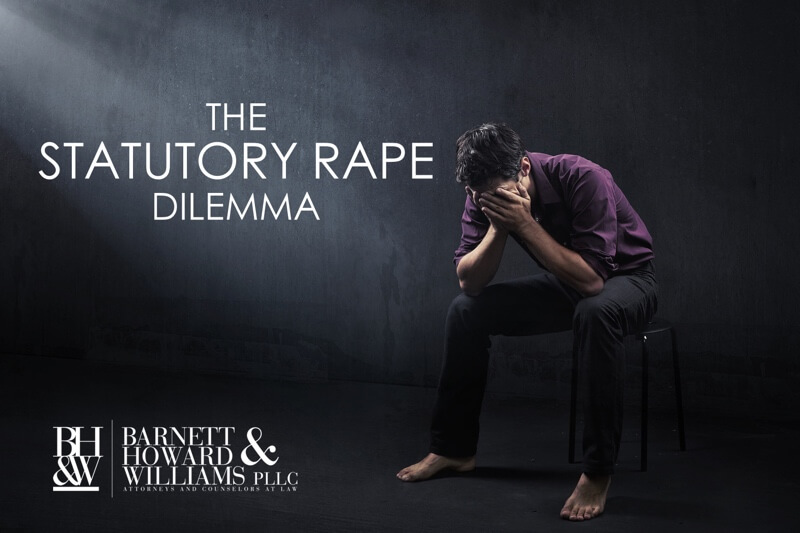
Man sitting on a chair with head in hands, expressing distress, with the text "THE STATUTORY RAPE DILEMMA" above and the logo of Howard Lotspeich Alexander & Williams, PLLC at the bottom, reflecting the complexities of statutory rape laws in Texas.

The Statutory Rape Dilemma in Texas

BySex Crimes

Man sitting on a chair with head in hands, expressing distress, with the text "THE STATUTORY RAPE DILEMMA" and branding of Howard Lotspeich Alexander & Williams, PLLC in a somber setting.Of the various types of criminal cases we defend in Fort Worth, Texas, Statutory Rape can be one of the more frustrating. First, a word of clarification; the term “Statutory Rape” does not actually appear in the Texas Penal Code. What I refer to as Statutory Rape is actually Sexual Assault of a person under 17 years of age (and over 14 years of age) under Section 22.011(a)(2). To understand what I mean about our frustration, consider this example (based on a true story).

The Story of Sam | A Common Statutory Rape Example

A 22 year-old attractive young man, let’s call him Sam, is filling up his car (a BMW) at a gas station when an attractive young woman (Nadia) approaches him and tells him how she admires his car. Nadia then tells Sam that she thinks he is cute and gives Sam her phone number. Nadia is younger than Sam, but he’s not exactly sure how much younger. She is fully developed and is dressed in mature clothing. Over the next few days Nadia and Sam send each other text messages. The messages are flirty at first and then Nadia turns the conversation toward sexual things. Sam is a bit surprised by how forward Nadia is, but he welcomes the banter. Sam then asks Nadia how old she is because he’s always heard the old adage “16’ll get ya 20.” Nadia tells Sam that she is 18 and says that she’ll show him an ID indicating the same when they get together. She then asks Sam to come pick her up in his BMW and take her to a park near her house. Sam agrees.

At the park, Nadia shows Sam her Texas ID, which says that she is indeed 18 years old. Sam and Nadia then engage in consensual sex, after which Sam takes Nadia home. Sometime during the next few days, Nadia’s mother gets ahold of her cell phone and notices the messages between her and Sam. When she confronts Nadia, Nadia admits that she and Sam had sex. Nadia’s mother is furious and calls the police to report Sam for child sexual assault. The police conduct a quick investigation wherein Sam admits to having sex with Nadia. After all, he thought he was doing nothing wrong since she was 18. The police then arrest Sam for statutory rape for having consensual sex with a 16 year-old. Nadia is only 16.

Statutory Rape is a Strict-Liability Offense

Statutory rape (Sexual Assault under Texas Penal Code Section 22.011(a)(2)) is a strict liability offense in Texas. What does this mean? It means that a person is guilty if:

  1. The person is older than 18 years of age; and
  2. The person intentionally or knowingly has sex with someone younger than 17 years of age.

*There is an exception to the law is the actors are less than 3 years apart in age, meaning that if the minor is 16 and the partner is 19 (but not more than 3 years older) then he will not be charged.

Other than the 3-year age gap exception, there are no other exceptions to statutory rape in Texas, hence strict liability. There is no Consent defense; consent is irrelevant for this offense. There is not Mistake of Fact defense when the minor lies about her age and no Mistake of Law defense for when the actors don’t know what the age of consent is in Texas. That is why we call this one of the more frustrating offenses in the Texas Penal Code.

Let’s take Sam’s case. Sam genuinely had no idea that Nadia was only 16. In fact, short of asking for her birth certificate, he showed due diligence in finding out her age before they had sex. He asked about her age and even saw her identification, which we now know was a fake ID. How can the state punish Sam when he tried to do everything right (fornication arguments aside)?

We often encounter this scenario or one like it. Our Fort Worth sexual assault defense attorneys have been able to get charges reduced under these circumstances. Many times, if we are hired before the grand jury considers the case, we will request to make a presentation to the grand jury and highlight these facts, urging the grand jury to no-bill the case and dismiss it. When we are negotiating with prosecutors on these types of cases, we do everything we can to get the charge amended to a different offense that doesn’t require sex offender registration (e.g. Injury to a Child). We have had considerable success in doing this, but it can be fact dependent (and personality dependent).

Sex Offender Registration for Consensual Sex with a Minor

Make no mistake; a conviction for statutory rape requires the offender to register as a sex offender in Texas. In fact, Statutory Rape is a lifetime registration offense. So although it may seem like a minor offense based on an age technicality, it is terribly serious. Further, even if your attorney is able to get your case reduced to a non-sex offense and you do not have to register as a sex offender, the court might still require you to undergo sex offender caseload on probation. You should fight this requirement as the sex offender caseload can be extremely difficult (and frustrating), especially when you never had the intent to commit a crime in the first place.

Free Consultation with a Fort Worth Statutory Rape Defense Attorney

If you are under investigation or have been charged with a Statutory Rape offense, contact our team of Tarrant County criminal defense attorneys. Our attorneys have the knowledge and experience to defend your future and your name with care and compassion. Contact us today at (817) 993-9249.