
Tag

Shoplifting

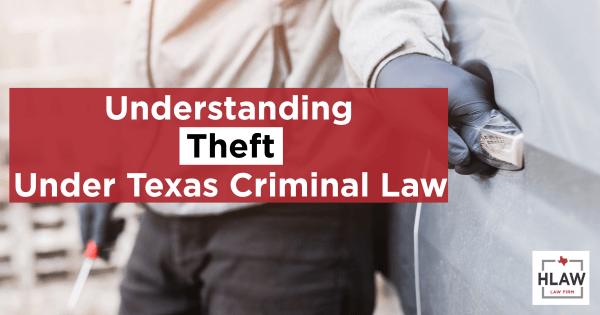
Person attempting vehicle theft with gloved hands and a tool, representing theft crimes in Texas

Understanding Theft Under Texas Criminal Law: A Comprehensive Guide

By Theft
Person attempting vehicle theft with gloved hands and a tool, representing theft crimes in Texas

Know your rights: Theft charges in Texas range from petty shoplifting to felony offenses—get the legal defense you deserve.

In Texas, theft is defined under Texas Penal Code § 31.03 as the unlawful appropriation of property with intent to deprive the owner of it. But that simple definition masks a wide range of possible charges—from shoplifting a T-shirt to stealing corporate funds. The consequences vary significantly depending on the value of the property, the method of theft, and whether aggravating factors are involved.

In this guide, we break down the different types of theft charges in Texas, the applicable laws, penalties, and why having an experienced Texas theft defense attorney is critical to protecting your rights.

Types of Theft Charges in Texas

1. Misdemeanor Theft (Sometimes Referred to as “Petty Theft”)

Legal Definition: Theft of property valued at less than $2,500, under Tex. Penal Code § 31.03(e).

Charge Level and Penalties:

  • Class C Misdemeanor: Property worth less than $100
    • Fine up to $500
  • Class B Misdemeanor: $100 to $749 or if the defendant has a prior theft conviction
    • Up to 180 days in jail and a $2,000 fine
  • Class A Misdemeanor: $750 to $2,499
    • Up to 1 year in county jail and a $4,000 fine

2. Felony Theft (Including Aggravated Theft)

Legal Definition: Theft becomes a felony when the value of the stolen property exceeds $2,500 or involves certain protected items, like firearms, livestock, or election ballots.

Felony Theft Levels:

  • State Jail Felony: $2,500–$29,999
    • 180 days to 2 years in state jail, up to $10,000 fine
  • Third-Degree Felony: $30,000–$149,999
    • 2–10 years in prison
    Second-Degree Felony: $150,000–$299,999
    • 2–20 years in prison
  • First-Degree Felony: $300,000 or more
    • 5–99 years or life imprisonment

Aggravating Circumstances:

  • Offense against elderly or nonprofit entities
  • Use of deception or breach of fiduciary duty
  • Use of a weapon (often charged separately or elevates to robbery)

3. Robbery and Burglary: Theft With Force or Intrusion

Although distinct offenses, robbery and burglary often stem from theft-related conduct and are charged under separate statutes:

Robbery – Tex. Penal Code § 29.02

  • Involves intentionally or knowingly causing bodily injury or threatening another while committing theft.
  • Second-Degree Felony: 2–20 years in prison

Aggravated Robbery – Tex. Penal Code § 29.03

  • Use of a deadly weapon, serious bodily injury, or offense against elderly/disabled person.
  • First-Degree Felony: 5–99 years or life imprisonment

Burglary – Tex. Penal Code § 30.02

  • Entering a building without consent with intent to commit theft, assault, or another felony.
  • Can range from a State Jail Felony (uninhabited buildings) to a First-Degree Felony (habitations with intent to commit felony).

4. Shoplifting

Shoplifting is a form of theft prosecuted under the same § 31.03 statute, but it frequently involves unique elements like store surveillance, witness statements, and security procedures.

Factors Affecting the Charge:

  • Value of merchandise
  • Use of devices to shield items from detection (which may elevate charge to Organized Retail Theft under Tex. Penal Code § 31.16)
  • Prior convictions can increase punishment range

Diversion Programs: In some counties (and in Tarrant County, Texas), first-time offenders may be eligible for pretrial diversion or deferred adjudication, avoiding a conviction if successfully completed.

5. Receiving or Possessing Stolen Property

Texas law treats knowingly receiving or possessing stolen property the same as stealing it, under Tex. Penal Code § 31.03(b).

Prosecution Must Prove:

  • Property was stolen
  • Defendant knew or should have known it was stolen

Penalty Level: Based on value of property and criminal history, ranges from Class C misdemeanor to first-degree felony

Penalties for Theft in Texas: A Breakdown

  1. Value of Property: The main driver of the charge level—from minor fines to multi-decade prison sentences.
  2. Prior Convictions: Repeat offenses often elevate even low-value thefts to higher classes of misdemeanors or felonies.
  3. Special Victims or Circumstances:
  1. Restitution and Civil Liability: Courts often order restitution, and under the Texas Theft Liability Act (Tex. Civ. Prac. & Rem. Code § 134.001), victims can sue offenders for civil damages.

Why You Need a Skilled Theft Defense Attorney in Texas

Theft charges may seem straightforward, but legal defenses are often nuanced:

  • Lack of intent to permanently deprive
  • Mistake of fact (believing the item belonged to you)
  • Illegal search or seizure (4th Amendment violations)
  • Coercion or duress

An experienced Texas theft lawyer can:

  • Assess the prosecution’s evidence
  • Challenge constitutional violations
  • Negotiate a reduction or dismissal
  • Fight for a favorable plea or trial outcome

At the HLAW Firm, we take a client-centered approach to every criminal case. Whether you’re a first-time offender or facing felony theft, we’re here to protect your rights and your future.

Conclusion

Theft charges in Texas cover a wide spectrum—from simple shoplifting to major corporate embezzlement. But regardless of the value or circumstances, a conviction can carry serious consequences for your freedom, record, and reputation.

If you’re facing any type of theft charge, don’t navigate the legal system alone. Contact the HLAW Firm today to schedule a confidential case review and get the strong, experienced representation you deserve.


Christmastime Arrests Texas

Top 5 Reasons for Arrests During the Christmas Holiday Season

By Criminal Defense

Christmastime Arrests TexasWhen you think about the Christmas season, you probably think about family time, presents, good food, and celebration. We think about those things too, but as criminal defense attorneys, we also think about the reasons that some of our clients get arrested during the holiday season. For this article, we took a look at the last 8 years of holiday season arrests (for clients that we represented) and compiled an (anecdotal) list of the top 5 reasons that folks get arrested during the Christmas/New Year’s season. Our goal is that this list will serve as a warning, so that your holiday season can be filled with the good stuff, rather than jail, bail, and calls to our office. Here goes:
5. Shoplifting

Many retailers slash their prices and offer steep discounts in the weeks leading up to Christmas and even bigger discounts after Christmas, but we have yet to see any retailer offer the “five finger discount” for their merchandise. Regardless, we see plenty of shoplifting cases during the Christmas season, making it our #5 reasons that people get arrested during Christmas. Depending on the regular price value of the item (not the discounted price), shoplifting theft charges can range from misdemeanors to felonies. Learn more about Theft law in Texas here.

4. Package Theft

In a similar vein to shoplifting, our #4 reason for holiday arrests is package theft. Many shoppers choose the convenience of online shopping and have their Christmas purchases delivered right to their front door. Some people see this as an easy target, following behind UPS or FedEx trucks to steal those would-be Christmas gifts from the front porch. However, with the increase in doorbell cameras, it is getting easier to catch the porch pirates in the act. Further, some law enforcement agencies have begun using dummy packages to bait thieves into getting caught. Package theft can range from a misdemeanor to a felony depending on what unknown treasure lay inside the brown box.

3. Air Travleing Trouble (Guns, Drugs, and Intoxication)

Going to visit grandma can require air travel for many families. This means that thousands more people than usual flood through DFW Airport between Thanksgiving and New Year’s. It matters not from where these travelers hail. From Maryland to Oregon to France, if a person is arrested at DFW Airport, their case will be filed in Tarrant County, Texas and they will have to travel back to DFW to attend court. During the holidays, we see a surge in airport arrests when people bring items into the airport that are not allowed or when folks over indulge during a layover. Specifically, we see the following airport arrests:

Even if the state from which a traveler is coming has legalized marijuana and the state to which they are traveling has legalized marijuana, if they are caught possessing marijuana in the airport, they will be arrested and charged. The combination of airport gun arrests, airport drug arrests, and airport public intox arrests make these types of cases our #3 reason for holiday arrests.

2. Assault Family Violence

In the movie Christmas Vacation, Clark Griswold showed an enormous amount of restraint when his extended family pushed him to the limit (especially Cousin Eddie), but not everyone is blessed with such a cool head. Christmas time brings added stressors into the family environment that can sometimes lead to verbal or physical altercations between family members, so much so, that these arrests rank at #2 in our book. Depending on the nature of the assault, a domestic violence arrest can be charged as a misdemeanor or a felony. Learn more about Family Violence under Texas law.

1. Driving While Intoxicated

With all of the Christmas and New Year’s parties and the increase in No Refusal Weekends, it is not hard to guess that DWI arrests are #1 on our list. Driving While Intoxicated in Texas can range from a misdemeanor (if it is a first or second offense) to a felony (if there is a child in the car or if the person arrested has been convicted of DWI twice in the past). Our advice is to plan ahead and do not even take your car to a Christmas party when you plan to drink. Catch a ride from a friend or take an Uber or Lyft. That would be a lot cheaper than hiring an attorney and a lot less hassle too. Learn more about Texas DWI law here.

We Hope You Never Need Us, But We’re Here if Your Do.

We wish you a very merry Christmas and a happy New Year. As always, we hope you never need us to represent you or one of your loved ones for a criminal offense. This is even more true during the Christmas season. Hopefully this list will help you avoid trouble that looms during the holiday season. If you do happen to need us, we are only a phone call away at (817) 993-9249.

Organized Retail Theft Lang

Organized Retail Theft: Does it Take Two to Tango? | Lang v. State (2018)

By Theft

Organized Retail Theft LangThe Court of Criminal Appeals recently handed down an opinion on the applicability of Texas’ organized retail theft statute. The issue facing the court was whether the statute defining the offense of organized retail theft permits a conviction for ordinary shoplifting by a single actor rather than requiring a group or collaborative effort.


CCA Opinion: Lang v. State (Tex. Crim. App. 2018)

The Facts—Defendant Stole Merchandise from HEB and Was Convicted Under Texas’ Organized Retail Theft Statue.

Defendant was shopping at HEB when an employee noticed her placing merchandise into reusable shopping bags. Some of the bags were inside of Defendant’s cart and one was tied to the side of her cart. The employee thought this behavior was unusual, so she kept an eye on Defendant. When Defendant went to check out, the employee observed her place all but one of the reusable bags onto the conveyor belt—leaving the bag that was tied to the side of the cart untouched. After paying, Defendant began to leave the store. Defendant was subsequently stopped by employees and questioned about the bag that was tied to her cart, which was full of unpaid merchandise. The unpaid items totaled $565.59, whereas the paid-for merchandise totaled only $262.17. At that time, the store called the police and Defendant was eventually arrested, charged, and convicted of organized retail theft.

Defendant appealed her conviction arguing that the evidence was legally insufficient to support her conviction. More specifically, Defendant claimed that the offense of “organized retail theft” could not be committed by a single actor because the statute requires group action or collaborative effort. The court of appeals rejected this argument for the reasons listed below.

Court of Appeals Affirms the Trial Court’s Decision—Claiming that Organized Retail Theft Does Not Require Multiple Actors.

In making their decision the court of appeals looked to the statute’s language, which provides that a person commits an offense if she “intentionally conducts, promotes, or facilitates an activity in which the person receives, possesses, conceals, stores, barters, sells, or disposes of: (1) stolen retail merchandise; or (2) merchandise explicitly represented to the person as being stolen retail merchandise.” The court contended that nowhere in the statutory language was there explicit terms requiring group behavior. As a result, the court held that the language was not ambiguous and used plain meaning to interpret the statue.

Using dictionary definitions, the court concluded that the statutory terms “conducts, promotes, or facilitates,” did not require multiple actors. The court also explained that reading those statutory terms in context, established that what is conducted, promoted, or facilitated is an “activity,” not another person. Thus, “leaving the store after stealing the retail merchandise” was sufficient activity to meet the elements required by the statute. Accordingly, the court of appeals upheld the defendant’s conviction and another appeal ensued.

Court of Criminal Appeals Reverses and Remands Case—Determining that Organized Retail Theft Requires Multiple Actors.

On appeal Defendant maintained that the offense of organized retail theft could not be committed by a single actor. She did not dispute the facts, rather, as a matter of law, she disputed whether the facts were adequate to establish the offense of organized retail theft. To evaluate this argument the Court of Criminal Appeals analyzed the statute’s language and compared it with the court of appeals’ analysis and Defendant’s argument. In doing so, the Court determined that the language could reasonably be interpreted in more than one way, and therefore, extra-textual sources, such as legislative history must be considered.

To make this determination the Court looked at the statute’s use of the past participle of steal (e.g., “stolen”). The court explained that use of “stolen” indicated that the “activity” covered by the statute takes place with respect to items that have already been stolen. Thus, the question then becomes “what type of ‘activity’ suffices to satisfy the statute’s requirements.” “Is it enough, as the court of appeals suggested, for a person to shoplift items of retail merchandise and then attempt to leave the store with the stolen items, thereby conducting an activity (leaving the store) in which the person possesses the retail merchandise she has just stolen?” Or, as Defendant suggested, does the statute require proof of some activity distinct from the type of conduct associated with shoplifting? In other words, “does the statute require proof of something more than the mere continued possession of the stolen retail merchandise during an attempt to leave the store?” Not immediately knowing the answer to these two reasonable interpretations, the Court decided it had to look to legislative history to help find the right answer.

After examining the statute’s legislative history, the Court found that the organized retail theft statute was intended to reach conduct distinct from that of ordinary shoplifting. To support its decision, the Court cited the statute’s bill analysis and a senate research report. Both pieces of legislative history similarly stated that organized retail theft is a highly organized criminal activity, dependent on multiple actors, and organized by a central figure. Further, the sources stated that organized retail theft is distinct from ordinary shoplifting in that it involves professional theft rings that move quickly across state lines in order to steal and move large amounts of merchandise—requirements that are clearly not present during ordinary shoplifting.

As such, when considering the legislative history in conjunction with the ambiguous statutory language, the Court concluded that it supports the notion that the organized retail theft statute was not intended to apply to the conduct of an ordinary shoplifter acting alone but rather to multiple actors involved in highly organized theft rings. Thus, the Court reversed and remanded the case.

Keller, P.J., filed a concurring opinion.

Yeary, J., filed a dissenting opinion.

Shoplifting Before Leaving the Store

Can Police Arrest a Person for Shoplifting Before They Leave the Store?

By Theft

Shoplifting Before Leaving the StoreThe Court of Criminal Appeals recently handed down a case regarding a police officer’s findings of reasonable suspicion and probable cause. The issue was whether an officer had probable cause to arrest a customer for theft from a store before she actually exited the store and when she claimed, after being confronted by the officer, that she was going to pay for the items shad had placed in her purse.


State v. Ford, Court of Criminal Appeals (2017)

The Facts—What Happened?

A Corpus Christi Police Department Officer responded to a report regarding a customer in a Dollar General Store concealing store merchandise in her purse and jacket. Upon arriving at the store, the responding officer met with the employee and was given a description of the customer.

The police officer approached a customer matching the employee’s description, identified later as Ford, and informed her that she had been seen concealing merchandise in her purse. Ford replied that she was not done shopping and had intended to pay for the items. However, the officer noticed that Ford had a shopping cart with store items that were not in her purse. The purse was covered by a jacket, which the officer picked up, and discovered that the purse was fully zipped up and full of merchandise. Upon removing the store items from her purse, the officer discovered six small baggies of methamphetamine and two pills.

The State charged Ford with theft over $50 and possession of controlled substances. Ford was subsequently indicted for possession of methamphetamine.

Defendant’s Motion to Suppress—The Trial Court Granted Defendant’s Motion and Determined No Reasonable Suspicion or Probable Cause

The drugs found on the defendant were discovered during a theft investigation. The defendant filed a motion to suppress the drugs. The trial court granted the motion to suppress.

At the suppression hearing, the trial court acknowledged that a theft could be complete without the physical removal of the property; however, the court also observed that the defendant never tried to leave the store with the merchandise and “was still shopping.” Further, the court determined that there was insufficient evidence that the defendant intended to steal the merchandise because she did not attempt to leave the store, she did not run or try to conceal anything when approached by the officer, and she stated that she intended to pay for the merchandise.

The trial court concluded that the “officer acted prematurely” in approaching the defendant and asking questions about the merchandise and that inferring an intent to steal was “too big a leap at [that] point.” The trail court questioned the reliability of the information provided during the suppression hearing as it all came from reports by the store employee and the police officer, both of whom were not at the suppression hearing to substantiate the information.

The Court of Appeals Agreed with the Defendant and the State—Holding that the Officer Had Reasonable Suspicion, but Not Probable Cause

On appeal, the State argued that the conversation between the police officer and the defendant was part of a consensual encounter and that the totality of the circumstances gave rise to probable cause to arrest the defendant.

The court of appeals rejected the State’s first claim that the conversation was part of a consensual encounter, but agreed with the State that the police officer had reasonable suspicion to stop the defendant to ask her questions. The court of appeals held that the trial court erred in concluding that the officer lacked reasonable suspicion to conduct a stop.

The court of appeals held that the trial court was within its discretion when it concluded that the State failed to meet its burden of proof establishing probable cause to arrest. This discretion was used when determining that the evidence used by the State was “questionable” with no one able to corroborate the information provided.

The Court of Criminal Appeals Reversed the COA Judgment and Determined that an Officer has Probable Cause to Arrest for Theft Even Before the Defendant Exits the Store

The Court of Criminal Appeals recognized that both the trial court and the court of appeals recognized that it was not necessary for the defendant to take the merchandise out of the store for her to commit theft. Nevertheless, both of the lower courts erred in concluding that the officer did not have probable cause to believe that the defendant intended to steal the items.

The court explained that the officer had knowledge of at least four undisputed facts supporting the idea that the defendant intended to steal: (1) the store employee reported that the defendant was concealing items in her purse; (2) the defendant admitted to the officer that she had concealed items in her purse; (3) the shopping cart had items from the store that were not in her purse; and (4) the defendant’s jacket was covering her purse. The fact that the defendant placed some items in her shopping cart but concealed others in her purse caused the arresting officer to believe the defendant was intending to steal the concealed items.

The court supported this argument by referring to Groomes v. United States, 155 A.2d 73, 75 (D.C. App. 1959), in which the District of Columbia Court of Appeals heard a case—similar to this one—and concluded that once items are removed from the shelf and concealed or put in a convenient place for removal, the elements of a taking and appropriation are satisfied. Further, the police officer could reasonably believe that the placement of the jacket on top of the bag was used to further conceal items.

The court also addressed the lower courts’ concern of reliability of the reports by the employee and the officer. The court notes that the employee’s report was then corroborated by the admission of the defendant, and further, that the employee served as a citizen informant who the officer could reasonably rely on as one of several factors for determining probable cause.

Here, the Court determined that the lower courts erred in concluding that the police officer lacked probable cause to arrest the defendant. Accordingly, the Court reversed the judgments of the courts below.

See Judge Walker’s Dissenting Opinion

Retailers Demanding Money From Shoplifters for Theft

By Theft

Why did I get a letter from Wal-Mart demanding that I pay them $350?

When a person is arrested for theft or shoplifting in Fort Worth and comes to consult with one of our Fort Worth criminal defense attorneys, one of the most common issues we’re asked about is what to do about a civil demand letter.

What is a civil demand letter?

When a person is arrested for shoplifting, many times the larger retailers will follow up the arrest with a civil demand letter. These letters demand payment of a civil penalty to the retailer. Typically, these letters will be sent directly from the store, a law firm or debt collector and they usually ask for between $200.00 – $400.00 (regardless of the amount that was stolen). The key to remember is that this is civil demand and is separate from the criminal case. What happens with the civil demand letter will have no bearing on the criminal case.

Should I pay Wal-Mart on the demand letter?

Your options when you receive a dmeand letter after an arrest for theft are:

  1. Pay the penalty if you want to stop the letters from being sent, or
  2. Don’t pay and force them to sue if they choose to.

Technically, the amount that the store is demanding is not owed but is something the store feels like it could sue for. What’s important to remember is that for a store to sue a shoplifter for these types of damages, they would have to pursue their cause of action under the Texas Theft Liability Act.

What if the store recovered the property on the scene?

Under this act, a person may be liable for damages resulting from the theft. But, the act specifically states that a store may only recover the amount of actual damages sustained not to exceed $1000.00. The key term here is “actual damages.” In the majority of shoplifting cases, the property being stolen is recovered. In that case, there would be no “actual damages” because the store has not suffered any true loss. If so, the store would not be able to prove that they’ve suffered any actual damages and would not be able to recover a judgment.

So, whether or not they would be successful in a lawsuit is one issue. Another is whether the retailer feels like expending the fees to bring a suit is even worth it if even the most they could recover would be $1000.00. I have yet to have a client (and have yet to speak with any other attorneys with clients) who has received one of these letters being actually sued by one of these retailers – regardless of whether they pay or not.

Ultimately, whether you pay a retailer after receiving one of these civil demand letters is up to you. But, don’t expect the trial of the century if you don’t.

Contact our Fort Worth Theft Defense Attorneys if You Have Received a Civil Demand Letter

Our criminal defense attorneys, with offices in Fort Worth, Keller, and Grapevine, are experienced in all types of theft cases in Tarrant County. Contact us today for a FREE consultation at (817) 993-9249.

Walmart Theft

Walmart Theft Case Charged with the Wrong Name

By Theft

Walmart TheftByrd v. State

In Byrd, the state charged appellant with theft of certain property from owner “Mike Morales.” At trial, however, the State did not prove, in any way whatsoever, that the property belonged to Mike Morales. The overwhelming proof showed that the property, in fact, belonged to Walmart. On appeal, appellant argued the the evidence was insufficient because the State did not prove that the property belonged to Mike Morales. The 4th Court disagreed, holding that the name of the owner was not required, as it was simply a variance of proof.

This week, the Texas Court of Criminal Appeals reversed the decision of the Court of Appeals. In a unanimous opinion written by Judge Cochran, the CCA held that:

Although the name of the owner is not a substantive element of theft, the State is required to prove, beyond a reasonable doubt, that the person (or entity) alleged in the indictment is the owner is the same person (or entity) – regardless of the name – as shown by the evidence.

The CCA explained that a conviction would still stand if an indictment alleged an incorrect name, such as Buddy Smith, when the proof at trial revealed that the victim’s name was, in fact, John Smith (Buddy was simply a nickname). In that instance, there would be sufficient evidence showing that the person alleged in the indictment is the same person from whom the property was stolen.

In this case:

Not only did the State fail to offer any evidence that “Mike Morales” – the person alleged in the theft indictment – has any ownership interest in or relationship to the property appellant shoplifted, but the jury, without any apparent concern the missing “Mile Morales,” convicted her nevertheless.  According to the State, the “only explanation for this exceptional circumstance seems to be that it was so clear to all the parties involved – and possibly to the jury as well – that the real victim (both alleged and proven) was Wal-Mart that the discrepancy seemed not to matter.”  An alternate, less generous explanation, is that everyone was asleep at the wheel.

As a rule for future Walmart theft cases (and all theft cases), the majority opinion states:

The parties, the court, and the jury must know the identity of the owner [of the stolen property] regardless of how the State names him.

It is worth noting that the CCA did not foreclose the option of the State reindicting the appellant for theft from “Walmart,” as jeopardy has not attached to that specific offense. But as far as theft from Mike Morales goes, the appellant stands acquitted.

Walmart Greeter Forgery Case

Man Convicted of Forgery for Showing a Fake Walmart Receipt

By Forgery

Walmart Greeter Forgery CaseAllen walks into Walmart, picks out a nice computer and matching desk, loads both into a shopping cart and proceeds to the exit. Of course, before he can make it out of the store, the infamous receipt-checker stops him at the door. Allen shows a fake Walmart “receipt.” Unfortunately for Allen, the receipt-checker isn’t as dumb as he was hoping. The receipt checker quickly identifies the receipt as a phony and Allen is detained while police are called.



These are the general facts of Shipp v. State, a Texas Court of Criminal Appeals case released last week and designated for publication. In Shipp, the appellant was tried and convicted of the state jail felony offense of Forgery of a Commercial Instrument. With his enhancements, punishment was assessed at 20 years in TDCJ-ID.

Is a Walmart receipt a “Commercial Instrument” under Texas’ Forgery laws?

Shipp argued on appeal that the phony receipt didn’t qualify as a “commercial instrument” under 32.21(d) of the Penal Code. The 6th District Court of Appeals (Texarkana) agreed, holding:

There was no testimony provided here to demonstrate that a receipt issued by this Wal-Mart store is anything more than the memorialization of a past transaction, as opposed to other kinds of things granting or ceding future benefits or rights listed in Section 32.21(d).

The 6th Court of Appeals used the statutory construction doctrine of Ejusdem generis (you can read the opinion for more, but simply put, when general words in a statute follow specific words, courts should look to the specific words for meaning) to arrive at its conclusion that the legislature did not intend to include such items as a Walmart receipt in the statute .

The CCA, on the other hand, declined to use the doctrine here because of the wide range of writings set out in 32.21(d).  Instead, the CCA looked to the legislative history behind 32.21(d) and held that this degree of forgery (state jail felony) was meant to include “documents of commerce.”  The CCA did not define “other commercial instrument” but nevertheless concluded that a store receipt falls within the definition of “documents of commerce.” Adressing Ejusdem generis the CCA states:

To invoke the rule of ejusdem generis to exclude such a patent example of a ‘commercial instrument’ would serve to defeat rather than effectuate the intent of the Legislature…

Dissenting, Presiding Judge Keller joined by Judge Johnson agree with the Court of Appeals’ use of Ejusdem generis stating:

the phrase ‘or other commercial instrument’ must also refer to a document that creates or discharges an economic obligation or that transfers property.

Presiding Judge Keller points out that a receipt has consistently been considered a “document” for purposes of the forgery statute (citing all the way back to 1884 – wow!) but is not an “other commercial instrument” for purposes of making it a state jail felony level. Thus, in her opinion, Shipp should have been prosecuted for a misdemeanor offense.

I would never have imagined a Walmart receipt being a “commercial instrument,” but apparently it is, so says the Court.