

Tag

Fort Worth Criminal Defense

Juvenile Certification Process in Texas

Juvenile or Adult? The Juvenile Certification Process in Texas

By Juvenile

The Nuts and Bolts of the Juvenile Certification Process

Juvenile Certification Process in TexasThe juvenile court has exclusive jurisdiction over offenses committed by juveniles (children ages 10-17)  in Texas. The only exception to this, according to Texas Family Code Section 54.02, is when the court waives its jurisdiction and transfers a juvenile to an adult district court to face the adult criminal justice process. This is what is called certifying a juvenile as an adult. The Family Code lays out a process for when and how a juvenile may be certified.

The Process of Certification

Family Code Section 54.02 actually lays out two different processes for certification. One process is for cases in which the charged person is still a juvenile. The other one is for cold cases where the person accused was a juvenile at the time of the offense, but became an adult prior to the time the case went to court. This latter process is commonly referred to as a post-18 certification.

In all cases, per Section 54.02(a), the juvenile court may certify someone as an adult ONLY if the following factors are met:

  1. the alleged offense is a felony
  2. the child was 14 or older at the time of the offense if the alleged offense was a first degree felony, a capital felony, or an aggravated controlled substance felony or the child was 15 or older for any other felony
  3. no adjudication hearing has taken place for that offense, and
  4. during a hearing, the court finds that there is probable cause to believe the juvenile committed the offense.

Additionally, in all cases, the court must order, prior to the hearing, a complete diagnostic study to be done on the juvenile, which is to include information about his circumstances and the circumstances of the crime. This study must then be given to the court, prosecutor, and defense attorney prior to the hearing. This is required by Section 54.02(d) and (e).

The “Normal” Certification Process in Texas

If the person who is the subject of a certification proceeding is under the age of 18 at the time of court, under Section 54.02(a), the court must determine whether the welfare of the community requires the child to be certified as an adult due to either the seriousness of the offense or the background of the child. In making this determination, the court must take into account, along with other things, whether the crime was committed against a person or property, the sophistication and maturity of the child, the record and previous history of the child, the potential of adequate protection of the public, and the likelihood of appropriate rehabilitation of the child using the resources and services available in the juvenile system. These factors are laid out in Section 54.02(f).

Post-18 Certification in Texas

For cold cases, in which a person was a juvenile at the time of the offense, but is now an adult, the process is a little bit different. For these cases, the certification process is the only avenue available for prosecution. According to Section 54.02(j), in addition to the factors listed above regarding age and probable cause, which must be met in every certification case, the court must also find that either:

  • because of a reason beyond the control of the State, it was not practicable to proceed prior to the person’s 18th birthday or
  • after due diligence on the part of the State, it was not practicable to proceed with the case prior to the person’s 18th birthday because the State did not have probable cause and new evidence has been discovered since the 18th birthday.

Who Decides on Certification?

Initially, the District Attorney’s Office makes the decision whether to seek certification. If they decide to seek certification, then a hearing will be held. At the hearing, the juvenile court judge will be the person to determine whether the juvenile will be certified. There is no jury at a certification hearing. In Tarrant County, the juvenile prosecutor who is assigned to the case is the person who decides whether to pursue certification.

Across the state of Texas, certifications make up only a small percentage of juvenile cases. Most cases are kept in the juvenile system. In Tarrant County, there are only a handful of certification hearings held each year. Most of those are post-18 certifications on sex cases where the victim did not outcry about the offense until after the juvenile charged was 18 or older. On average, there are less than 5 certifications of juveniles who are still under the age of 18 per year in Tarrant County.

Possible Defenses to Juvenile Certification

Because the State must only prove by probable cause that the charged juvenile committed the offense, it is unlikely that defenses to the offense itself will be successful at a certification hearing. However, there are some other areas where a defense attorney can attack. In cases of a post-18 certification, the best possible avenues for the defense would be to attack the age of the juvenile at the time of the offense or the due diligence of law enforcement to investigate the case.

For normal certifications, a defense attorney should look to areas such as the maturity of the juvenile, and the likelihood of rehabilitation of the juvenile through the resources available in the juvenile system. A defense attorney should also highlight the positive aspects of the juvenile’s background, including responsible adults who could provide appropriate support and supervision for that child, positive educational and extra-curricular activities, and any treatment or mentoring that the child has had in the past which showed positive results. An attorney should also be pointing out things such as a low IQ, any mental health diagnosis, a lack of treatment for those problems, and how available resources within the juvenile system would be the best approach to address those things.

Legal Ramifications of Certification

If the juvenile court waives its jurisdiction and certifies a juvenile as an adult, the case will be transferred to adult court. From there, it will be treated as an adult case for all intents and purposes. The prosecutors must present the case to a grand jury for indictment. Adult punishment ranges will apply.
If, however, the juvenile court denies certification on an accused person who is still a juvenile, the case can still be pursued by the prosecution in juvenile court. In those post-18 certifications, if the court denies the certification, then the case is dead because the court will no longer, at that point, have jurisdiction over the person accused due to their age.

Certifying a juvenile as an adult is something that does not happen a lot in the State of Texas. It is even more rare in Tarrant County. However, when it does happen, there is a specific procedure laid out in Family Code Section 54.02 which must be followed in order for the certification to happen. The prosecutor gets to decide whether to seek certification, but it is up to the juvenile court judge to determine whether it will be granted. If granted, from that point on, the case and the juvenile will be treated as an adult and will be prosecuted in the adult system.

About the Author

Christy Dunn is a writer and attorney licensed to practice in Texas. She was a prosecutor for 15 years. The last five years of her prosecutorial career was spent in the Juvenile Division of the Tarrant County District Attorney’s Office. She has tried over 20 juvenile cases in Texas and multiple certification hearings. She was part of the multidisciplinary team that created a Project SAFeR.

Texas Sex Offender Registration

Which Crimes Require Sex Offender Registration in Texas?

By Sex Crimes

Texas Sex Offender RegistrationIt’s no secret that there are certain offenses that require individuals to register themselves on the sex offender registry. However, what are those offenses? How long is a person required to register?
What Offenses Require Sex Offender Registration in Texas?

In Texas there are over 20 offenses that require registration as a sex offender. Additionally, registration could be required as a condition of parole, release to mandatory supervision, or community supervision. Further, even if a person was convicted for a crime outside of Texas you might be required to register as a sex offender if the elements of that offense are substantially similar to an offense under Texas law that requires registration.

Under the Texas Code of Criminal Procedure these are called “reportable convictions or adjudications.” Article 62.001(5) of the Code defines these to be a conviction or adjudication, which includes deferred adjudication, that is based on various offenses outlined in the section.

How Long Does a Person’s Duty to Register as a Sex Offender Last?

Many of the offenses requiring registration as a sex offender have a lifetime registration requirement but some have a “10-year” requirement. The 10-year requirement depends not only on the alleged offense but also on how the case is disposed. If the duty was based on an adjudication of delinquent conduct (defined by Tex. Fam. Code §51.03) then the duty to register ends on the 10th anniversary of the date on which the disposition was made or the date of completion of the terms of the disposition, whichever is later. If the duty is based on a conviction or deferred adjudication, then the duty to register ends on the 10th anniversary of the date the person is released from a penal institution, or is discharged from community supervision, or the court dismisses the criminal proceedings, whichever date is later.

Additionally, there is a 10-year requirement for persons, who would otherwise be subject to lifetime registration requirements, who were a juvenile at the time and their case was transferred to a criminal district court pursuant to Section 54.02 of the Texas Family Code. Tex. Code Crim. Proc. Art. 62.101(b). Under this requirement the duty to register ends 10th anniversary of the date the person is released from a penal institution, completed probation, or the date the court dismisses the charges against them, whichever date is later. Id.

Below is a chart that lists offenses requiring registration and the applicable time period the law requires a person to register.

Sex Offender Registration Requirements in Texas

LENGTH OF REGISTRATION SEXUAL OFFENSES

Lifetime Registration

See Tex. Code of Crim. Proc. Art. 62.101(a), 62.001(5), (6)

  • Continuous sexual abuse of a young child or children. TPC 21.02
  • Indecency with a young child under. TPC 21.11(a)(1)
  • Sexual assault. TPC 22.011
  • Aggravated sexual assault. TPC 22.021
  • Aggravated kidnapping under TPC 20.02(a)(4) with intent to violate or abuse the victim sexually
  • Burglary under TPC 30.02(d) if offense was committed with the intent to commit one of the above listed felonies
  • Sexual performance by a child. TPC 43.25
  • An offense under the laws of another state, federal law, the laws of a foreign country, or the Uniform Code of Military Justice if the offense’s elements are substantially similar to the above felonies.
  • Trafficking of a person under TPC 20A.02(a)(3), (4), (7), or (8)
  • Prohibited sexual conduct. TPC 25.02
  • Compelling prostitution under 43.05(a)(2)
  • Possession or promotion of child porn. TPC 43.26
  • Indecency with a young child under TPC 21.11(a)(2) if the person received another conviction or adjudication that requires registration
  • Unlawful restraint, Kidnapping, or Aggravated kidnapping if there was an affirmative finding that the victim or intended victim was younger than 17 and the person receives or has received another conviction or adjudication that requires registration. TPC 20.02, 20.03, 20.04
  • Obscenity under TPC 43.23(h)

10-Year Registration


See Tex. Code of Crim. Proc. Art. 62.101(c), 62.001(5)

  • Indecency with a young child in a manner not listed under lifetime registration. TPC 21.11
  • Unlawful restraint, Kidnapping, or Aggravated kidnapping if there was a finding that the victim or intended victim was younger than 17. TPC 20.02, 20.03, 20.04
  • An attempt, conspiracy, or solicitation to commit one of the above listed offenses in this chart
  • Online solicitation of a minor. TPC 33.021
  • Prostitution under TPC 43.02(c)(3)
  • Second indecent exposure under TPC 21.08 or an offense with substantially similar elements under the laws of another state, federal law, the laws of a foreign country or the Uniform Code of Military Justice but not if the second resulted in deferred adjudication.
  • An offense of the laws of another state, federal law, the laws of a foreign country or the Uniform Code of Military Justice that contains elements that are substantially similar to the elements of the offenses described above, but not if the offense resulted in deferred adjudication.

What Exactly Does the Duty to Register Require?

A person required to register must register with the municipality or county where they reside or intent to reside for more than seven days. Among other things the registration must contain the type of offense the person was convicted of, the age of the victim, and a recent color photograph of the person. Tex. Code Crim. Proc. Art. 62.051. If the person spends more than 48 hours in a different municipality or county three or more times in a month they must provide the local authority with certain information. Art. 62.059. In addition to registering, the person must comply with a request for a specimen of their DNA. Tex. Code Crim. Proc. Art. 62.061; Government Code §411.1473. Also, if the Department of Public Safety has assigned a person a numeric risk level of 3, public notice must be given of where that person intends to live. Art. 62.056. Further, there are restrictions on type of employment for certain registrants. Art. 62.063.*

As you can see there are many consequences that come with a conviction, deferred adjudication or adjudication for delinquent conduct for one of the above listed offenses and there are additional requirements that could be imposed depending on the particular alleged offense. These very specific requirements provided under the Texas Code of Criminal Procedure must be followed so that a person does not violate the registration requirements and face additional criminal consequences ranging from a state jail felony to a first degree felony. Art. 62.102. If it has been alleged that you committed one of these offenses, it can be extremely overwhelming but also important to understand what lies ahead for you. Contact our criminal defense attorneys today to ensure that you fully comprehend what is being alleged, what consequences could be attached, and what your options are in your specific situation. Additionally, contact us if you are currently required to register and have questions about what duties are required of you.

*Note this blog does not provide all requirements and additional requirements for certain offenses. To find all requirements see Article 62 of the Texas Code of Criminal Procedure.

Juvenile Sex Crime Diversion Tarrant County

Project SAFeR: Juvenile Sex Crime Diversion Program in Fort Worth

By Juvenile

Treatment without Labels: An Effective Program for Juveniles Charged with a Sex Crime in Tarrant County

Juvenile Sex Crime Diversion Tarrant CountyImagine this: You receive a call out of the blue from a detective telling you that he is investigating your 11-year-old son for sexually touching your 6-year-old niece. How do you protect your young son who is being charged with Aggravated Sexual Assault of a Child? How do you choose between helping your son and helping your niece? Is there any way to get them both help without prosecuting your son? Will your son be labeled a sex offender for the rest of his life? Is there any way for your extended family to work this out?

While this may seem far-fetched, it happens more than you think. Fortunately, there is now a program in Tarrant County that can help without destroying the life of either child involved. It is called Project SAFeR.

What is Project SAFeR?

Project SAFeR (which stands for Safety and Family Resiliency) is a program in Tarrant County designed to help youth with problematic sexual behaviors who are between the ages of 7-12. There are three components to the program: legal, supervision, and counseling. The program, which started in July 2015, was created through a collaborative effort of Lena Pope Home, Alliance for Children, Tarrant County District Attorney’s Office, Child Protective Services (CPS), Tarrant County Juvenile Services, and local law enforcement. The purpose of the program is to help the victim, young juvenile, and their families deal with the problem in an effective way so that both children may go on to lead productive lives.

What is Problematic Sexual Behavior?

Problematic sexual behavior is that which is goes beyond what is normal sexual development for a child’s age. It usually involves children who are quite a bit different in age or who are not considered equals due to maturity, size, or other factors. A child with problematic sexual behaviors will act out on another child who is not a willing participant, either through the use of force, threats, bribery, or some other type of coercion or persuasion. Problematic sexual behaviors interfere with normal, nonsexual, childhood interests and behaviors, and usually continue even after a child’s behavior has been discovered and reprimanded.

The Legal Component of Project SAFeR

Because kids under the age of 10 cannot be prosecuted for their actions in Texas, children between the ages of 7-9 who have problematic sexual behaviors, can be referred to the counseling program but will not be required to participate in the diversion or supervision components. For these children, a parent can contact Lena Pope Home in Fort Worth at 817-255-2500 for help (see below for more specifics on the counseling component).

For children between the ages of 10-12, law enforcement and/or CPS will likely be involved to some extent. Many times, these cases will be referred to Tarrant County Juvenile Services and the Tarrant County District Attorney’s Office Juvenile Unit.

In order to be eligible to participate in the legal, or diversion, component of Project SAFeR, the charged juvenile must be between the ages of 10-12. If a juvenile is older than 12, he will be ineligible for the diversion program. Other eligibility requirements for the program are:

  • A multi-disciplinary team must decide that the case is appropriate for inclusion in the program based on the totality of the circumstances. This team screens cases for the program while they are still being investigated by CPS and law enforcement.
  • The victim’s family must agree to the charged juvenile being in the program. If the victim’s family does not agree, this alone will make the juvenile ineligible.
  • A risk assessment, which will be completed by the counselors involved in the program, must show the charged juvenile to be at a low risk to reoffend.

If all of these requirements are met, a juvenile’s case will be filed with the court by the prosecutor. The child will appear before a juvenile court judge and must admit to committing the offense. The judge will make a finding that there is enough evidence to find the juvenile guilty of the offense, but the judge will instead withhold judgement on the issue of delinquency and order the child into Project SAFeR.

If the juvenile successfully completes the supervision and counseling components of the program, the prosecutor will dismiss the case. If, however, the child is kicked out of the program, then he will return to court and will be found delinquent at that time and then will proceed to the disposition, or punishment, stage of the case. A juvenile who successfully completes Project SAFeR will, as a condition of the program, be eligible to have his record sealed upon his 16th birthday.

The Supervision Component of Project SAFeR

The supervision component of Project SAFeR is provided by Tarrant County Juvenile Services. If the child is allowed into the program, he will be assigned a juvenile probation officer who is a part of the Juvenile Offender Unit. The term of supervision will be up to 6 months in length. During that time, the juvenile must complete the counseling component of the program as well as go to school, not commit any new offenses, and obey his parents/guardians. The probation officer will check in on the juvenile, as well as check with his counselor and parents, on a regular basis while in the program.

The Sexual Counseling Component of Project SAFeR

The counseling piece of the program is provided by Lena Pope Home at their Fort Worth location. Both the child charged and at least one caregiver will be required to attend all counseling sessions while in the program. The counseling is once a week (on Monday nights) for 18 weeks.

The juvenile will attend a child’s group at the same time that his caregiver is attending a parents’ group each week. The two groups will be learning the similar material at the same time. So, for instance, during the week that the juvenile is learning the sexual behavior rules, his parent will be learning how to enforce those sexual behavior rules in the home. In addition to learning about sexual behavior rules and appropriate relationships, those in the program will also learn communication skills and stress relief strategies. Both the juvenile and parent must demonstrate that they have learned and are implementing the information taught in order to successfully complete the program. The counseling is provided free of charge to those in the program.

Outcomes and Benefits of Project SAFer

While this program has only been in existence in Tarrant County for a little over a year, it has been implemented in other parts of the country for many years. The program in Omaha, Nebraska, recently completed a 10-year follow-up study on those juveniles who completed their program. They found that of those who successfully completed the program, less than 2% committed a new sexual offense. This is a much lower reoffending rate than traditional sex offending treatment programs.

The majority of those who have been accepted into the Tarrant County Project SAFeR program have graduated. Many of those parents have indicated that the information they learned in the program not only helped them handle their children’s sexual behavior problems, but it also taught them to be better parents in general. The techniques and strategies taught in the counseling component have also been instrumental in helping parents to communicate better and have better relationships with their children. It has brought these families closer together.

Project SAFeR is taking a whole new approach to treating children with problematic sexual behaviors. It starts with NOT labeling or treating them as sex offenders. It approaches the problem from a family-focused point of view and treats it as a serious problem that the family can get through together, as opposed to treating the juvenile as if he is a sex offender who is doomed for the rest of his life. If your child is between the ages of 10-12 and is facing prosecution for a sex crime in Tarrant County, ask your attorney about whether Project SAFeR is the right approach for you and your family.

About the Author

Christy Dunn is a writer and attorney licensed to practice in Texas. She was a prosecutor for 15 years. The last five years of her prosecutorial career was spent in the Juvenile Division of the Tarrant County District Attorney’s Office. She has tried over 20 juvenile cases in Texas and multiple certification hearings. She was part of the multidisciplinary team that created a Project SAFeR.

Bail Not Excessive 8th Amendment

“Excessive Bail Shall Not Be Required” | Bail is Not Intended to be Punishment

By Bail Bonds

Bail Not Excessive 8th AmendmentJust the other day, I read something written by one of our local mayors calling for bail reform because a certain person had been released on what she believed was an insufficient bail amount. This got me thinking about our system of bail in Texas and the real purpose behind the system. I doubt I’ll ever convince the mayor that we ought not to punish people before they’ve had their day in court, but I thought it best to lay out the history and purpose of bail in case she ever wants to know.

The purpose of bail in the criminal justice system has been convoluted throughout the years, leaving many people with a fundamental misunderstanding about what bail actually is and the purpose behind it. Often people think bail is just another form of punishment (i.e. “Let’s lock him up and throw away the key!”), when in reality it should be the exact opposite. The use of bail allows a defendant to be released and have the ability to prepare the best defense possible for trial. At the moment that bail is set, the person is presumed innocent. So what exactly is bail? What is the overarching purpose? How is the amount of bail determined?

What is Bail?

Under both the United States Constitution and the Texas Constitution, generally, criminal defendants have a right to bail and to be free from excessive bail. Tex. Const. art. I §11, §13. With that, while all non-capital crimes are eligible for bail, bail can be denied in several situations under the Texas Constitution and it is at the judge or magistrate’s discretion whether to grant bail where defendant has been charged with capital murder. Tex. Const. art. I, §11; Bill of Rights; Judiciary Act of 1789.

Bail is the guarantee given by the defendant that he will appear at his court settings. Bail includes both bail bonds and personal bonds. Tex. Code Crim. Proc. Ann. Art. 17.01. A bail bond is a written undertaking by the defendant ensuring his appearance. Art. 17.02. There are a few different ways to go about getting a bail bond:

  1. The defendant can have a family member or friend sign the bond as their surety, accepting responsibility for the amount if the defendant does not appear;
  2. A defendant can go through a commercial bail bondsman and have them be their surety; or
  3. The defendant can pay the court cash in the amount of the bond. Id.

A personal bond is when there is no surety and no money paid when the defendant is released and the defendant will be responsible for a set amount if they do not appear. Art. 17.03.

What is the Purpose of Bail?

Congress stated that, historically, the sole purpose of bail was to secure defendant’s presence in court. 110 H.R. 2286. The purpose remains the same, to reduce flight risk but also to give the defendant the best opportunity to prepare for trial. Stack v. Boyle, 342 U.S. 1 (1951). Essentially, the idea behind bail is that if a person puts down a chunk of money they are less likely to flee. Riverside v. McLaughlin, 500 U.S. 44 (1991). In no way should bail be a form of punishment for the defendant and the Eighth Amendment makes it clear that bail shall not be excessive. Further, being released on bail does not prove guilt nor affect the presumption of innocence. A person remains innocent until proven guilty when granted bail. United States v. Houston, 26 F. Cas. 379.

How is Bail Set in Texas?

In Texas, a court, judge, or magistrate setting bail should use their discretion under the Texas Constitution and the rules provided in Article 17.15 of the Texas Code of Criminal Procedure. The Code sets out 5 rules in determining bail for a defendant:

  1. The bail set must be “sufficiently high” so as to reasonably ensure the defendant’s appearance in court.
  2. Bail must not be an “instrument of oppression.” Which essentially means bail is not to be a form of punishment.
  3. The nature and circumstances of the offense are to be considered.
  4. The defendant’s ability to make bail will be considered.
  5. The future safety of the community and victim of the alleged offense must be considered.

The court is also allowed to look to other factors including criminal history, family ties, and links to the community. Gonzalez v. State, 996 S.W.3d 350. If bail is set in an amount that the defendant cannot make, the court will hear evidence on that issue and will lower it if the amount was found improper or excessive under the rules and/or the Constitution. If the court refuses then the defendant can also appeal before trial. Id.

Bail in Tarrant County

If you were to compare the standard bail amounts from county to county across Texas for similar criminal allegations, you would probably find that Tarrant County is on the lower side. Johnson County and Parker County might set a higher bail amount for the same or similar case. This does not mean that Tarrant County’s bail system needs to be reformed. Clearly, if Tarrant County began to experience more folks not showing up for court, then the bail might go up (and it does in each individual case, when the defendant proves himself to be unreliable in appearing for court). Before any public officials begin calling for reform in Tarrant County, I would suggest that we determine whether, in fact, the system is broken, or if, perhaps we are trying to subject a defendant to pretrial punishment with excessive bail.

Juvenile Detention Hearing Tarrant County

Juvenile Detention Hearings: What are They and What Happens at Them?

By Juvenile

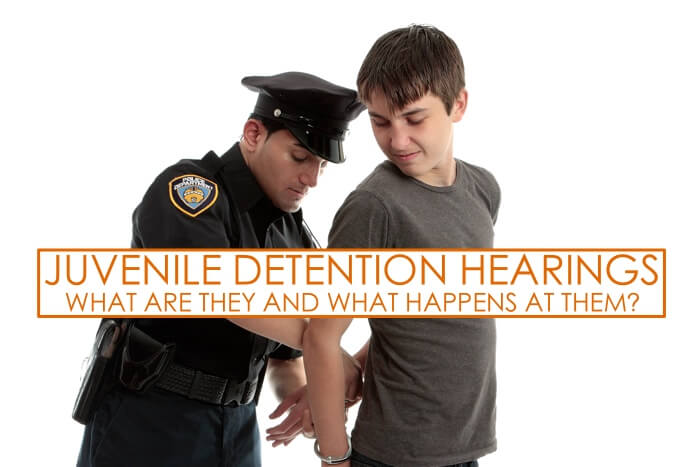
Juvenile Detention Hearing Tarrant CountyIf a juvenile (a child between the ages of 10-16) is arrested, that person is taken to a juvenile detention center instead of jail. In the juvenile justice system, there is no such thing as bail. There is no amount of money a parent can pay to get their child out of detention. Instead, a detention hearing will be held. This article will explain what detention hearings are, why you need an attorney, and what happens during those hearings.


What Is a Juvenile Detention Hearing in Texas?

According to the Texas Family Code Section 54.01(a), a detention hearing is required to be held within two business days after a juvenile has been detained. If the juvenile is detained on a Friday or Saturday, then the detention hearing is required to be held on the first business day. If, after the initial hearing, a child is kept in detention, then the law requires additional detention hearings to be held every 10 business days for as long as that juvenile is in custody. If a juvenile is detained, his attorney can request an additional hearing sooner than 10 business days.

The purpose of these hearings is for a judge to determine whether the court should continue to detain that child or release him to a parent or another responsible adult while decisions about that juvenile’s case are made.

Family Code Section 54.01(e) requires that a juvenile be released at a detention hearing unless the judge finds that the juvenile:

  • is likely to abscond,
  • has inadequate supervision,
  • does not have an adult to bring him back to court,
  • is a danger to himself or the public safety, or
  • has previously been adjudicated for an offense and is likely to commit another offense if released.

Does My Child Need an Attorney for the Juvenile Detention Hearing?

The short answer is yes. Section 51.10 of the Family Code gives a juvenile the right to an attorney at all important stages of the process, including the detention hearing. This section goes on to say that if a child is not represented by a lawyer at a detention hearing and is detained, the court must immediately either appoint him an attorney or order the family to hire one.

The court will only appoint a lawyer if the judge determines that the family is indigent based on the court’s financial guidelines. Most families won’t meet this standard. If the court does appoint an attorney, the court will determine who that person is. This is done by looking at who is next up on the list. Whether your child gets a good attorney, or a bad one, is decided by the luck of the draw.

You can, however, hire a lawyer to represent your child before the first, or any, detention hearing. If you hire an attorney, you will get to decide who that is. You can pick out one that you feel comfortable handling such an important matter for your child.

Why Should I Hire a Juvenile Defense Attorney as Opposed to Getting a Court-Appointed One?

It is best if you hire a lawyer for your child prior to the initial detention hearing. If the court appoints an attorney, that person will meet you and your child for the first time at the detention hearing. During that hearing, or minutes before, will be the first time that the appointed lawyer will hear anything about your child’s case. In some instances, you won’t have an opportunity to talk to the appointed attorney until after the detention hearing.

On the other hand, if you hire a lawyer, you will have a chance to meet with that person before the hearing. This will give the attorney an opportunity to learn about the case before walking into the courtroom for the detention hearing. This, in turn, will allow the lawyer to be better prepared to explain to the judge why she should release your child.

Additionally, an attorney is better equipped to represent your child if they are involved with the case from the very beginning. Many times, things are said during an initial detention hearing that may later become relevant to the underlying case and your child’s defense. If you wait until later in the process to hire an attorney, that person may never hear that relevant information. It is much more difficult for a lawyer to come into a case that is already ongoing than it is to be involved from the beginning.

What Happens During Juvenile Detention Hearings in Tarrant County?

The detention hearing is an informal hearing. Generally speaking, the following people will be present for it: the judge, the juvenile, an intake probation officer, a prosecutor, and a defense attorney. There may also be others present, such as a therapist, victim’s assistance officer, or a CPS worker.

After the judge warns the juvenile about his rights, the probation officer will summarize the reasons why the juvenile is in detention. This may include a summary of the police report and/or any probation violations that the juvenile is alleged to have committed. The probation officer will also detail the child’s history with the juvenile system.

Then, the judge will give the juvenile, the parent, the attorneys, and anyone else involved an opportunity to speak. Under Family Code Section 54.01(g), nothing the juvenile says during the detention hearing can be used at any later hearing. The judge may also have questions for one or more of the participants. Then, the judge will make his decision.

Conclusion

In conclusion, a detention hearing is an informal method for a judge to determine whether a juvenile who has been detained should continue to be held in custody or released. Because of this purpose, the hearing is held relatively quickly after an arrest and then is repeated on a regular schedule for as long as a child is in detention. An attorney is required to represent the child at these hearings and should be retained as soon as possible.

About the Author

Christy Dunn is a writer and attorney licensed to practice in Texas. She was a prosecutor for 15 years. The last five years of her prosecutorial career was spent in the Juvenile Division of the Tarrant County District Attorney’s Office. She has tried over 20 juvenile cases in Texas and multiple certification hearings. She was part of a multidisciplinary team that created a juvenile diversion program for youth with problematic sexual behaviors.

Texas Hate Crimes

Hate Crimes in Texas | Statistics and Impact of Texas Hate Crimes

By Hate Crimes

Texas Hate Crimes

Texas Hate CrimesOne of the highest-profile hate crimes in the nation to occur in recent years involved the unprovoked massacre of a historic South Carolina church carried out by Dylann Roof.  Shortly, thereafter, there was the largest mass shooting in American history that occurred in Orlando at a gay night club.  These terrible incidents opened up the flood gates for a national dialogue on the real prevalence and impact of hate crimes in the nation.

In the state of Texas, hate crimes are no less of an issue than any other area of the nation, and their investigation remains a top priority for investigators and social interest groups working against them. The available statistics on hate crime frequency in Texas illustrate the ongoing need for officials to continue their heavy investment of effort in working against discrimination-motivated victimization based on race, religion, gender, sexual orientation, and all other personal identifiers.

Legal Definition of Hate Crime in Texas

Under Article 42.014 of the Texas Code of Criminal Procedure, a hate crime occurs if the:

defendant intentionally selected the person against whom the offense was committed or intentionally selected property damaged or affected as a result of the offense because of the defendant’s bias or prejudice against a group identified by race, color, disability, religion, national origin or ancestry, age, gender, or sexual preference. 

The FBI defines a hate crime as “a criminal offense against a person or property motivated in whole or in part by an offender’s bias against a race, religion, disability, sexual orientation, ethnicity, gender, or gender identity.”

Out of all the FBI Civil Rights program’s priorities, hate crimes are the highest on the program’s list. The FBI considers those who perpetuate and preach intolerance and hatred to be catalysts for terrorism, and the Bureau treats them as such.

The Texas Hate Crimes Act, recorded in Chapter 411.046 of the Texas Government Code, categorizes any crimes that are perceivably motivated by “prejudice, hatred, or advocacy of violence” as hate crimes. Like the FBI’s classification determiners, these crimes are linked to any prejudices directed at gender, gender identity, religion, disability, race, ethnicity, sexual orientation, disability and religion.

The following statistics collected by the Texas Department of Public Safety are the most recent available for comprehensive insight into hate crime prevalence, locations, offenders, victims and offenses in the state of Texas.

What is the Penalty for a Hate Crime Offense in Texas?

In a criminal case, if the judge or jury makes an affirmative finding that the offense is a Hate Crime, Section 12.47 of the Texas Penal Code outlines the punishment enhancement.  For offenses other than a Class A Misdemeanor or First Degree Felony, the underlying offense is enhanced to the next higher category of offense. For instance, if the offense is a Class B Misdemeanor and the jury returns an affirmative finding that the offense was motivated by prejudice toward the victim’s race, the offense is increased to a Class A Misdemeanor.  First Degree Felonies are not enhanced under Section 12.47 because they already carry a penalty range of 5-99 years in prison. If the underlying offense is a Class A Misdemeanor, it will remain a Class A Misdemeanor but the minimum jail sentence is increased to 180 days. Enhancements for hate crimes are limited to offenses under Title 5 of the Texas Penal Code, or Section 28.02, 28.03, or 28.08, Texas Penal Code.”

Texas Hate Crime Volume

The Texas DPS reported that there were 166 reports of hate crimes in 2014. The hate crimes involved 198 offenders and 190 victims. The most common bias was race and ethnicity, the second most common bias was sexual orientation, and the third most common bias was religiously-motivated. The 2014 figure on hate crime reports was a 23 percent increase from the 2013 figure.

Texas Hate Crime Locations

The DPS reported that hate crimes most commonly occurred in residential homes, at 30.4 percent. Next to residences, the second-most frequent places for hate crimes to occur were roads/highways/streets/alleys, at 16.1 percent. The third most frequent areas for hate crimes to occur were parking lots and garages, at 12.5 percent.

Texas Hate Crime Offenders

The DPS hate crime report’s data on offenders showed that the 198 hate crime offenders were 67.7 percent white, 18.7 percent black, 1.5 percent Asian, 1.0 percent multiracial, and 11.1 percent unknown. The information on Texas hate crime offender demographics was analyzed with the understanding that hate crimes can be perpetuated by different offenders sharing the same race.

Texas Hate Crime Victims

The DPS report’s data on hate crime victims categorized the victims based on the following categories: individual, business, financial institution, government, religious organization, society/public, “other”, and unknown. Individuals were the most frequent victim type, at 84.2 percent. The second most frequent victim type was “business”, at 8.4 percent, followed by government and religious victims at 3.2 percent.

Specific Texas Hate Crime Offenses

The most common type of hate crime offense was simple assault, at 15 percent. The second most frequent hate crime offense was vandalism, at 25.7 percent, followed by intimidation at 18.6 percent.

History of Nationwide Hate Crime Investigation by the FBI

The FBI has historically investigated hate crimes in which the offending party was motivated by the national origin, religion, or ethnicity of the victim. The role of the FBI in hate crime investigation was notably increased after the Civil Rights Act of 1964. In the past, investigators were restricted to cases in which the victim of a hate crime was engaging in an activity under federal protection.

After the 2009 Hate Crimes Prevention Act of 2009, investigators gained a freedom to investigate hate crimes without as much red tape. In addition, the 2009 act also gave investigators clearance to freely investigate hate crimes committed out of a bias against the sexual orientation, gender, disability or gender identity of the victim.

Conclusion

Though the time and manpower investment in hate crime investigation remains heavy, the need for vigilance remains high. According to the FBI’s 2015 report, there were 5,479 hate crime incidents nationwide in 2014; these incidents involved 6,418 offenses to the Uniform Crime Reporting (UCR) program, creating 6,727 victims nationwide. Though the figure was down from the 2013 rate, in which there were 5,928 incidents and 6,933 offenses, the issue remains a top priority for investigators in Texas and the nation at large all year round.

Lautenberg Amendment Federal Gun Ban

The Lautenberg Amendment Federal Gun Ban on Misdemeanor Domestic Violence Cases

By Domestic Violence

What is the Lautenberg Amendment?

Lautenberg Amendment Federal Gun BanThe Lautenberg Amendment to the Gun Control Act enacted in the Fall of 1996 provides that those with a conviction for a misdemeanor crime of domestic violence cannot use, possess, or transport a firearm or ammunition.


Senator Frank Lautenberg was the chief sponsor of this amendment. The purpose behind this amendment is to keep firearms out of homes where a domestic violence relationship exists. Lautenberg presented it with the idea that domestic violence and firearms are a deadly combination and enacting this amendment would lessen the likelihood of a victim to die during a domestic violence episode. 142 Cong Rec S 11872. Additionally, since there was already a firearm ban in place for felony convictions, this Amendment combats the devastating loophole that previously allowed persons with misdemeanor convictions of domestic violence to fall through the cracks and be permitted to own firearms. United States v. Hayes, 555 U.S. 415.

When Does the Lautenberg Amendment Apply?

The Lautenberg Amendment will not have any impact until a person has a misdemeanor conviction of domestic violence. 18 U.S.C. § 922(g)(9). That is, a misdemeanor that

“has, as an element, the use or attempted use of physical force, or the threatened use of a deadly weapon, committed by a current or former spouse, parent, or guardian of the victim, by a person with whom the victim shares a child in common, by a person who is cohabiting with or has cohabited with the victim as a spouse, parent, or guardian, or by a person similarly situated to a spouse, parent, or guardian of the victim.”

18 U.S.C. § 921(33).

A defendant will not be considered convicted unless they were represented by an attorney or “knowingly and intelligently” waived that right and the case was prosecuted at a jury trial or the defendant “knowingly and intelligently” waived that right by a guilty plea or otherwise properly waived that right. Id.

If you have been charged with a qualifying misdemeanor conviction, the amendment has no impact on you until you have received a final conviction. However, if you are subject to a protective order, the Gun Control Act and the State of Texas separately provide that you cannot use, possess, or transfer firearms. 18 U.S.C. § 922(d)(8); Tex. Fam. Code § 85.022(b)(6); Tex. Pen. Code § 46.04(c).

In Texas, if you have disposed of your case through deferred adjudication, which is not a final conviction, and you successfully complete the deferred adjudication, the amendment will not impact you since the statute requires a conviction. 18 U.S.C. § 921(33). Additionally, the conviction element of this statute will not be satisfied if the conviction is expunged, set aside, or the defendant has been pardoned. Id.

What Impact Does the Lautenberg Amendment Have on the Military Defendant?

Prior to the Lautenberg Amendment, 18 U.S.C. § 925(a)(1) provided a military and law enforcement exception to the Gun Control Act. The Lautenberg Amendment contains no similar exception.

What this means for the military defendant that gets a conviction is that his service could be compromised since they can no longer use, possess, or transfer a firearm. This conviction can impact their ability to re-enlist, cause a transfer to a military occupational specialty (MOS) that doesn’t require the handling of firearms, and affect the ability to be deployed. Many servicemembers that receive a domestic violence conviction will be processed for administrative separation.

According to the Supreme Court, What Cases are Considered Misdemeanor Convictions of Domestic Violence?

In Voisine v. United States, the Supreme Court clarified that the federal firearm ban under the Lautenberg Amendment applied to every case where the underlying conduct was an act of domestic violence, regardless of whether the state court made an affirmative finding of domestic violence (or family violence in Texas). This means that persons with misdemeanor convictions anywhere from a Class C simple assault* to a Class A assault with or without a domestic violence finding are banned from using, possessing and transferring firearms if their victim was one with whom they had a domestic relationship.

Voisine v. United States dealt with two domestic violence-related cases from Maine where both defendants’ previous convictions were based on reckless conduct, not intentional or knowing conduct. Thus, they argued that the Lautenberg Amendment didn’t apply to them. The Supreme Court ruled that the firearm ban did apply to them for two reasons:

  1. Reckless use of force is use of force the same as if it was intentional or knowing; and
  2. The legislative history and plain language of the statute lead to such a conclusion.

Looking to the statutory definition of an applicable misdemeanor conviction provided above, there is no specific mental state required. The definition provides that the Amendment applies to any misdemeanor under federal, state, or tribal law that was committed by a person through use of physical force against a victim with whom they have a domestic relationship.

*Class C is the same level as a traffic ticket.

Texas Specific Firearm Bans for Domestic Violence Convictions

In Texas, a person who has been convicted of a misdemeanor involving family violence cannot possess or transfer a firearm or ammunition for 5 years after they are released from confinement or after they have completed and been released from community supervision following the conviction. Tex. Pen. Code § 46.04(b).

The Texas Family Code defines family violence as “an act by a member of a family or household against another member of the family or household that is intended to result in physical harm, bodily injury, assault, or sexual assault or that is a threat that reasonably places the member in fear of imminent physical harm, bodily injury, assault, or sexual assault.” Tex. Fam. Code § 71.004. Additionally, under Section 22.01 of the Texas Penal Code an assault involving the person’s family or household occurs if the person causes bodily injury to another, threatens a person with “imminent bodily injury,” or causes physical contact with someone that they know or should know would find “offensive or provocative.” From these definitions you can see that a misdemeanor conviction of domestic violence in Texas expands the qualifying convictions beyond those that qualify under the Lautenberg Amendment.

If a person is convicted of a misdemeanor offense of family violence the court must notify them that it is against the law for them to possess or transfer firearms or ammunition. Tex. Code Crim. Proc. art. 42.0131. Additionally, if a defendant decides to enter a plea of guilty or nolo contendere for a misdemeanor involving family violence the court must, before accepting the plea, admonish the defendant with the following:

“If you are convicted of a misdemeanor offense involving violence where you are or were a spouse, intimate partner, parent, or guardian of the victim or are or were involved in another, similar relationship with the victim, it may be unlawful for you to possess or purchase a firearm, including a handgun or long gun, or ammunition, pursuant to federal law under 18 U.S.C. Section 922(g)(9) or Section 46.04(b), Texas Penal Code. If you have any questions whether these laws make it illegal for you to possess or purchase a firearm, you should consult an attorney.”

Tex. Code Crim. Proc. Art. 27.14.

Texas law does not require the defendant to surrender firearms or ammunition once the possession is prohibited. Neither does Texas law specifically authorize or require the removal of firearms or ammunition from the scene of a domestic violence incident.

In short, Texas law provides a prohibition of gun possession for five years after release from confinement or probation in more circumstances than under the Lautenberg Amendment. However, if your conviction is also a qualifying conviction under the Lautenberg Amendment then your right to possess a firearm is indefinitely prohibited. If you find yourself in that situation your only option to restore your firearm rights is to request a full pardon and restoration of civil rights in your pardon paperwork.

Are You Currently FacingDomestic Violence Assault Charges in Tarrant County?

Whether you have already been convicted or are currently facing charges of assault it is extremely important to know the heavy consequences that are attached to convictions where the underlying conduct is considered domestic violence. There are many misconceptions out there on whether federal firearm ban applies to a specific assault case. It is important that you know for a fact whether it applies to you so that you don’t risk violating federal law. If you are facing charges for an offense involving family violence under Texas law, contact our criminal defense team and schedule a free consultation to discuss and determine what consequences you are facing and whether the federal and/or Texas firearm ban applies to you.

Husband Wife Privilege Texas Rule 504

Can One Spouse be Forced to Testify Against the Other?

By Criminal Defense, Jury Trial

Can My Spouse be Forced to Testify Against Me in a Criminal Trial in Texas?

Husband Wife Privilege Texas Rule 504Everyone knows (or should know) of the attorney-client privilege which prohibits the calling of an attorney to testify as a witness against his client and protects the attorney-client relationship. But what about the husband-wife relationship? Are spouses afforded any protection from having their spouse testify against them in a criminal trial?

Yes. In Texas there are two “Husband-Wife” privileges that apply to the marital relationship: spousal immunity and the marital communication privilege. Many people are aware that certain privileges arise but often do not know exactly what protections these privileges provide. The following article discusses both of the matrimonial privileges in Texas.

See the full text of Texas Rule of Evidence 504 – Spousal Privileges

What is Spousal Immunity? How does Spousal Immunity work in Texas?

Spousal immunity is the privilege that exists in a criminal trial for the defendant’s spouse not to be called as a witness in certain situations.  Tex. R. Evid. 504(b). This privilege applies to spouses that are married to the defendant during trial and are asked to testify as to matters that occurred during the spouse’s marriage to the defendant. The non-defendant spouse holds this privilege; meaning he or she is the one who may invoke the privilege not to testify and it is ultimately his or her decision. Tex. R. Evid. 504(b)(3). Thus, if the spouse wants to voluntarily testify for the State, she may do so regardless of whether the defendant objects to the spouse’s testimony.

Spousal immunity does not stop the defendant from calling their current spouse as a witness. If a defendant chooses to do so the spouse cannot assert this privilege and will be required to testify. With that, if the defendant does not call the spouse and surrounding evidence suggests the spouse could testify to relevant matters the State is allowed to comment about that. 504(b)(2).

Exceptions to Spousal Immunity in Texas

There are two exceptions to spousal immunity in Texas.

  • First, the privilege does not apply in a criminal proceeding in which the defendant has committed against the spouse (e.g. Domestic Violence) or prosecution for bigamy.
  • Second, the privilege does not apply when the spouse is called to testify about matters that occurred before they were married to the defendant.

What is the Texas Marital Communication Privilege?

Under Texas Rule of Evidence 504(a), spouses have the privilege to prevent testimony of certain communications made during the marriage from one spouse to the other spouse.  Unlike the spousal immunity privilege, the marital communication privilege may be invoked by either the defendant or the spouse being called as a witness. Additionally, this privilege survives divorce; meaning it applies whether or not the defendant and the spouse are still married as long as the communications were made while they were married. Tex. R. Evid. 504(a)(2).

This privilege only applies to communications that were intended to be confidential, that is, they were made privately with no intent to disclose to anyone other than the spouse. A communication will still be confidential if someone overheard the conversation if the defendant spouse made the statement without knowledge or intent that the other person would hear the conversation. Basically, the requirement is that the communication made was intended for the spouse’s ears only.

Exceptions to the Marital Communications Privilege in Texas

There are two exceptions to the confidential communications privilege.

  • First, if the communication was made in whole or in part to aid in the commission of a crime the privilege does not apply.
  • Second, the marital communication privilege does not apply in prosecutions for crimes against the defendant’s spouse, any minor child, or a member of the defendant or defendant spouse’s household.

In conclusion, there are certain situations where matters occurring between spouses are kept within the sanctity of the marriage and will not come out in court. However, as you can see these privileges are very specific and it is important to be aware of what exactly is privileged and when such privileges apply.

See the full text of Texas Rule of Evidence 504 – Spousal Privileges

License to Carry Handgun LTC CHL

License to Carry a Handgun After Arrest or Criminal Charge in Texas

By Weapons Charges

License to Carry Handgun LTC CHLThere are many consequences for persons arrested and charged with a crime in Texas.  One of the often overlooked considerations is whether and to what extent a criminal accusation impacts one’s authorization to carry a weapon with a License to Carry (LTC), formerly a Concealed Handgun License (CHL). The reality of gun possession in today’s political climate is that the restrictions are many and increasing.


Texas has very specific guidelines regarding qualifications for obtaining a License to Carry a Handgun. But, what most do not realize is that there are also strict regulations in place while a person possesses that license – especially if a person is arrested and charged with a crime.

What happens to my License to Carry or CHL if I’m arrested and charged with a crime?

Texas Government Code 411.187 spells out the scenarios that require the Texas Department of Public Safety (DPS) to suspend one’s LTC or CHL. In regards to criminal charges, the department SHALL suspend an LTC if the license holder is charged with the commission of:

  • a Class A or Class B Misdemeanor;
  • an offense under Section 42.01 of the Texas Penal Code (Disorderly Conduct); or
  • any Felony offense.

In addition, a person’s LTC or CHL will be suspended if a person is arrested for any offense involving family violence or disorderly conduct and is subject to an active protective order.

How long will my License to Carry be suspended if I’m arrested and charged with a crime?

Unfortunately, the law is clear that the suspension will remain in place until the dismissal of the charges or for the duration of the protective order (in a family violence case.) Texas Government Code 411.187(c)(3).

What happens to my LTC or CHL if I’m convicted of the charge?

If you are convicted of any felony or of the offense of “Unlawful Carrying of a Handgun by a License Holder,” your license to carry a handgun will be revoked permanently. Texas Government Code 411.186 (3) & (4).

If you are convicted of a class A or class B misdemeanor, your license will remain suspended and you will only be able to re-apply for a new LTC when you once again meet the initial eligibility requirements.

A person is eligible for a LTC if they have not, in the five years preceding the application, been convicted of a Class A or Class B misdemeanor or disorderly conduct. What this essentially establishes is a 5-year waiting period from the time of your conviction to the time when you can apply again for your handgun license.

What about being convicted of offenses involving family violence?

Offenses involving family violence carry more significant consequences. If you are convicted of a Class C, Class B or Class A misdemeanor involving family violence, then Federal Law prohibits you from owning or possessing a firearm. Also, under Federal Law, even a plea to deferred adjudication constitutes a conviction and bars a person from owning or possessing a firearm. Because of this, a conviction for any misdemeanor involving family violence would prohibit you from ever being eligible to obtain your concealed handgun license in Texas. See Texas Government Code 411.172 (a) (9).

Defense of Third Party Defense of Others

Defense of Third Party Not Allowed in Fort Worth Domestic Violence Case

By Domestic Violence

Defense of Third Party Defense of OthersThis week, the Texas Court of Criminal Appeals released Henley v. State. In a 4-3 decision the divided court held that the defendant was not allowed to offer “defense of a third party” as a legal argument in his assault case, because it “was not material to, nor probative of, any fact that was of consequence to the determination of this action.”



Henley v. State (Tex. Crim. App. 2016)

Henley was Charged with Domestic Violence in Tarrant County and Offered a “Defense of Others” Argument at Trial

Mr. Henley was charged with misdemeanor assault causing bodily injury to a family member (domestic violence). Henley was alleged to have pulled his ex-wife out of her car by her hair, punched her in the face several times, and hit her head against the concrete driveway.

At trial, Henley asserted a “defense of others” defense, which is an extension of the traditional self-defense argument. The rationale he provided for this defense was that he did not think his ex-wife was a fit parent because her new husband had sexually and possibly physically assaulted the children. The mother’s new husband was not present during the altercation and did not pose any immediate threat, but Henley tried to argue nonetheless that he was defending his children from being exposed to a physically and sexually abusive environment.

The trial judge did not allow Henley to present the defense of others claim and he was convicted. The 2nd District Court of Appeal (Fort Worth) reversed the trial court, holding that Henley should have been allowed to present his defense. The State appealed to the Court of Criminal Appeals.

What is the Standard to Assert Defense of a Third Party?

To claim defense of a third person, a defendant must reasonably believe his intervention was immediately necessary to protect the third person from the threat of force.

The question in this case was not, “is defense of a third person an effective defense when considered by the jury?” Rather the question was “should the defendant be allowed to bring that defense at all under these facts?”

A Divided CCA Holds that the Trial Judge Did Not Err in Denying Henley the Ability to Raise Defense of a Third Person

The slim majority said no,. Henley should not be able to bring this defense because his aim was not to offer material or probative evidence, but rather to introduce evidence of how bad of a mother. Henley’s ex-wife is, and perhaps try to finagle a jury nullification. The majority saw Henley’s attempted defense as nothing more than an attempt to circumvent the judicial and evidentiary process and try to make an emotional appeal to the jury rather than a factual one.

The dissenting judges (Keller, Hervey, and Newell) argued that the defense should have been allowed because anything thing that is of consequence to the determination of the action more probable or less probable than it would be without the evidence should be deemed relevant and therefore admissible. Further, the question of whether Henley’s defense claims were reasonable belonged to the jury not the judge. It was the jury who should decide if Henley, in fact, acted reasonably on that day in question.

What are the Implications of this Holding for the Defense of Third Person Claim in Texas?

This case demonstrates that Defense of a Third Person is not as easy as simply claiming it. There must be evidence to show that the defense is reasonable. The evidence must show that the “intervention was immediately necessary to protect the third person from the threat of force” or it could be disallowed by the trial judge. The valid defense of others is still viable; as viable as it ever was. It simply must fit the facts.