
Dangerous Weapon Enhancement

Is Sleeping in a Running Vehicle 'Operating' for DWI Charges? Federal Sentence Enhanced for Presence of Dangerous Weapon Even Though the Defendant Had No Knowledge of the Weapon

By Sentencing

Should a defendant charged with possession of drugs be punished for a “dangerous weapon” found at the scene of the drug trafficking and owned by a co-conspirator, when he did not know about the gun in the first place?

Dangerous Weapon EnhancementThe Federal Fifth Circuit Court of Appeals thinks so.  See the Court’s opinion in United States v. Guerrero.

On September 5, 2012, police were investigating a ranch in McAllen, Texas as a possible stash house for drug-trafficking. Officers observed Adrian Rodriguez-Guerrero coming and going from the ranch along with three other men in a caravan. When the officers stopped the caravan, “because the vehicles appeared weighed down,” a dog alerted to the presence of drugs. The police found “boxes of limes with bundles of marijuana concealed among the limes.” The defendants subsequently consented to a search of the McAllen ranch. (I’m always left wondering why people, especially those in possession of drugs, consent to a search.) “There the [police] found…clothing…a loaded shotgun and 125 shotgun shells…plastic cellophane, limes, packing tape…lime boxes, latex gloves, a large scale, and several bundles of marijuana.” In a written statement accepting responsibility, Rodriguez-Guerrero said he was hired to do landscaping at the residence, but was asked to “load the marijuana into a truck at the [ranch]…acknowledg[ing] the [ranch] as a stash house [for drugs].”

Conspiracy to Possess and Distribute Marijuana Enhanced for Possession of a Dangerous Weapon

At trial, he pled guilty to conspiracy to possess with intent to distribute 100 kilograms or more of marijuana, receiving a “guidelines-range sentence of 104 months” imprisonment and four years of supervised release. His sentence included a two-level enhancement for possession of a dangerous weapon—the shotgun found at the McAllen ranch. The district court noted, “[the Court] is not finding Rodriguez-Guerrero possessed the shotgun; rather, it was reasonably foreseeable…that there would be a weapon involved in…the… drug trafficking crime.” The district court added, “the shotgun was a tool of the trade and it [is] reasonably foreseeable to [Rodriguez-Guerrero] that there would have been a weapon, especially [to] a person with the experience that he has in drug trafficking.” Rodriguez-Guerrero appeals to the Fifth Circuit Court of Appeals, stating that there was no evidence to support a finding that either he or a co-conspirator possessed the shotgun—possession which lengthened his prison sentence.

U.S. Federal Sentencing Guidelines Application When a Dangerous Weapon is a “Tool of the Trade”

The United States Sentencing Guidelines Manual provides a two-level sentencing enhancement if “a dangerous weapon was present, unless it is clearly improbable that the weapon is connected with the offense.” U.S.S.G. § 2D1.1(b)(1), cmt. n.11(A). “The government must prove weapon possession by a preponderance of the evidence…[and can do so] by showing a temporal and spatial relationship of the weapon, the drug trafficking activity, and the defendant.” United States v. Zapata-Lara, 615 F.3d 388-90.

Here, the Fifth Circuit Court reasons, the McAllen ranch was a stash house for drug-trafficking, used to “package and transport marijuana.” The ranch was a warehouse to store and move drugs, not a residence “in which drugs were also stored.” Next, several bundles of marijuana were found in the ranch’s master bathroom, making it “plausible [the Court reasons] to find that either Rodriguez-Guerrero or another co-defendant accessed the master bedroom, where the shotgun was found.” Further, the rounds of ammunition suggest that the gun was connected with the drug trade. Lastly, the gun and rounds of ammunition were found on the same day that police observed Rodriguez-Guerrero and the co-defendants at the ranch.

The Court concludes that the “facts identified by the [district] court plausibly establish a temporal and spatial relationship between the weapon, the drug-trafficking activity, and Rodriguez-Guerrero.” The purpose of the sentencing enhancement is to punish because of increased danger and violence when drug traffickers possess weapons. U.S.S.G. § 2D1.1(b)(1), cmt. n.11(A). “The mere fact that a weapon cannot be attributable to any specific drug trafficker does not decrease the danger of violence.” Even though Rodgriguez-Guerrero may not have possessed shotgun, or that he may not have known about the shotgun is irrelevant. The Court states, “there was [sufficient] evidence to support that the weapon must have been possessed by one of the conspirators in furtherance of the conspiracy.”

In short, the Court says that establishing the “temporal and spatial” relationship is enough for possession in these types of drug trafficking cases; and, possession of a weapon could lead to enhanced, or increased prison sentences in federal courts.


Possession of Methamphetamine in Fort Worth

Federal Courts No Longer Distinguish Between Pure Meth and Botched Meth When Calculating Weight

By Drug Crimes

Possession of Methamphetamine in Fort WorthHere’s a Breaking Bad question for you: If Walt lets Jesse cook a batch of Meth and Jesse screws it up, such that it is unsellable, can they be punished for the amount of bad methamphetamine that they cooked in addition to the amount of good methamphetamine (if there were such a thing)? This 5th Circuit tells us in United States v. Ramirez-Olvera.

Antonio Ramirez-Olvera was convicted of possessing methamphetamine (meth) with the intent to distribute, violating 21 U.S.C. § 841(a)(1) and (b)(1)(B); he received a sentence of 240 months imprisonment, which is ten years below the bottom of the federal sentencing guidelines range for this offense.  Arguing that the district court excessively punished him, as the court did not distinguish between d-methamphetamine (“d-meth”) and l-methamphetamine (“l-meth”) for the sentencing guidelines’ equivalency table, Ramirez-Olvera appealed to the United States Court of Appeals for the Fifth District.

See the opinion in United States v. Ramirez-Olvera (5th Circuit, 2015)

How Should the Court Determine the Weight of Meth in a Possession Case?

The issue before the Court is whether federal courts must distinguish between the types of meth when deciding punishment, or, whether courts can punish based on a “lump sum” of the meth. As you can imagine, higher amounts generally mean a longer prison sentence.

Had the district court used only the d-meth in its calculations, Ramirez-Olvera’s prison sentence might have, in theory, been shorter. Relying on DEA lab reports,Ramirez-Olvera’s probation officer generated a presentence report that recommended, he “should be held responsible for 7.7 [total] grams,” combining both the l-meth and d-meth seized fromRamirez-Olvera’s home and car.

The Court discusses types of methamphetamine, highlighting the differences scientifically and practically. “D-meth and l-meth are stereoisomers of meth…consist[ing] of identical molecules [that are] differently arranged.” United States v. Acklen, 47 F.3d 739, 742 (5th Cir. 1995). D-meth causes psychological and physical changes in humans. L-meth, on the other hand, “produces little or no physiological effect when ingested.” Id. Further, L-meth is a “weak form of [meth], is rarely seen and is not made intentionally, but rather results from a botched attempt to produce d-meth.” U.S. Sentencing Guidelines Manual § 2D1.1(c)(1)(2014). In other words, l-meth is an accidental byproduct when creating d-meth goes awry; L-meth has little to no cash value.

The Court reviews this case anew, focusing on the plain meaning of the Federal Sentencing Guidelines for drug crimes; the Guidelines are the authoritative, controlling source of law. United States v. Moore, 733 F.3d 161-63 (5th Cir. 2013). Amendment 518, “a 1995 amendment to § 2D1.1, indicates that courts need not distinguish between d-meth and l-meth when determining the quantity of…meth attributable to a defendant.” U.S. Sentencing Guidelines, [Sentencing Commission Dicta], §2D1.1(c)(1)(2004). Under this amendment, “l-meth [is to] be treated the same as d-meth…thereby simplifying guideline application [from this point forward].” Id. Further, the Court “ha[s] relied on Amendment 518 to hold [in an unpublished case] that any distinction between d-meth and l-meth is now immaterial when calculating drug quantity under the guidelines. United States v. Beltran, 91 F. App’x 349 (5th Cir. 2004).

The Court affirms the district court’s opinion, holding that under Amendment 518 to the sentencing guidelines, meth no longer is to be categorized for sentencing purposes; l-meth and d-meth are to be added together to render the quantity courts will use in assessing punishment. All meth created, pure and botched, will be added together to determine a defendant’s prison sentence.

Public Intoxication Charges in Texas

What is the Punishment for Public Intoxication in Texas?

By DWI

Is a Texas Public Intoxication charge a serious offense? What is the Possible Punishment for a PI in Tarrant County?

Public Intoxication Charges in TexasWe often receive calls or emails from people in Tarrant County who have been arrested for or cited with Public Intoxication (PI) in Fort Worth. Typically, they contact us to determine how serious a PI charge is in Texas and what the possible punishment might be. They want to know whether this is something they should handle on their own or whether they need a criminal defense attorney to help.
Generally, Public Intoxication in Texas is a Class C misdemeanor. Some might tell you that a Class C misdemeanor is the same as a traffic ticket and that is somewhat true. However, some Class C convictions can have a much larger impact on your future than a simple speeding violation. So when someone asks me whether they need an attorney to help them handle a PI, I tell them yes. You won’t need to pay an arm and a leg, but a criminal defense attorney can help ensure that your rights are protected throughout the process and can, hopefully, set your case up for a dismissal and an expunction down the road.

Public Intoxication Punishment When the Offender is 21 Years of Age or Older

Section 49.02(c) of the Texas Penal Code provides that Public Intoxication in Texas is a Class C Misdemeanor, which is punishable by a fine not to exceed $500.00. However, if a person has two prior Public Intoxication convictions on their record, a third PI can be enhanced to a Class B misdemeanor, which has a range of punishment of up to 180 days in the Tarrant County jail and a fine up to $2,000. This enhancement provision is one of the big reasons that it pays to hire an attorney for each and every Public Intoxication violation in Texas.

Should You Plead Guilty to a Public Intoxication Charge in Texas?

Sure it is easy to just plead guilty, pay the fine, and get on with life. However, a conviction for a PI, even though it is only a Class C offense, can have a lasting negative impact on your job prospects, military or college admissions, and more. As stated above, a PI conviction can also count toward a future enhancement charge or possible even evidence during sentencing in a DWI trial. If you do plead guilty, please do so after consultation with a criminal defense attorney in your area.

Public Intoxication Punishment When the Offender is Under 21 Years Old

There are different rules for persons under 21 in Texas. As you probably know, person under 21 are not allowed to consume any amount of alcohol, so the legislators drafted special rules for them. Section 49.02(e) of the Texas Penal Code Section relates to minors and states that minors would face the same punishment as if they committed an offense under Section 106.071 of the Texas Alcoholic Beverage Code. Here are the highlights for you:

  • A person under 21 can be enhanced to a Class B misdemeanor for a 3rd PI, just like a person over 21 can
  • A first time conviction for Public Intoxication can result in a driver’s license suspension.
  • The fine for PI for a person under 21 is between $250 and $500.
  • Mandatory community service.
  • Alcohol education course or alcohol awareness program.

Fort Worth Public Intoxication Defense Attorneys

If you have been arrested in Tarrant County for Public Intoxication, contact our Fort Worth public intoxication defense attorneys today for a free consultation of your case. We can help you get your PI dismissed and then help you get the entire thing expunged from your record.  Call us today at (817) 993-9249.

Impersonating a Public Servant in Texas

Man Pretends to be a Dallas District Attorney and Receives 2 Years in Prison

By Criminal Defense

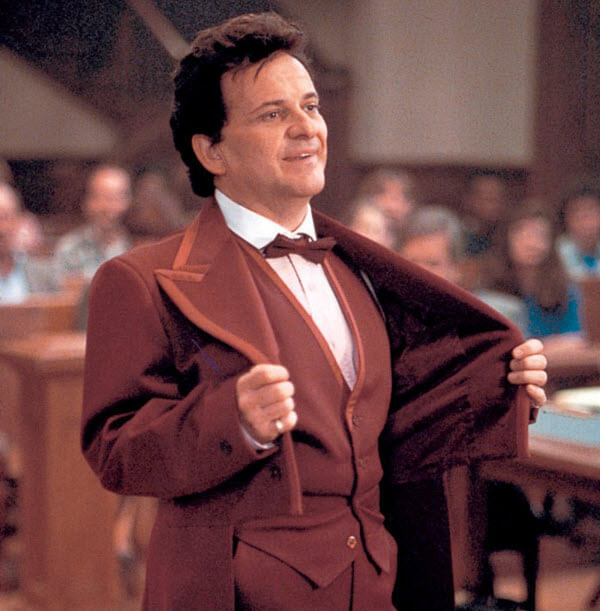
Impersonating a Public Servant in TexasWhen I think of someone impersonating an attorney, my mind goes to Joe Pesci and My Cousin Vinny.  In the movie Vincent Gambino only impersonated a criminal defense lawyer (not a public servant) so nobody seemed to care (except the judge), but in Texas, Impersonating Public Servant (including a district attorney) is a serious matter.  Robert Cornwell found this out after he pretended to be a Dallas County Assistant District Attorney in hopes of helping his friend with a DWI case.


In May of 2012, Robert Cornwell called Montgomery County Assistant District Attorney Kourtney Teaff, identifying himself as an assistant district attorney from Dallas County, attempting to “resolve [his friend’s] [DWI] case.” Cornwell claimed access to criminal histories, case files, and fingerprint cards. He mentioned speaking with governmental offices, and prosecuting his nephew for drug possession. Cornwell insisted on using his personal cell phone number because he and Teaff “were on the same team.” Becoming suspicious of the “highly unusual” requests coming from another district attorney, Teaff recorded the conversations. According to the trial court, Cornwell always used his real name, he had never been an attorney in Texas, he never attempted to claim official authority over Teaff, and he intended that “Teaff should consider the requests a personal favor.” Cornwell was sentenced to two years imprisonment for impersonating a public servant.

See the opinion in Cornwell v. State

What does “Impersonating a Public Servant” mean in Texas?

Impersonating a Public Servant is a Third Degree Felony with a punishment range of 2-10 years in prison and up to a $10,000 fine.  A person violates Section 37.11(a)(1) of the Texas Penal Code when the person impersonates a public servant in combination with the requisite intent…[which] can be satisfied with either the submission theory (“with intent to induce another to submit to his pretended official authority”) or the reliance theory (“with the intent to induce another…to rely on his pretended official acts.”).

Cornwell appealed to the Court of Appeals, arguing that the evidence was insufficient to show either theory of intent—submission or reliance—because he did not persuade Teaff to submit to any asserted authority he might have over her. The Court of Appeals rejected Cornwell’s argument, “concluding that the evidence was…sufficient to support a jury finding that he had impersonated a public official with intent to induce another to rely on his pretended official acts—the reliance theory.” Cornwell then petitioned the Court of Criminal Appeals (“CCA”) for discretionary review.

Here, the CCA determines whether the Court of Appeals was incorrect in misconstruing the meaning of the Section 37.11(a)(1) of the Texas Penal Code, as only “a few Texas appellate courts have directly addressed the reliance theory of intent, and specifically, the meaning of pretended official acts.” See Ex Parte Niswanger, 335 S.W.3d at 617 & n.11; Tiller v. State, 362 S.W.3d 125, 128 (Tex. App.—San Antonio 2011, pet. ref’d.); Tovar v. State, 777 S.W.2d 481,489 (Tex. App.—Corpus Christi 1989, pet. ref’d.).

The CCA Clarifies what “Impersonating” means (and doesn’t mean).

The CCA explained that Section 37.11(a)(1) can be broken down into two parts: the culpable act (actus reus, the bad act) and a culpable mental state (mens rea, the guilty mind). To violate the statute, the State must prove:

  1. that the impersonation happened and
  2. that the impersonator had the specific intent to induce another to submit or to rely upon.

“An accused may not be convicted on a simple showing that he falsely held himself out to be a public servant.”

Because it was undisputed that Cornwell did impersonate a public servant—an assistant district attorney from Dallas County—satisfying the first part of the statute, the CCA focused on Cornwell’s mental state, specifically the reliance theory—the evidence that shows Cornwell’s intent to induce another to rely upon his pretended official acts. The CCA explained that Cornwell attempted to persuade Teaff he was “an experienced assistant district attorney by relating various claims of conduct he had undertaken as an assistant district attorney” namely, “putting his nephew in jail, reviewing case files, and investigating matters in the capacity of assistant district attorney.” The CCA is adamant that, “the only reason [Cornwell] could have had for relaying these pretended official acts to Teaff was to enhance the credibility of his claim to be an assistant district attorney.” “By calling and speaking to an assistant district attorney as a member of the same team, [Cornwell]…hoped to gain [Teaff’s] trust and goodwill.” Further, Cornwell did not ask for favor[s] in his capacity as a private citizen or concerned friend, rather, he asked under the guise of being an assistant district attorney. The CCA states, such “purported actions exceed mere false identification as a public servant.” The CCA agreed with the Court of Appeals, affirming Cornwell’s conviction and sentence.

There are no shortcuts to due process. The Texas Penal Code prescribes strict punishment for those impersonating officers of the court. There is no doubt that criminal charges and allegations can make the accused feel panicked and overwhelmed, however, the old adage “desperate times call for desperate measures,” will not hold water in court where impersonation is concerned. If you or a loved one are facing criminal charges, contact an actual Texas attorney who will explain the proper steps in dealing with the legal system. Contact our office today for a free consultation at (817) 993-9249.

Community Caretaking Fort Worth

“Hunched Over” Passenger Not Enough Distress to Invoke the Community Caretaking Exception

By Criminal Defense, DWI

Community Caretaking Fort WorthWhile conducting a preventative patrol on the Fourth of July in 2013, a Fort Worth police officer stopped at a red light beside Cameron Byram’s vehicle. Both vehicles had the windows rolled down. The officer testified at trial that he noticed a female passenger in Byram’s car “hunched over…[and that he]…didn’t see any movement at all [from] the female.” The officer smelled alcohol coming from Byram’s car, and felt Byram was “not attending to the female passenger.” The officer shouted over to Byram, asking if she was alright, but Byram faced forward and drove away when the light turned green. Believing the female passenger needed medical attention, coupled with Byram’s actions “as an attempt to avoid contact with the police,” the officer stopped Byram’s car to conduct traffic stop. The officer checked on the passenger and called for medical attention, which she later refused. Next, the officer investigated and arrested Byram for driving while intoxicated (DWI). The officer testified that Byram had not committed a traffic offense, nor were there any technical violations on Byram’s car—he only stopped the car to perform a safety check.

Byram v. State (2nd Court of Appeals – Fort Worth, 2015)

***UPDATE – This case was REVERSED by the Texas Court of Criminal Appeals in 2017. See opinion.

After his motion to suppress the evidence for the DWI charge was denied, Byram entered a guilty plea. The trial court assessed punishment at ninety days in jail and a $750 fine, but suspended the sentence, placing him on community supervision for eighteen months. Byram appealed.

The issue before the Fort Worth Court of Appeals is whether the community caretaking exception to the Fourth Amendment applies to the facts of the case, or, whether the police officer had reasonable suspicion to stop Byram.

The Fourth Amendment provides a safeguard against unreasonable searches and seizures. U.S. Const. amend. IV; Wiede v. State, 214 S.W.3d 17, 24 (Tex. Crim. App. 2007). A warrantless arrest is considered unreasonable unless it fits into an exception, such as the community caretaking exception. Minnesota v. Dickerson, 508 U.S. 366, 113 S. Ct. 2130, 2135 (1993); Torres, 182 S.W.3d at 901. A search or seizure “is not unreasonable” when community caretaking is the goal, however, the exception is “narrowly applied” in the “most unusual of circumstances.” Wright, 7 S.W.3d at 152.

“Courts consider four non-exclusive factors in determining whether the officer’s belief that the defendant needed help was reasonable: (1) the nature and level of the distress exhibited by the individual; (2) the location of the individual; (3) whether or not the individual was alone or had access to assistance other than that offered by the officer; and (4) to what extent the individual, if not assisted, presented a danger to himself or others.” Corbin v. State, 85 S.W.3d 272, 277 (Tex. Crim. App. 2002).

First, the Court of Appeals concludes that the passenger did not exhibit distress. “The passenger did not appear to be in any great distress, she was located in a busy area of town where there were nearby hospitals, she was not alone [in the car], she was in public, and she did not appear to be a danger to herself or others.” Further, the Court of Appeals states, “We…cannot conclude that the…community caretaking exception, when applied to a hunched over passenger…indicates that the passenger presented a danger to herself or others.”

Second, the Court of Appeals determines that the officer lacked reasonable suspicion to be able to perform a safety check. “[While] we do not question the good faith of [the officer’s] subjective suspicion that Byram might have been involved in an alcohol-based offense…so long as consumption of alcohol is not illegal…permitting…investigation of persons for alcohol-based offenses solely on whether the odor of alcohol is present invites unwarranted police intrusions.” Byram’s traffic stop violated his Fourth Amendment rights.

Justice Sue Walker dissents, stating the passenger was exhibiting signs of distress because she “was not moving and appeared unconscious.” The passenger was also in a vehicle driven by a man “who appeared unconcerned about her well-being.” The passenger’s access to assistance was doubtful because Byram did not respond to the police officer’s question about her condition. Lastly, the passenger was a danger to herself because she appeared unresponsive and unable to ask for help. “Thus, all four factors…support the reasonableness of the officer’s belief that she needed assistance.”

Law enforcement officers must abide by local, state and federal procedural and substantive laws when conducting traffic stops and arrests. If you or a loved one is facing DWI charges or traffic violations, please contact our office today for a free consultation at (817) 993-9249.

Knowing Possession of Drugs in Texas

Trace Amounts of Drugs Inside Pipe Not Enough For Knowing Possession of Drugs

By Drug Crimes

What Does it Mean to Be in Knowing Possession of Drugs in Texas?

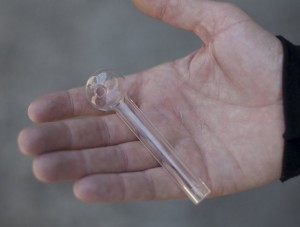
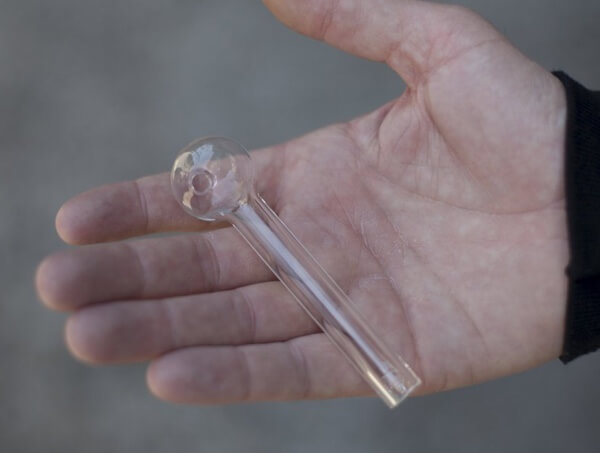
Knowing Possession of Drugs in TexasPolice found George Williams sitting behind an air conditioner unit of a business building. Even though it was a cool morning, Williams had his shirt off and was sweating profusely. After doing a pat-down of Williams, police found a crack pipe in his pocket that was later determined to have cocaine residue in it by police and a chemist.

The Trial Court convicted Williams of knowingly possessing a controlled substance. The elements are:

  1. that appellant exercised actual care, control and management over the contraband; and
  2. that appellant had knowledge that the substance in his possession was contraband.

The 14th Court of Appeals (Houston) wanted to look further to see whether the evidence would support a reasonable inference that the defendant knowingly possessed the contraband. When the quantity of a substance possessed is so small that it cannot be measured, there must be evidence other than mere possession to prove that the defendant knew the substance in his possession was a controlled substance.

Read the Case:  Williams v. State (14th District Court of Appeals – Houston, 2015)

In other cases, the defendant was convicted because the State proved that there was saliva on the crack pipe, suggesting that it had recently been smoked and that the defendant was intoxicated at the time the police found him. Another example is a defendant being found in a well-known drug house holding a syringe with cocaine in it in a manner that he was about to insert, or had just inserted it, into his body.

In this case, the Court of Appeals found that the only evidence was that Williams had his shirt off and was sweating. The Court of Appeals held that this was not enough to prove Williams had recently used the pipe or knew of its purpose as a crack pipe. The Court of Appeals reversed this case in the favor of Williams.

This signals that it takes more than just merely being found with a pipe containing trace amounts of a drug to be convicted of knowingly possessing the drug. There must be more evidence such as intoxication, recent usage, or being found in a known drug house.

Fort Worth Drug Crimes Attorneys | Free Case Consultation

If you have been charged with possession of a controlled substance or any other drug crimes, contact our attorney today for a Free consultation of your case. We will take the time to speak with you about the incident and answer your questions about the criminal justice process in Tarrant County. Contact our office at (817) 993-9249.

Passing in Left Lane in Texas

Warrantless Traffic Stop Upheld for Driving in “Passing Only” Lane

By Drug Crimes, Reasonable Suspicion

Driving in the “Passing Only” Left Lane for Forty-Five Seconds Creates Reasonable Suspicion for Warrantless Traffic Stop in Texas

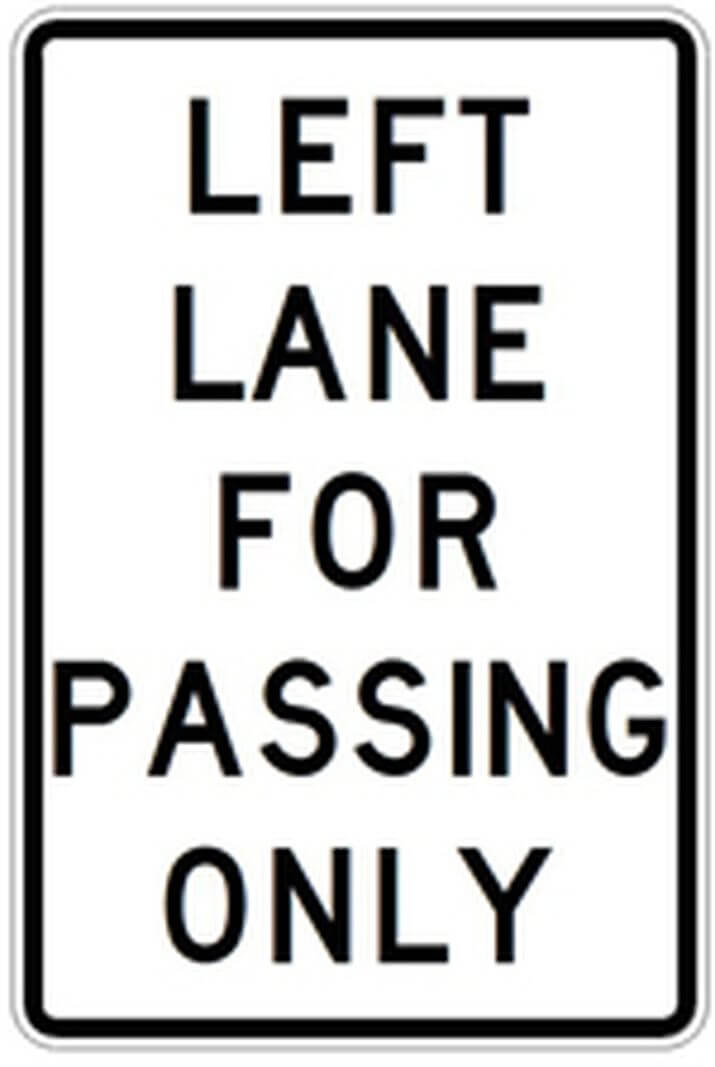
Passing in Left Lane in TexasJaganathan v. State: Francheska Jaganathan was driving in the left lane of a three-lane Texas highway, just ahead of a police cruiser. Mounted with a dashboard camera, the cruiser accelerated and changed lanes, but stayed behind Jaganathan’s car. A few seconds later, Jaganathan’s car passed a “Left Lane for Passing Only Sign,” yet her vehicle continued in the left lane despite the middle lane being clear of traffic. About forty-five seconds later, the trooper turned on his overhead lights, and conducted a traffic stop of Jaganathan’s car. During the traffic stop, the trooper smelled marijuana, prompting a search of the vehicle. The trooper found marijuana in the trunk, and as a result, Jaganathan was charged with possession of marijuana.

At trial, Jaganathan filed a motion to suppress the evidence, but the court denied the motion. Jaganathan chose a plea agreement where she pled guilty and was placed on deferred adjudication. On appeal, Jaganathan argued that the trooper lacked reasonable suspicion to conduct the traffic stop in the first place. The court of appeals agreed with her, stating that Jaganathan likely stayed in the left lane for safety reasons, that seeing the cruiser may have influenced her decision to stay out of the trooper’s way, and that a few seconds were an insufficient amount of time “to conclude that [Jaganathan] committed a [traffic] violation.”

The Court of Criminal Appeals of Texas disagrees with the court of appeals, citing the reasonable suspicion standard in Texas, and the Texas Transportation Code. The Court of Criminal Appeals also clarifies the issue at hand.

The issue is not whether Jaganathan committed a traffic offense, but whether the trooper had reasonable suspicion to stop the vehicle.

First, “A trooper may make a warrantless traffic stop if the reasonable suspicion standard is satisfied.” Guerra v. State, 432 S.W.3d 905, 911 (Tex. Crim. App. 2014). “Reasonable suspicion exists if the trooper has specific and articulable facts that, when combined with rational inferences from those facts, would lead him to reasonably suspect that a particular person has engaged …in criminal activity.” Abney v. State, 394 S.W.3d 542, 548 (Tex. Crim. App. 2013).

Second, “an operator of a motor vehicle [must] comply with an applicable official traffic-control device, including a sign.” TEX. TRANSP. CODE § 544.004(a); § 541.304(1). “Before a trooper can have reasonable suspicion to believe that a defendant committed the traffic offense of failing to obey a “Left Lane for Passing Only” sign, the trooper must be aware of facts that support a reasonable inference that the defendant drove past the sign before being pulled over.” Abney, 394 S.W.3d at 549.

Here, Jaganathan was driving in the left lane without passing other cars, after driving past a sign that prohibited that conduct. The dashboard camera captured the sign and all of the movements of the car. According to the Court of Criminal Appeals, even if Jaganathan had a defense of necessity—she HAD to be in the left lane for a medical or traffic emergency—the trooper still had reasonable suspicion to conduct a traffic stop. The Court of Criminal Appeals states, “these were only possibilities, and so it was reasonable for [the trooper] to suspect the appellant had violated the law.” Further, the reasonable suspicion standard “accepts the risk that officers may stop innocent people.” Illinois v. Wardlow, 528 U.S. 119, 125 (2000). As a result of the forty-five second traffic violation, the trooper had reasonable suspicion to pull Jaganathan’s car over; and, as a result of smelling marijuana, the trooper was able to search the car without a warrant, resulting in charges against Jaganathan. The Court of Criminal Appeals reversed the judgment of the court of appeals and affirmed the judgment of the trial court.

It is important to note, however, that the ruling has a dissenting opinion. Justice Meyers is adamant that the sign and the Transportation Code supporting it are problematic for the following reasons:

• The Code is unclear on how to comply or not comply with the sign.
• The Code does not state a specific amount of time a driver has to pass and merge back into the non-passing lane.
• The Code does not address passing a string of cars, in the middle lane.
• The Code does not address the need to accelerate to be able to pass, whether intended or unintended (for example if the car being passed speeds up, making passing difficult).
• Proving a driver’s intent to pass another car is difficult.

If you or a loved one are facing traffic violations or drug charges, please contact our office for a free consultation at (817) 993-9249.

Vincent Bugliosi

Vincent Bugliosi’s Advice on Cross-Examination and Asking “Why”

By Trial Advocacy

Renowned Trial Lawyer, Vincent Bugliosi, Explains One of His Theories About Cross-Examination

Vincent BugliosiIn 2011, I had the privilege of escorting the late Mr. Vincent Bugliosi around Marine Corps Base Camp Pendleton, as he was the guest speaker at a trial advocacy conference my office organized.  Mr. Bugliosi, 76 years old, was best known as the prosecutor that put Charles Manson away.  He was also a renowned true crime author, writing such books as Helter Skelter, And the Sea Will Tell, ‘Till Death Us Do Part, and Outrage.  He would tell you, however, that his proudest moment was his victory over Gerry Spence in the mock trial of Lee Harvey Oswald for the assassination of President John F. Kennedy.  Other than this mock trial, Gerry Spence boasts a perfect trial record.


One of the things about which Mr. Bugliosi spoke was cross-examination.  He noted that many of the best-selling books on cross-examination caution lawyers from asking a witness WHY they took a certain action.  Lawyers are warned that they should never allow a witness to explain themselves on cross.  Well, Mr. Bugliosi did not exactly agree with that maxim.  Here’s what he had to say on the subject:

Even if I do not ask “why,” the lawyer who called the witness, if alert, will do so on redirect.  The witness has then often had a court recess or perhaps overnight to think up the very best answer to the “why” question.  I would much rather force the witness to answer on cross, not giving him extra time to fabricate.

Although both lawyers can avoid asking the “why” question and, as in some other situations, “save for final argument” the implications of the witness’ testimony, by that late point in the trial the witness’ reason for his improbable act is a matter of competing speculations by the lawyers, not the court record.

The “why” question, of course, can be a dangerous one, but I feel this is so only if the lawyer hasn’t first blocked off possible and anticipated escape hatches.  Admittedly, real witnesses, unlike their fictional counterparts in novels and on the screen who cave under pressure of the first or second good question, are as doughty and elusive as all hell.  When all but trapped, and at the brink of a public, courtroom humiliation, human beings seem to secrete a type of mental adrenaline that gets their minds working extremely fast, and well.  So the witness a lawyer faces on the stand, for some curious reason, is almost inherently formidable.  But a witness can’t go somewhere when he has nowhere to go.

If I feel a witness if lying, a technique I frequently employ is to first elicit answers from him on preliminary matters (blocking off all escape hatches), answers which, when totaled up, show he would be expected to take a certain course of action.  The witness having committed himself by his answers, I then ask him what course he in fact took (which is not the course he would be expected to take), and follow this up with the “why” question.  If time after time a witness is unable to satisfactorily justify conduct which is incompatible with what would be expected of a reasonable person, the jury will usually conclude that his testimony is suspect.

Mr. Bugliosi made sure to caveat that we should never ask the “why” question unless all possible escape hatches have been blocked off.  He was truly an outstanding speaker on this and many more topics.  His true crime books are excellent and are highly recommended for all criminal trial lawyers out there.  Vincent Bugliosi passed away on June 6, 2015.

Sexting Message Texas

“Attempted Sexting” Lands 24 Year-Old on Sex Offender Registry

By Sex Crimes

Attempted Transfer of Explicit Video of Self to a Minor (Sexting) Amounts to a ‘Sexual Act’ Resulting in Registration on the Sex Offender Registry

Sexting Message TexasUnited States v. Schofield – (5th Circuit Court of Appeals, 2015)

Should a person be ordered to register as a sex offender for sending explicit video to a minor (sexting), but never physically touching the victim? The Fifth Circuit Court of Appeals says yes.

In November 2013, twenty-four year old Nick Schofield began sending text messages to a fifteen-year-old girl. They sent text messages for four months, when an undercover federal agent assumed the girl’s side of the conversation. Believing he was still communicating with the girl, Schofield sent the undercover agent sexually explicit photos and videos of himself. A grand jury indicted Schofield on one count of transfer of obscene material to a minor and four counts of attempted transfer of obscene material to a minor, violations of 18 U.S.C. § 1470. In his plea agreement, Schofield pleaded guilty to one count of attempted transfer of obscene material to a minor, and the other counts were dismissed at sentencing.

The district court sentenced Schofield to two years imprisonment and ordered him to register as a sex offender under the Sex Offender Registration and Notification Act (“SORNA”). The purpose of SORNA is to establish a national sex offender registry, “to protect the public from sex offenders and offenders against children.” 42 U.S.C. § 16901. Under SORNA, a convicted sex offender must register his current address and employer’s address.

At trial, Schofield objected to the registration requirement of his sentencing. Schofield appealed to the Fifth Circuit Court of Appeals, contending (1) that the crime of attempted transfer of obscene material to a minor was not a sex act under SORNA and (2) that the statutory definition of a sex offense as a “criminal offense against a minor” was an unconstitutionally vague, all-encompassing residual clause.

First, the Court stated the purpose of SORNA is to “cast a wide net to ensnare as many child offenders as possible.” United States v Dodge, 597 F.3d 1347. The wide net was meant to apply to as many offenses against children that make sense according to the plain language and plain meaning of the statute. The Court also quoted an Eleventh Circuit case dealing with similar facts and charges. The Eleventh Circuit held that the 18 U.S.C. § 1470 intended “[not] to exclude certain offenses but rather to expand the scope of offenses that meet the statutory criteria.” Id. In short, the Fifth Circuit Court of Appeals held that the crime of attempted transfer of obscene material to a minor, was in fact, a sex act under SORNA’s plain language, structure, legislative history, and purpose.

Second, the Court found that Schofield’s conduct in sending the explicit video to a fifteen-year-old girl falls within the SORNA residual clause, noting, “the key is conduct that contains a sexual component toward a minor.” Because Schofield’s conduct “engaged with” a young girl in a sexual manner, the Court held that his conduct includes a sexual component toward a minor, falling under SORNA’s residual clause. The Court reiterated, “Judges do not need a statute to spell out every instance of conduct that is a sexual offense against a minor.” Id.

The Fifth Circuit Court of Appeals held that the language of SORNA’s residual clause was intentionally vague, with the purpose of including as many criminal offenses as possible. Even though the Defendant did not have physical contact with the girl, he was deemed by the Court to have behaved in a sexual manner, which amounted to a sexual act requiring registry on the sex offender registry. If you or a loved one is facing a sexual or computer crimes charge in Tarrant County, Texas, please call our experienced criminal defense attorneys today at (817) 993-9249.

Bail Bond Scam Alert

By Bail Bonds

Dallas Fort Worth Bail Bond Scam

Public Service Announcement:  Attorneys beware that your clients could be the target of a Bail Bond scam that is going around.  There is a person with a Florida phone number (352-210-7464) that is calling criminal defendants in the DFW area claiming to be a representative from their bail bond office.  The caller then claims that the person (who is typically in good standing) owes some amount of money to the bail bondsman.  The caller then threatens to go off the bond if the person does not pay immediately.

This happened to one of our clients yesterday and we called the number to investigate and quickly uncovered the scam.  Please let your clients know that this is going around so that they are not fooled if they get a similar call.