

Skip to content

News and Insights

Page 61 of 105 · 523 articles

Military Defendants in Texas Military Veteran Attorney

3 Things To Avoid When Representing a Military Defendant

By Brandon Barnett · Veterans

Criminal Defense Attorneys Defending a Military Defendant Must Be Careful Not to Make These Mistakes

Military Defendants in Texas Military Veteran AttorneyTexas has its fair share of military bases and military servicemembers. Sometimes those servicemembers get into trouble, be it for DWI, Domestic Violence, or other criminal offenses. The military defendant, who usually has no criminal history, is not savvy with the Texas criminal justice system and must rely solely on the criminal defense attorney he selects to represent them. Below are some of the mistakes that I’ve seen when a non-military criminal defense attorney represents a military defendant. These are my opinions and should not be attributable to the United States Marine Corps or any government agency.

Mistake #1 – Allowing Your Client to Wear His Uniform to Court

You should not ask or allow your military criminal client to wear his service uniform to court. I understand that you may think his uniform will win him favor with the judge or the prosecutor, but it doesn’t. Anecdotally, I’ve spoken with several judges and prosecutors on this issue and it never inures to your client’s benefit. Whether you believe it or not, the general public (including judge and prosecutors) holds our military to a higher standard than the average defendant. Rightly or wrongly, they expect more from them and don’t like to see them as a criminal defendant. By allowing your client to wear his uniform, you skyline him and lower our Armed Forces in public esteem in the process. Unless it is an absolute emergency and his uniform is the only thing keeping your client from appearing in court naked, please ask him to wear the same thing your other clients wear to court. A court setting for a criminal case is the last place your client wants to be noticed in his dress uniform.

Mistake #2 – Not Considering the Military Consequences of a Disposition

When representing military servicemember, you need to ask and learn about the military consequences of the criminal case. Some criminal case dispositions trigger mandatory reporting to the member’s chain of command, which could (and often does) result in negative consequences in the military. Other types of cases (e.g. Domestic Violence) can result in your client losing the right to possess a firearm, which makes them non-deployable and virtually useless to their command. If your client does not know what his obligations are to his Service, seek out another attorney with military experience and ask them. DO NOT CALL YOUR CLIENT’S COMMAND OR THE BASE LEGAL COUNSEL. There is no privilege with base personnel and they will often be required to report your call to your client’s commander.

Mistake #3 – Not Requesting Your Client’s Military Record (OMPF)

Every servicemember has an OMPF or Official Military Personnel File. The OMPF will tell you everything you need to know about your client’s service. It will show you awards, deployments, performance ratings, disciplinary actions, and more. If you plan on using your client’s service as a positive mark in his favor, you should do your research to make sure that his service has indeed been positive. Your client may have below average ratings, several minor disciplinary infractions, and a Letters of Reprimand in his file. Or he may have combat awards, Letter of Appreciation, and early promotion recommendations. A savvy prosecutor will know all of this. The military shares information with the DA when requested. So before you drape yourself and your client in the flag, you should probably learn a little more about how “honorable” his service has been.

Military Veteran Representing Military Defendants in Texas State Courts

Brandon Barnett is a criminal defense attorney in Fort Worth, Texas with Barnett Howard & Williams PLLC. He is a veteran of the US Marine Corps and Operation Iraqi Freedom. He currently serves a reserve Military Judge for special and general courts-martial. Mr. Barnett teaches Military Justice at Texas A&M University School of Law in Fort Worth. For a free consultation of your Texas criminal case or to consult with Mr. Barnett about the potential military consequences of a criminal disposition, contact him at (817) 993-9249.

Read full article
MVRA Restitution Victim Benns

Who Qualifies as a "Victim" Under the Mandatory Victims Restitution Act?

By Brandon Barnett · Fraud

Definition of “Victim” under the MVRA, leaves HUD out in the Cold | Who Qualifies for Relief Under the Mandatory Victims Restitution Act?

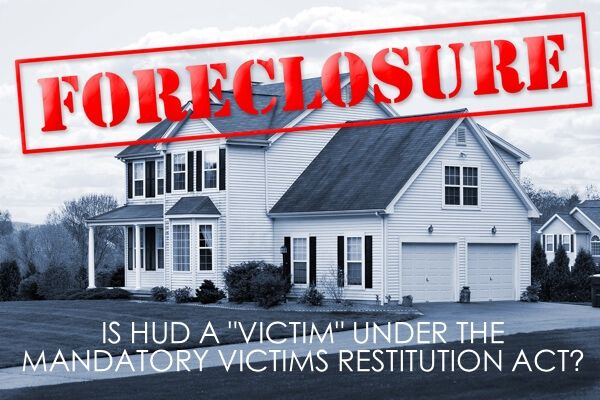
HUD MVRA Restitution Victim BennsUnited States v. Benns (5th Circuit, 2016) is a case regarding the Mandatory Victims Restitution Act (MVRA).  In this case, the US Court of Appeals for the Fifth Circuit held that HUD is not a victim of the defendant's crime, even though the HUD was out a considerable amount of money after defendant forged a credit application. Read more about USA v. Benns below.

Anxious Couple Seeks Help for Mortgage Default

Desperate for relief from a mortgage in arrears, Michael and Brenda Arnold conveyed ownership rights of their Arlington home to Rickey Benns. At the time of the conveyance, Benns agreed to rent the home and pay the mortgage from the profits made from future tenants. The mortgage loan, held by Bank of America and insured by the United States Department of Housing and Urban Development (“HUD”), remained in the Arnold family’s name. Unfortunately, Benns reneged on his agreement and failed to pay off the mortgage, triggering foreclosure proceedings against the Arnolds, unbeknownst to them.

Looming Foreclosure Leads to Desperate Acts of Forgery

In an attempt to prevent foreclosure of the property, Benns secretly tried to refinance the property. Benns forged Arnolds's signatures on loan modification documents and used a false pay stub to trick the bank into believing the Arnolds were creditworthy and still owned the property. After the application was denied by the bank, the property was eventually foreclosed on and sold below market value. Because Bank of America’s mortgage was insured by HUD, HUD paid the bank $54,906.59—the difference between what HUD paid Bank of America following foreclosure and the later sale price of the property.

A Plea is Entered and Restitution is Ordered

Benns plead guilty to one count of making false statement on a credit application, a violation of 18 U.S.C. § 1014. Upon entering the guilty plea, Benns “accepted the accuracy of a factual resume prepared by the government…author[izing] restitution to the victims of the community…includ[ing] restitution arising from all relevant conduct, not limited to that arising from the offense of conviction alone.” Benns was sentenced to twenty-seven months imprisonment, five years of supervised release, and ordered to pay restitution, totaling $544,602.42, under the federal Mandatory Victims Restitution Act (“MVRA”). Benns appealed to the United States Court of Appeals for the Fifth Circuit, arguing that HUD was not a victim of his convicted offense.

What is the Mandatory Victims Restitution Act (“MVRA”)?

The MVRA requires district courts to order restitution payments to crime victims during sentencing. 18 U.S.C. § 3663A. Under federal law, a victim is defined as, “a person directly and proximately harmed as a result of the commission of an offense for which restitution may be ordered.” Id. Typically, restitution is limited to losses arising from underlying conduct of a defendant’s offense of conviction. Hughley v. United States, 495 U.S. 411, 412-13 (1990); United States v. Espinoza, 677 F.3d 730, 732 (5th Cir. 2012); United States v. Maturin, 488 F.3d 657, 660-61 (5th Cir. 2007). To be a considered a victim under the MVRA, a person or organization must “suffer a foreseeable loss as a result of the conduct underlying the convicted offense.” Id. The government must establish, by a preponderance of the evidence, direct or proximate causation between the conduct underlying the offense and the actual loss suffered by the victim. United States v. Reese, 998 F.2d 1275, 1282 (5th Cir. 1993).

The Big Issue: Is HUD really a victim of Benns’s forgery scheme?

The United States Court of Appeals for the Fifth Circuit must determine whether HUD was a victim of Benn’s convicted offense. If the Court finds that HUD was a victim, then HUD will receive restitution under the MVRA. If the Court finds that HUD was not a victim, then Benns’ restitution award, which was imposed by the district court, could be amended or vacated altogether.

The Court of Appeals for the Fifth Circuit Weighs In with a Surprising Twist

Here, the Court weighs the argument made by the government against the facts of the case. The government argues that HUD’s loss was a direct result of Benn’s false credit application because the filing of the application itself delayed the foreclosure, which resulted in HUD selling the property at a loss. However, the Court states that the government did not produce evidence that the false credit application resulted in a delay, or that such a delay resulted in a greater loss for HUD than if HUD had sold the property any sooner than it actually did. The Court holds, because of the lack of evidence connecting the false credit application with the loss incurred by HUD, HUD is not to be considered a “victim” under the MVRA and, accordingly, cannot receive an award of restitution. “Benns was indicted and pleaded guilty to one count of filing a false credit application…it therefore does not follow that the behavior underlying Benn’s offense was the cause of HUD’s loss.”

Restitution could have only been awarded had the government established a direct or proximate causation between Benn’s false credit application and HUD’s loss when HUD sold the property at a foreclosure auction. The Court says the government failed to do so. Even though HUD was out $54,906.59, the Court does not consider HUD to be a victim of Benn’s convicted offense and vacates the restitution award.

Read full article
Pointers on Being a Judge Fort Worth Criminal Defense

7 Pointers on Being a Judge

By Brandon Barnett · Ethics

Some Words of Wisdom From the Top Military Appellate Bench

Pointers on Being a Judge Fort Worth Criminal DefenseThis week I am taking a break from my Fort Worth criminal defense cases to attend a Continuing Legal Eduction at the Air Force Judge Advocate General's School at Maxwell Air Force Base in Montgomery, Alabama. I am a reserve military judge in the Marine Corps and this is one of the annual training requirements for military judges. In one of our periods of instruction, the Chief Judge from the Court of Appeals for the Armed Forces (the highest court in the military justice system) gave us seven helpful tips on Being a Judge. I found them to be simple yet incredibly insightful. As you read these, you'll notice that they not only apply to military judges, but state judges, prosecutors, and criminal defense lawyers as well.
  1. Be Kind

  2. Be Patient

  3. Be Dignified

  4. Don't Take Yourself Too Seriously

  5. Don't Be Dismayed When You are Reversed* (*or overruled for the trial lawyers)

  6. Remember That There are No Unimportant Cases

  7. Don't Forget Your Common Sense

Simple, insightful, and easy to apply to our practice every day. We would all do well to observe these tips as often as possible. Practicing criminal defense in Fort Worth, I am fortunate to observe my colleagues, adversaries, and judges applying these pointers all the time. But sometimes there are cases or opposing counsel that tempt us to violate some of these rules (especially rules 1-3). I am thankful for the reminders and will continue to apply them to my practice both on the bench in the military and in the courtroom in Fort Worth.

Some of my other favorite quotes that tie in with this advice:

"Be polite, be professional, but have a plan to kill everybody you meet."

-General James "Mad Dog" Mattis, USMC (Retired)

"All you have to do is follow three simple rules. One, never underestimate your opponent. Expect the unexpected. Two take it outside. Never start anything inside the bar unless it's absolutely necessary. And three, be nice."

-Dalton (Patrick Swayze), Roadhouse

Read full article
12.44(a) and 12.44(b) State Jail Felony Reduction

Explaining Section 12.44 | Felony Reduced to Misdemeanor

By Jason H. Howard · Sentencing

What is Section 12.44(a) and Why Does it Matter to the State Jail Felony Defendant?

1244(a) and 1244(b) State Jail Felony Reduction Our Fort Worth criminal defense attorneys are routinely asked by family and friends of clients charged with State Jail Felony offenses about 12.44(a) and 12.44(b). Although it is sometimes elusive, our attorneys have had success in reducing State Jail Felony cases under Section 12.44. This article will discuss Sections 12.44(a) and 12.44(b) of the Texas Penal Code and explain why they are important to the State Jail Felony defendant.

State Jail Felony Punishment in Texas

In accordance with Section 12.35 of the Texas Penal Code, the confinement range for a State Jail Felony in Texas:

  • From 180 days to 2 years in a State Jail facility.

Any resulting conviction under Section 12.35 is considered a felony conviction for most purposes.

When a person is sentenced to confinement for a State Jail Felony offense, the sentence is served day for day. Aside from State Jail Diligent Participation Credit, a state jail sentence will last for every single day of the term, unlike a prison sentence, which may be cut short for parole or good time. For example, if someone receives a sentence for 12 months in state jail, that person will serve 365 actual days on the sentence.

What about 12.44?

Since parole and good time are not options for state jail time, Section 12.35 requires the defendant to serve that sentence day for day. However, section 12.44 of the Texas Penal Code allows for a reduction of the above consequences for someone charged with a state jail felony.

Sec. 12.44. REDUCTION OF STATE JAIL FELONY PUNISHMENT TO MISDEMEANOR PUNISHMENT.
(a) A court may punish a defendant who is convicted of a state jail felony by imposing the confinement permissible as punishment for a Class A misdemeanor if, after considering the gravity and circumstances of the felony committed and the history, character, and rehabilitative needs of the defendant, the court finds that such punishment would best serve the ends of justice.
(b) At the request of the prosecuting attorney, the court may authorize the prosecuting attorney to prosecute a state jail felony as a Class A misdemeanor.

Please note section 12.44 has two subsections. The differences between them are significant.

What is the Difference Between 12.44(a) and 12.44(b)?

12.44(a)

Under 12.44(a), at the discretion of the court, a state jail felony can be punished as a Class A misdemeanor. If convicted, the conviction results in a felony conviction. However, if sentenced to confinement, the defendant is allowed to serve time the same as if he were convicted of a Class A misdemeanor. That means the defendant can serve his time in the local county jail as opposed to a State Jail facility. That also may allow the defendant to have access to good time offered by the county jail in his jurisdiction (e.g. In Tarrant County, this could result in 2 for 1 credit or 3 for 1 if the defendant is a trustee).

12.44(b)

Under 12.44(b), at the discretion of the prosecutor, a state jail felony can be converted to a Class A misdemeanor. If convicted, the conviction results in a misdemeanor conviction. If incarcerated, the defendant would serve his time in the county jail the same as described in the above paragraph.
Note: Both 12.44(a) and (b) require the sentence to be within the penalty range of a Class A misdemeanor (0-365 days confinement and a fine, if any, not to exceed $4,000).

Probation Under 12.44

Straight Probation and Deferred Adjudication probation are also allowed under both 12.44(a) and 12.44(b). Straight probation would result in a conviction for a felony if reduced under 12.44(a) and a conviction for a misdemeanor if reduced under 12.44(b). If you receive deferred adjudication probation under either a 12.44(a) or 12.44(b) reduction, a conviction can be avoided altogether if the probation is successfully completed. Any future probation revocation proceedings by the state would be limited at sentencing to the misdemeanor punishment provided by section 12.44 as discussed in the paragraphs above.

Note: A probated sentence under 12.44 cannot exceed 2 years – the maximum time allowed for a probated sentence for a Class A misdemeanor.

State Jail Felony Defense Attorneys, Fort Worth, Texas

Depending on the circumstances, if you or someone you know is charged with a state jail felony in Texas, Section 12.44 may be applicable. There are many factors that the prosecutor or judge will consider if your attorney requests a 12.44 reduction. It is important to discuss your specific circumstances with your attorney. Please feel free to contact Barnett Howard & Williams PLLC if you have questions.

Read full article
Cell Tower Records Criminal Defense

Murder Case Hinges on the Privacy of Cell Tower Records

By Brandon Barnett · Murder

Was it an Unlawful Warrantless Search Under the 4th Amendment for the DA to Obtain Cell Tower Records From a Third Party and Use Them Against a Defendant Charged with Murder?

Ford v. State (2015) | San Antonio Murder Mystery

JCell Tower Records Criminal Defenseon Ford and Dana Edwards dated off and on for two years in the small town of Alamo Heights, Texas. After a long break-up, the former couple saw each other at a friend’s New Year’s Eve party. The group of friends drank heavily and played “Apples to Apples,” an interactive game that required the participants to reveal their thoughts on personal topics. During the game, the subject of marriage came up and Ford was singled out about his on-again-off-again relationship with Edwards. Angry, Ford left the party before everyone else.

The next day, Edwards’s parents were expecting her in Fredericksburg, but she never showed. Worried, her parents drove to her condo, where they found her dead. Because she sustained lacerations and trauma to her head, the police opened up a murder investigation.

The State Gathers Evidence

On January 2nd, Ford volunteered to give a statement. In his statement, Ford said he left the party around 11:30 pm, went home, and fell asleep. Ford said that his new cell phone had been in his possession the entire night.

The investigators obtained video footage of the streets bordering Edwards’s condo, footage that conflicted with Ford’s official statement. At 11:24 pm, the camera captured a white SUV, similar to Ford’s vehicle, turn into the victim’s condo complex. At 1:00 am, Edwards’s car entered the complex. At 3:16 am, with the headlamps turned off, the white SUV exited the complex. No one could definitively say the white SUV belonged to Ford, as the license plate and registration stickers could not be determined because of the quality of the video.

A week later, the San Antonio District Attorney’s Office filed an application under Article 18.21 § 5(a) of the Texas Code of Criminal Procedure, and in compliance with Communications Act, to obtain Ford’s historical cell-site-location records from AT&T Wireless.

Ford’s Case Goes to Trial

At trial, a radio network engineer from AT&T Wireless testified about the records. The engineer said that AT&T can tell where a cell phone is located by examining the sector information. He explained, “when a person sets up a call, receives a call, or sends a text, the person does so in communication with…sectors in the cell-phone network…[which] enables [AT&T] to look up the records for a particular phone number…determin[ing] [the] cell phone’s proximity to a cell…tower.” Ford v. State, 444 S.W.3d 171, 190 (Tex. App.—San Antonio 2014). This is also true when the phone is not being actively used, as “unanswered texts and calls…automatic downloads….cause the [phone] to…ping the network to alert the network that the [phone] is in a particular…area.” Id.

According to AT&T, Ford’s cell records indicate that the numerous pings place Ford at the party, then at the victim’s condo complex and finally, at his home. The “ping” time frame also matches the timestamps from the camera footage for the unknown white SUV. Id.

The jury found Ford guilty of murder, sentencing him to forty years in prison. Ford appealed, and the court of appeals affirmed the verdict and sentence, relying upon the third party doctrine. Justice Chapa dissented in the court of appeals case, stating, in a nutshell, that Ford retained a reasonable expectation of privacy in his physical movements and location; he did not voluntarily surrender his expectation of privacy; and because the State did not secure a warrant before obtaining the records, Ford’s Fourth Amendment rights were violated. Ford appealed to the Criminal Court of Appeals (“CCA”).

The Big Issue | Privacy of Cell Tower Records

Did the State of Texas’ warrantless acquisition of historical cell-site-location information—recorded by a 3rd party cell-phone service provider—violate the Fourth Amendment? Did Ford have a reasonable expectation of privacy in his movements and location?

What does the law say about the expectation of privacy in cell phone records? What is the Third Party Doctrine?

The Fourth Amendment Guarantees , “the right of the people to be secure in their persons, houses, papers, and effects, against unreasonable searches and seizures.” U.S. CONST. amend. IV. A person may appeal a verdict under a privacy theory if (1) he has a subjective expectation of privacy in the place or object searched, and (2) society…recognize[s] that expectation as reasonable. State v. Granville, 423 S.W.3d, 399, 405 (Tex. Crim. App. 2014).

The Third Party Doctrine allows for acquisition of information revealed to a third party (such as a cell phone company or a bank). Case law reflecting this doctrine suggests that information that must be disclosed [in the normal course of business] for the phone company to provide the requested service, is not off-limits to law enforcement and is not a violation of the Fourth Amendment. However, courts across the United States remain divided on this issue.

The Texas Court of Criminal Appeals Weighs in on Cell Phone Records and the Third Party Doctrine

Here, the CCA says that the DA’s office did not violate Ford’s Fourth Amendment rights because Ford had no legitimate expectation of privacy in records held by AT&T, records kept in the normal course of business, pointing to his location and movements in the past. AT&T uses the records for its own business purposes to improve network functionality. Moreover, phone service providers are required, by the FCC to locate a cell phone when a 911 call is placed. In re Application (Fifth Circuit), 724 F.3d at 611-12. Therefore, “The type of non-content evidence, lawfully created by a third-party telephone company for legitimate business purposes, does not belong to defendant[s], even if it concerns [a defendant].” United States v. Davis, 785 F.3d 498, 511 (11th Cir. 2015) . Acknowledging that Fourth Amendment claims may survive with in the case of GPS devices, or in long-term monitoring of individuals, the CCA affirms, holding, “In the circumstances [of this case], we do not see a jurisprudential reason to stray from the third-party doctrine.”

What could Ford v. State mean for you?

Generally speaking, your cell phone records, by way of the third-party doctrine, are subject to review by law enforcement and could be used against you in criminal proceedings in Texas. The CCA is saying that a reasonable person does not have a reasonable expectation of privacy in his or her cell tower records.

Read full article

Speak with a Fort Worth attorney

Call (817) 993-9249 or send us a message to discuss your case.