
Skip to content
Tag

Keller & Southlake DWI Defense Guide | HLAW

Page 8 of 12 · 57 articles

No Refusal Weekends for DWI in Fort Worth, Texas

No Refusal Weekends in Texas | DWI Blood Search Warrant

By Brandon Barnett · DWI

What you need to know about No Refusal Weekends in Texas | Fort Worth DWI Attorneys
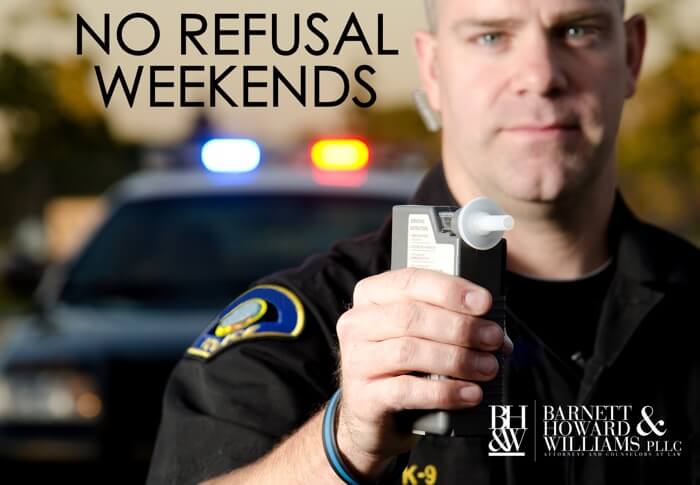
No Refusal Weekends for DWI in Fort Worth, TexasThroughout the year, as various holidays approach (Christmas, New Year's, Super Bowl weekend, 4th of July, etc.), we receive questions about "No Refusal Weekends," in which police agencies crack down on driving while intoxicated or DWI. It is important that Texas motorists understand the rules of the road, so that every holiday season remains merry and bright. Many have seen the “No Refusal” notices on electronic road signs, heard the “No Refusal” advertisements on the radio, or watched stories on the news related to “No Refusal" for suspected drunk driving. What is “No Refusal” and how does the law impact your holiday travel? Understanding a few basic things about the law could help you in the event of a traffic stop or a detention by a law enforcement officer.

What is No Refusal Weekend?

No Refusal Weekend refers to a short period of time, typically a holiday weekend or the weekend of a special event, such as the Super Bowl, where law enforcement advertises the ability to conduct routine traffic stops, detaining motorists for suspected DWI. During the stop, law enforcement requests a blood or breath sample, and, if the motorist refuses to comply, law enforcement immediately contacts a judge or magistrate who is designated “on call” during the No Refusal time frame. If the law enforcement officer conveys to the judge that (1) there was reasonable suspicion to detain the motorist for a traffic or criminal offense, and, (2) there is probable cause to believe the motorist is driving under the influence of drugs or alcohol, then the judge quickly issues a search warrant for the sample. Tex. Transp. Code §§ 724.011(a), 724.012(b), 724. At that point, law enforcement may call for a phlebotomist to take the sample on site, or may transport a motorist to a facility to obtain the sample. If all goes according to plan, “no refusal” speeds up the process by which law enforcement obtain samples used for DWI/DUI arrests. Further, the sample becomes evidence for trial.

What is the purpose of No Refusal Weekend?

The entire No Refusal process from detention to arrest is faster in theory, the goal being to catch motorists who are driving under the influence quickly, and to capture the highest blood alcohol content (“BAC”) possible. In Texas, a BAC level of .08 is considered legally intoxicated. No Refusal Weekend differs from a DWI stop on regular days by it’s speed — the quick phone call to an “on call” judge who is waiting by the phone to issue warrants — and it’s deference to law enforcement in the moment. So what does this mean for you, the Texas motorist?

You have the right to refuse blood and breath tests initially.

The term No Refusal sometimes confuses motorists. Many believe they cannot refuse a law enforcement officer’s request for a sample during a No Refusal period. Not true. On No Refusal Weekend motorists still have the right to refuse to provide blood and breath during a traffic stop. However, if law enforcement obtains a search warrant for blood, the motorist must comply; failure to comply may result in additional charges. Once the officer has a warrant in hand, the rules change. But before the officer obtains a warrant, you can refuse to provide breath or blood and you may refuse to submit to field sobriety tests. For notifications about when No Refusal Weekends begin in the Dallas Fort Worth area, and to know your rights if you are stopped by an officer, download our free App from the App Store or Google Play — know your rights before you go out!

*Note: Refusal of a breath or blood test may result in temporary loss of driving privileges, even if the officer later obtains a warrant to conduct the search.  The courts will typically grant an occupational driver's license to work and household tasks.

Warrantless searches for blood alcohol content in DWI cases violate the Fourth Amendment.

The No Refusal law comes from an “implied consent” provision in the Texas Transportation Code. The 2007 law states, “if a person is arrested for...operating a motor vehicle in a public place…while intoxicated…the person is deemed to have consented…to submit to the taking of one or more specimens of the person's breath or blood for analysis to determine the alcohol concentration or the presence in the person's body of a controlled substance, drug, dangerous drug, or other substance.” Tex. Transp. Code §§ 724.011(a), 724.012(b), 724. However, in 2014, the Texas Court of Criminal Appeals held that “warrantless, nonconsensual testing of a DWI suspect's blood does not…fall within any recognized exception to the Fourth Amendment's warrant requirement, nor can it be justified under a…Fourth Amendment balancing test.” State v. Villareal, PD-0306-14 (Tex. Crim. App. 2014).  See also, the US Supreme Court's opinion in Missouri v. McNeely. In summary, a motorist may refuse a blood or breath test upon an initial request by law enforcement, but after a warrant is obtained from a judge, a motorist may not refuse at that point because it is mandatory—hence the name No Refusal.

Please take the time to know your responsibilities and rights before heading out on No Refusal Weekends in Texas. Download our App on the App Store or on Google Play for the latest information on No Refusal Weekends. Have a safe and happy holiday season! This article is for educational purposes only and does not take the place of legal advice. If you are in need of a DWI attorney, please contact our office for a free consultation at (817) 993-9249.
Read full article
Impersonating a Public Servant in Texas

Man Pretends to be a Dallas District Attorney and Receives 2 Years in Prison

By Brandon Barnett · Criminal Defense

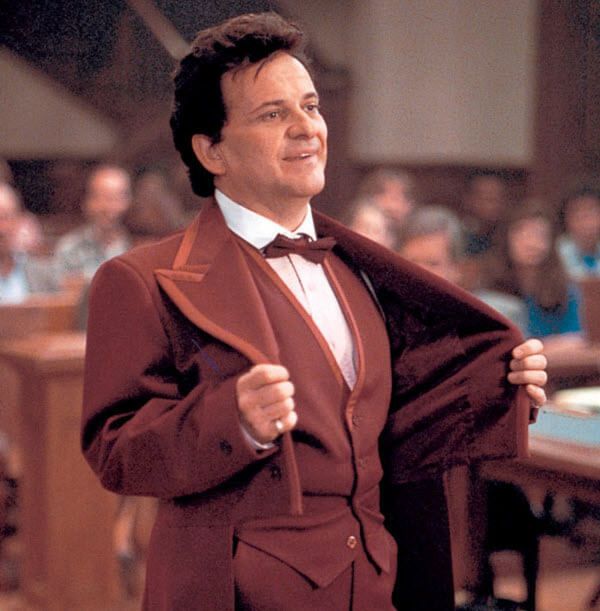
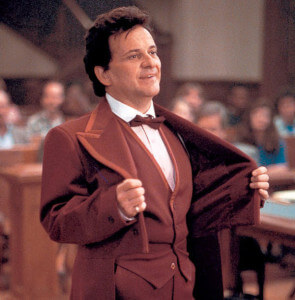
Impersonating a Public Servant in TexasWhen I think of someone impersonating an attorney, my mind goes to Joe Pesci and My Cousin Vinny.  In the movie Vincent Gambino only impersonated a criminal defense lawyer (not a public servant) so nobody seemed to care (except the judge), but in Texas, Impersonating Public Servant (including a district attorney) is a serious matter.  Robert Cornwell found this out after he pretended to be a Dallas County Assistant District Attorney in hopes of helping his friend with a DWI case.


In May of 2012, Robert Cornwell called Montgomery County Assistant District Attorney Kourtney Teaff, identifying himself as an assistant district attorney from Dallas County, attempting to “resolve [his friend’s] [DWI] case.” Cornwell claimed access to criminal histories, case files, and fingerprint cards. He mentioned speaking with governmental offices, and prosecuting his nephew for drug possession. Cornwell insisted on using his personal cell phone number because he and Teaff “were on the same team.” Becoming suspicious of the “highly unusual” requests coming from another district attorney, Teaff recorded the conversations. According to the trial court, Cornwell always used his real name, he had never been an attorney in Texas, he never attempted to claim official authority over Teaff, and he intended that “Teaff should consider the requests a personal favor.” Cornwell was sentenced to two years imprisonment for impersonating a public servant.

See the opinion in Cornwell v. State

What does "Impersonating a Public Servant" mean in Texas?

Impersonating a Public Servant is a Third Degree Felony with a punishment range of 2-10 years in prison and up to a $10,000 fine.  A person violates Section 37.11(a)(1) of the Texas Penal Code when the person impersonates a public servant in combination with the requisite intent...[which] can be satisfied with either the submission theory (“with intent to induce another to submit to his pretended official authority”) or the reliance theory (“with the intent to induce another…to rely on his pretended official acts.”).

Cornwell appealed to the Court of Appeals, arguing that the evidence was insufficient to show either theory of intent—submission or reliance—because he did not persuade Teaff to submit to any asserted authority he might have over her. The Court of Appeals rejected Cornwell’s argument, “concluding that the evidence was…sufficient to support a jury finding that he had impersonated a public official with intent to induce another to rely on his pretended official acts—the reliance theory.” Cornwell then petitioned the Court of Criminal Appeals (“CCA”) for discretionary review.

Here, the CCA determines whether the Court of Appeals was incorrect in misconstruing the meaning of the Section 37.11(a)(1) of the Texas Penal Code, as only “a few Texas appellate courts have directly addressed the reliance theory of intent, and specifically, the meaning of pretended official acts.” See Ex Parte Niswanger, 335 S.W.3d at 617 & n.11; Tiller v. State, 362 S.W.3d 125, 128 (Tex. App.—San Antonio 2011, pet. ref’d.); Tovar v. State, 777 S.W.2d 481,489 (Tex. App.—Corpus Christi 1989, pet. ref’d.).

The CCA Clarifies what "Impersonating" means (and doesn't mean).

The CCA explained that Section 37.11(a)(1) can be broken down into two parts: the culpable act (actus reus, the bad act) and a culpable mental state (mens rea, the guilty mind). To violate the statute, the State must prove:

  1. that the impersonation happened and
  2. that the impersonator had the specific intent to induce another to submit or to rely upon.

“An accused may not be convicted on a simple showing that he falsely held himself out to be a public servant.”

Because it was undisputed that Cornwell did impersonate a public servant—an assistant district attorney from Dallas County—satisfying the first part of the statute, the CCA focused on Cornwell’s mental state, specifically the reliance theory—the evidence that shows Cornwell’s intent to induce another to rely upon his pretended official acts. The CCA explained that Cornwell attempted to persuade Teaff he was “an experienced assistant district attorney by relating various claims of conduct he had undertaken as an assistant district attorney” namely, “putting his nephew in jail, reviewing case files, and investigating matters in the capacity of assistant district attorney.” The CCA is adamant that, “the only reason [Cornwell] could have had for relaying these pretended official acts to Teaff was to enhance the credibility of his claim to be an assistant district attorney.” “By calling and speaking to an assistant district attorney as a member of the same team, [Cornwell]…hoped to gain [Teaff’s] trust and goodwill.” Further, Cornwell did not ask for favor[s] in his capacity as a private citizen or concerned friend, rather, he asked under the guise of being an assistant district attorney. The CCA states, such “purported actions exceed mere false identification as a public servant.” The CCA agreed with the Court of Appeals, affirming Cornwell’s conviction and sentence.

There are no shortcuts to due process. The Texas Penal Code prescribes strict punishment for those impersonating officers of the court. There is no doubt that criminal charges and allegations can make the accused feel panicked and overwhelmed, however, the old adage “desperate times call for desperate measures,” will not hold water in court where impersonation is concerned. If you or a loved one are facing criminal charges, contact an actual Texas attorney who will explain the proper steps in dealing with the legal system. Contact our office today for a free consultation at (817) 993-9249.

Read full article
Community Caretaking Fort Worth

“Hunched Over” Passenger Not Enough Distress to Invoke the Community Caretaking Exception

By Brandon Barnett · Criminal Defense, DWI

Community Caretaking Fort WorthWhile conducting a preventative patrol on the Fourth of July in 2013, a Fort Worth police officer stopped at a red light beside Cameron Byram’s vehicle. Both vehicles had the windows rolled down. The officer testified at trial that he noticed a female passenger in Byram’s car “hunched over…[and that he]…didn’t see any movement at all [from] the female.” The officer smelled alcohol coming from Byram’s car, and felt Byram was “not attending to the female passenger.” The officer shouted over to Byram, asking if she was alright, but Byram faced forward and drove away when the light turned green. Believing the female passenger needed medical attention, coupled with Byram’s actions “as an attempt to avoid contact with the police,” the officer stopped Byram’s car to conduct traffic stop. The officer checked on the passenger and called for medical attention, which she later refused. Next, the officer investigated and arrested Byram for driving while intoxicated (DWI). The officer testified that Byram had not committed a traffic offense, nor were there any technical violations on Byram’s car—he only stopped the car to perform a safety check.

Byram v. State (2nd Court of Appeals - Fort Worth, 2015)

***UPDATE - This case was REVERSED by the Texas Court of Criminal Appeals in 2017. See opinion.

After his motion to suppress the evidence for the DWI charge was denied, Byram entered a guilty plea. The trial court assessed punishment at ninety days in jail and a $750 fine, but suspended the sentence, placing him on community supervision for eighteen months. Byram appealed.

The issue before the Fort Worth Court of Appeals is whether the community caretaking exception to the Fourth Amendment applies to the facts of the case, or, whether the police officer had reasonable suspicion to stop Byram.

The Fourth Amendment provides a safeguard against unreasonable searches and seizures. U.S. Const. amend. IV; Wiede v. State, 214 S.W.3d 17, 24 (Tex. Crim. App. 2007). A warrantless arrest is considered unreasonable unless it fits into an exception, such as the community caretaking exception. Minnesota v. Dickerson, 508 U.S. 366, 113 S. Ct. 2130, 2135 (1993); Torres, 182 S.W.3d at 901. A search or seizure “is not unreasonable” when community caretaking is the goal, however, the exception is “narrowly applied” in the “most unusual of circumstances.” Wright, 7 S.W.3d at 152.

“Courts consider four non-exclusive factors in determining whether the officer’s belief that the defendant needed help was reasonable: (1) the nature and level of the distress exhibited by the individual; (2) the location of the individual; (3) whether or not the individual was alone or had access to assistance other than that offered by the officer; and (4) to what extent the individual, if not assisted, presented a danger to himself or others.” Corbin v. State, 85 S.W.3d 272, 277 (Tex. Crim. App. 2002).

First, the Court of Appeals concludes that the passenger did not exhibit distress. “The passenger did not appear to be in any great distress, she was located in a busy area of town where there were nearby hospitals, she was not alone [in the car], she was in public, and she did not appear to be a danger to herself or others.” Further, the Court of Appeals states, “We…cannot conclude that the…community caretaking exception, when applied to a hunched over passenger…indicates that the passenger presented a danger to herself or others.”

Second, the Court of Appeals determines that the officer lacked reasonable suspicion to be able to perform a safety check. “[While] we do not question the good faith of [the officer’s] subjective suspicion that Byram might have been involved in an alcohol-based offense…so long as consumption of alcohol is not illegal…permitting…investigation of persons for alcohol-based offenses solely on whether the odor of alcohol is present invites unwarranted police intrusions.” Byram’s traffic stop violated his Fourth Amendment rights.

Justice Sue Walker dissents, stating the passenger was exhibiting signs of distress because she “was not moving and appeared unconscious.” The passenger was also in a vehicle driven by a man “who appeared unconcerned about her well-being.” The passenger’s access to assistance was doubtful because Byram did not respond to the police officer’s question about her condition. Lastly, the passenger was a danger to herself because she appeared unresponsive and unable to ask for help. “Thus, all four factors…support the reasonableness of the officer’s belief that she needed assistance.”

Law enforcement officers must abide by local, state and federal procedural and substantive laws when conducting traffic stops and arrests. If you or a loved one is facing DWI charges or traffic violations, please contact our office today for a free consultation at (817) 993-9249.

Read full article

DWI Intox Manslaughter Case Reversed Due to Drunk Victim

By Brandon Barnett · DWI

Causation Difficult to Prove In DWI Intoxication Manslaughter Case | Fort Worth DWI Attorneys

One of the key issues in any criminal case is causation. In order to be found guilty of a crime, a defendant’s actions must be found to have been the cause of the criminal act. While causation may seem like a simple thing to prove, causation may depend as much on the actions of the victim as on the actions of the defendant.

Saenz v. State (14th Court of Appeals, August 2015)

FACTS: Monika Saenz was driving her truck around 3:00 a.m. when she struck Jose Torres, Jr., killing him. Blood drawn over an hour after the accident yielded a blood alcohol concentration (BAC) of .172 for Saenz. The autopsy of Torres determined that his BAC was also .172 at the time of the accident and that he had used marijuana and cocaine prior to his death.

Saenz was convicted of intoxication manslaughter and accident involving injury or death. There was no question as to whether Saenz’s truck hit Torres. Saenz’s only defense was concurrent causation: If Torres’ conduct was clearly sufficient to produce the accident that resulted in his death, and Saenz’s conduct was clearly insufficient to produce that result, then Saenz should be acquitted under the theory of concurrent causation.

Saenz pointed to many features of Torres’ conduct that were sufficient to cause the accident. He was walking in the road in dark clothes while intoxicated in the middle of the night; there was no evidence that Saenz’s car ever left the roadway; Torres was walking on the wrong side of the road; and Saenz was not speeding at the time of the accident. Saenz’s position was that her driving while intoxicated was insufficient to cause Torres’ death because even a sober driver would have struck and killed Torres given his conduct.

As part of her concurrent causation defense, Saenz attempted to admit evidence of Torres’ .172 BAC. However, the medical examiner refused to state his opinion that Torres’ .172 BAC would have affected his normal use of physical or mental faculties. As a result, the trial court did not allow admission of the evidence regarding Torres’ BAC.

On appeal, the Texas Fourteenth Court of Appeals questioned why the medical examiner would refuse to concede that a BAC of more than twice the legal limit for driving may have affected Torres’ use of his mental or physical faculties. Furthermore, the Court noted that the standard for public intoxication is that an individual is intoxicated to the degree that he may endanger himself or others. According to the Court, the evidence of Torres’ .172 BAC may have led the jury to conclude that Torres was a danger to himself while walking in the middle of the road in the dark. Further, the Court held, the BAC evidence might have provided a possible explanation to the jury for why Torres failed to move from the roadway when the vehicle appeared.

After finding that the evidence of the victim’s BAC should have been admitted, the Court addressed the question of whether the failure to admit had harmed Saenz’s case. According to the Court, Torres’ BAC evidence was essential Saenz’s defense, and excluding the evidence denied Saenz the opportunity to properly present her concurrent causation defense. Because the Court determined that exclusion of evidence of the victim’s BAC was error that may have contributed to the conviction or punishment, the Court reversed the conviction for intoxication manslaughter and remanded the case for a new trial.

This case illustrates the complexity of the current causation defense, which is used in cases other than criminal cases, particularly property insurance cases. A Fort Worth Criminal Defense Attorney will be familiar with the concurrent causation defense and may be able to obtain an acquittal for his or her client by showing that the criminal act would have occurred even if the defendant had done nothing wrong because the victim’s conduct would have caused it.

Read full article

Court Rejects Blood Alcohol Content Evidence by Unqualified Expert in DWI Case

By Brandon Barnett · DWI

Rejecting the "Science" of Retrograde Extrapolation in Texas DWI Cases

Most people are familiar with the blood alcohol concentration (BAC) level for DWI: 0.08.  Most people, however, are not familiar with "retrograde extrapolation" and the role it plays in determining BAC. A Fort Worth Criminal Defense Attorney will understand the importance of retrograde extrapolation in a DWI case as evidenced by a recent decision from the Texas Fourteenth Court of Appeals.

VELIZ v. STATE (14th Court of Appeals, Houston, 2015)

FACTS: Houston Police Officer Joel Quezada arrested Luis Veliz shortly after midnight. Veliz admitted to having two beers to drink. After Officer Quezada obtained a search warrant, Veliz's blood was drawn at 3:32 a.m. Veliz's BAC was .081.

At Veliz's trial, a criminalist from the police crime laboratory testified that, based on the .081 BAC at 3:32 a.m., Veliz's BAC at the time of the stop would have been between 0.095 and 0.124. The jury found Veliz guilty of DWI.

On appeal, Veliz argued the criminalist's testimony regarding his BAC was not admissible. This is where retrograde extrapolation became important.

The issue in a DWI case is the BAC at the time the defendant was driving. The blood sample is often obtained hours after the arrest. The process for estimating a BAC at the time of arrest based on a blood sample drawn later is known as retrograde extrapolation: a BAC at one point in time (3:32 a.m. for Veliz) is used to estimate the BAC at a time in the past (12:05 a.m. for Veliz).

Mata Factors Must Be Proven In Order to Apply Retrograde Extrapolation in Texas DWI Cases

Texas case law allows retrograde extrapolation testimony if the expert witness understands how to apply and how to clearly explain the process. In assessing such testimony, courts consider the time between the offense and the blood test, how many tests are administered and at what intervals, and any characteristics of the individual that were considered, including weight, gender, drinking pattern, tolerance for alcohol, amount of alcohol consumed, type of alcohol consumed, time of the last drink and what food was consumed. These are known as the Mata factors, based on the case in which they were first applied.

The Mata factors are important because different individuals' bodies absorb and eliminate alcohol at different rates. And calculating a BAC retroactively requires knowing whether the individual was in the absorption phase (increasing BAC) or in the elimination phase (declining BAC). While not every factor must be known, Texas case law requires that if only one test is performed some time after the alleged offense, retrograde extrapolation is reliable only if many of the factors are considered.

The Court found the criminalist did not know many of Veliz's relevant characteristics--his drinking pattern, the time of his first or last drink, or whether he had eaten recently. The criminalist testified she did not know the Mata factors for retrograde extrapolation. She also testified--incorrectly--that all she needed to perform a retrograde extrapolation was the time of the stop and the time of the blood draw. Because the criminalist did not understand and could not explain the subtleties of retrograde extrapolation, the court reversed the verdict and remanded for a new trial.

Some people believe refusing a blood test when arrested for DWI is a good strategy because any delay will result in a lower (and unreliable) BAC. However, a Fort Worth Criminal Defense Attorney will advise that a BAC based on blood drawn several hours after the arrest can be used to calculate a BAC at the time of arrest that will be admissible in court if the retrograde extrapolation appropriately considers some or all of the Mata factors.

On the other hand, if an individual is on trial for DWI, his or her Fort Worth Criminal Defense Attorney should carefully question any BAC evidence, particularly if it is based on a blood draw that occurred some time after the arrest. Retrograde extrapolation is not an exact science, and a jury will be allowed to hear testimony only if the extrapolation is appropriately performed and explained.

Contact the Experienced Fort Worth DWI Attorneys at Barnett Howard & Williams PLLC. (817) 993-9249

Our Tarrant County DWI attorneys are experienced in the science behind DWI and retrograde extrapolation for determining BAC. If you have been arrested for DWI, please contact us today for a FREE consultation of your case. Call (817) 993-9249 and set up an office consultation in Fort Worth, Keller, or Grapevine.

Read full article

Speak with a Fort Worth attorney

Call (817) 993-9249 or send us a message to discuss your case.