Short answer: If a driver hits you while you're riding a bicycle in Fort Worth, Dallas, or elsewhere in North Texas, you can usually recover compensation from the at-fault driver's insurance for medical bills, lost income, and pain and suffering. You may also be able to use your own auto policy's PIP and uninsured motorist coverage, even though you weren't in a car. Texas treats a bicycle as a vehicle with the same rights on the road. Fort Worth and Dallas have local "vulnerable road user" ordinances that require drivers to give cyclists safe passing room. You can recover damages as long as you are not more than 50% at fault, so evidence about who caused the crash matters from day one.
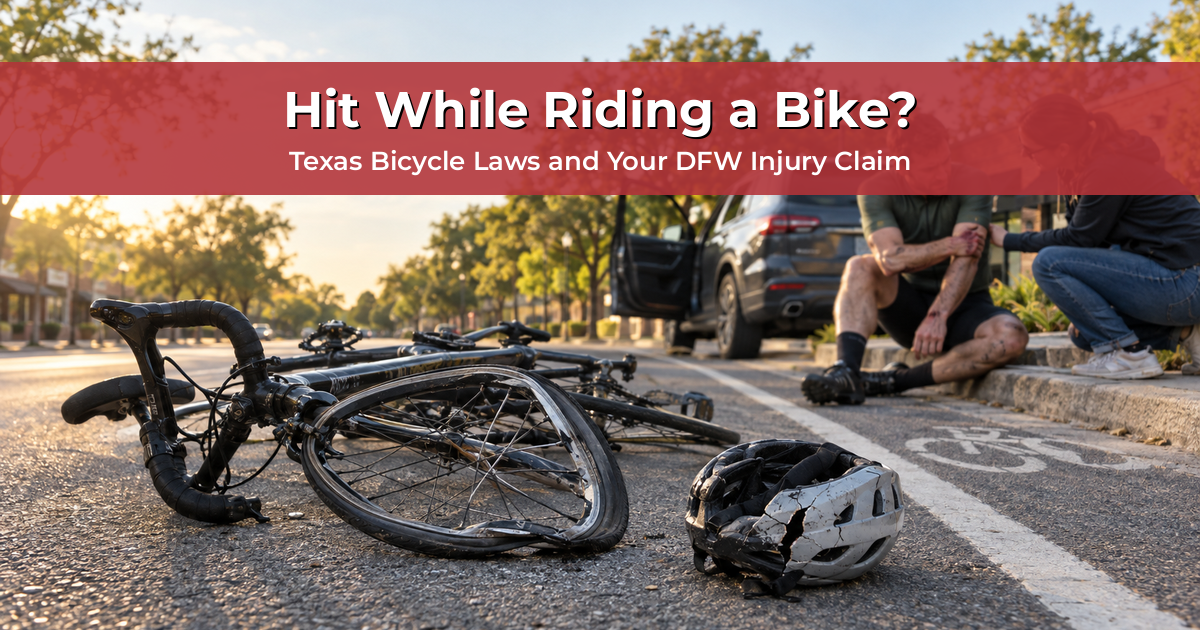
Bicycle crashes are some of the most serious collisions we see. A cyclist has no seatbelt, no airbag, and no steel frame, so even a low-speed impact from a right-turning SUV or an opening car door can cause broken bones, a head injury, or worse. According to TxDOT, 80 bicyclists died and another 429 were seriously injured in 2,761 Texas traffic crashes in 2024. Driver inattention, failure to yield the right of way, and speeding were the top contributing factors.
At Howard Lotspeich Alexander & Williams, PLLC (HLAW), we represent injured cyclists across Tarrant, Dallas, Denton, Collin, Johnson, and Parker counties. This guide explains the Texas bicycle laws that matter in an injury claim, how fault is decided, which insurance pays, and what to do after a crash.
Key Takeaways
- A bike is a vehicle in Texas. Cyclists have the rights and duties of drivers. They must ride with traffic and generally keep to the right, but the law lists several exceptions that let you take the lane.
- Texas has no statewide 3-foot law. Fort Worth and Dallas have local vulnerable road user ordinances requiring at least 3 feet of clearance for passenger vehicles and 6 feet for trucks.
- Crosswalk crashes can be crimes. Under Transportation Code §545.428, a driver who negligently injures a cyclist in a crosswalk commits a Class A misdemeanor. It becomes a state jail felony if the cyclist suffers serious bodily injury.
- The 51% rule. Under CPRC §33.001, you can recover damages if you are 50% or less at fault. Your recovery is reduced by your percentage of fault.
- Your own auto policy may cover you on a bike. PIP and UM/UIM coverage often protect you as a cyclist, which matters when the driver is uninsured, underinsured, or flees.
- No helmet doesn't bar your claim. Texas doesn't require adult cyclists to wear helmets, though insurers may still argue about it.
- The deadline is generally two years. Texas's personal injury statute of limitations is generally two years.
What Texas Bicycle Laws Apply in DFW?
Bicycles have the same rights as cars
The City of Fort Worth's bicycle law guide, drawing on the Texas Driver Handbook, explains that a bicycle is a vehicle. A person riding one has the rights and duties of any vehicle driver, except those that by their nature can't apply to bicycling. Cyclists must obey signs and signals, stop at red lights and stop signs, and ride with traffic, not against it.
When cyclists can take the lane
Drivers and insurance adjusters often assume a cyclist must hug the curb. That's not quite the law. Under Transportation Code §551.103, a cyclist moving slower than traffic must ride "as near as practicable" to the right curb or edge, unless:
- They are passing another vehicle;
- They are preparing to turn left;
- A hazard prevents safe riding at the edge, such as a parked car, debris, a pedestrian, or a poor road surface; or
- The outside lane is less than 14 feet wide with no bike lane, or is too narrow for a bike and car to travel safely side by side.
On a one-way street with two or more marked lanes, a cyclist may also ride near the left curb. Many DFW streets have outside lanes narrower than 14 feet, so a cyclist riding in the middle of the lane is often doing exactly what the law allows.
Safe passing: no statewide 3-foot law, but Fort Worth and Dallas have rules
Texas is unusual: it has no statewide minimum passing distance. The Legislature passed a safe passing bill in 2009, but it was vetoed. Statewide, a driver overtaking another vehicle must pass to the left "at a safe distance" under Transportation Code §545.053.
Several North Texas cities have filled the gap. According to the North Central Texas Council of Governments:
| City | Ordinance | Key requirements |
|---|---|---|
| Dallas | City Code Ch. 28, Sec. 28-58.2 | Pass at a safe distance (3 ft for cars, 6 ft for trucks/commercial vehicles); no throwing objects at cyclists; no "right hook" turns in front of a cyclist |
| Fort Worth | City Code Ch. 22, Sec. 22-95 | Same as Dallas, plus a ban on maneuvering a vehicle to intimidate or harass a vulnerable road user |
BikeTexas reports that Texas cities with safe passing ordinances include Fort Worth, Denton, and Plano. In a civil case, a violation of a safety ordinance like this can be powerful evidence of negligence.
"Dooring" is against the law
One of the most common urban bike crashes happens when a parked driver or passenger opens a door into a cyclist's path. Transportation Code §545.418 says a person may not open a door on the side available to moving traffic unless it can be done "in reasonable safety without interfering with the movement of other traffic." Dooring crashes are common in busy areas like Magnolia Avenue, West 7th, Deep Ellum, and Bishop Arts, where riders pass rows of parked cars.
Crosswalks and the vulnerable road user offense
Under §545.428, a driver commits an offense if they operate a vehicle in a crosswalk with criminal negligence and injure a pedestrian or a person riding a bicycle, scooter, or similar device. It's a Class A misdemeanor, or a state jail felony if the rider suffers serious bodily injury. The statute provides an affirmative defense if the rider was violating traffic laws at the time. A criminal charge doesn't decide your civil case, but it can strengthen your claim.
Helmets and lights
Texas has no statewide helmet requirement for adult cyclists. Fort Worth's guide says wearing an approved helmet is "highly suggested" but "not required by law." At night, Texas law requires a white front lamp and a red rear reflector or lamp, and TxDOT recommends both.
Who Is at Fault in a Texas Bicycle Accident?
Fault is decided under Texas's proportionate responsibility system. A jury or the parties' negotiations assign each person a percentage of responsibility:
- If you are 50% or less at fault, you can recover, but your damages are reduced by your percentage. For example, 20% fault on a $100,000 claim leaves $80,000.
- If you are more than 50% at fault, you recover nothing from that defendant.
Insurers know this, so they look for ways to shift blame to the cyclist. Common arguments include riding outside the bike lane, not wearing a helmet, having no lights, wearing dark clothing, or "coming out of nowhere." Many of these arguments fall apart once the facts and the law are examined, such as when §551.103 allowed the cyclist to take the lane. We explain fault in more detail in our article on how fault works in Texas personal injury cases.
Common causes of bike crashes we see in DFW
- Right hooks: a driver passes a cyclist, then turns right across the cyclist's path.
- Left crosses: an oncoming driver turns left in front of the cyclist.
- Unsafe passing: a driver passes too close, sideswipes the cyclist, or forces them off the road.
- Dooring: a parked car door opens into the cyclist.
- Driveway and parking-lot exits: a driver pulls out without looking for cyclists on the road or a trail crossing.
- Distracted driving: texting, using navigation, or using a phone while driving.
- Road defects: potholes, broken pavement, or debris, which can sometimes support a claim against a government entity, with very short notice deadlines.
Which Insurance Pays After a Bicycle Accident?
Cyclists are often surprised to learn how many coverages may apply:
- The at-fault driver's liability insurance. Texas requires minimum liability coverage of $30,000 per person and $60,000 per accident for bodily injury. For a serious bike injury, that's often not enough.
- Your own Personal Injury Protection (PIP). PIP is no-fault coverage on Texas auto policies that pays medical bills and lost wages regardless of fault. Depending on your policy language, it may cover you as a cyclist struck by a motor vehicle.
- Your own uninsured/underinsured motorist (UM/UIM) coverage. If the driver has no insurance, too little insurance, or leaves the scene, UM/UIM can fill the gap. See our guides on UM/UIM and PIP coverage and hit-and-run crashes in Texas.
- Health insurance. Health insurance pays medical bills up front, but it may have a right to be repaid from your settlement. Read more in Who Gets Paid First? Hospital Liens and Your DFW Injury Settlement.
- Commercial or employer policies. If a delivery van, work truck, or rideshare vehicle hits you, additional and often larger policies may apply.
Every policy is different. Get a lawyer's review before you give a recorded statement to any insurer, including your own. See insurance adjuster tactics in Fort Worth.
What Compensation Can an Injured Cyclist Recover?
Depending on the facts, damages can include:
- Past and future medical expenses, including ER care, surgery, physical therapy, and future care.
- Lost wages and loss of earning capacity.
- Physical pain and mental anguish.
- Physical impairment and disfigurement, including scarring and road rash.
- Damage to your bicycle, helmet, clothing, and gear. High-end bikes and electronics can be expensive.
- Wrongful death damages for families when a crash is fatal. See wrongful death claims.
In Texas, recoverable medical expenses are generally limited to amounts actually paid or incurred, not the full amount billed, so documenting your medical care carefully matters.
What Should You Do After a Bike Crash in DFW?
- Call 911 and get checked out. Adrenaline hides injuries. Head, neck, and internal injuries may not show up right away. Read why you should see a doctor even after a "minor" crash.
- Make sure a police report is made. Officers sometimes treat bike crashes as minor. A Texas Peace Officer's Crash Report (CR-3) documents the scene and the driver's information. See how to get your car wreck police report.
- Photograph everything. Take photos of the vehicle, its position, the lane, any bike lane markings, skid marks, debris, your bike, and your injuries.
- Save your ride data and video. GPS apps (such as Strava or Garmin), helmet cams, and handlebar cameras can show your speed, route, and position on the road. Ask nearby businesses for security footage quickly, and look for dash-cam video. See dash-cam footage in Texas accident cases.
- Don't repair or throw away the bike or helmet. Your damaged equipment is evidence.
- Get witness names and phone numbers. Independent witnesses are especially valuable when the driver blames the cyclist.
- Don't give a recorded statement or post about the crash before talking with a lawyer.
- Watch the deadlines. The Texas statute of limitations is generally two years, and claims involving a city or county can require written notice within months.
Frequently Asked Questions
Does Texas have a 3-foot passing law for bicycles?
Not statewide. A statewide safe passing bill was vetoed in 2009. However, Fort Worth (City Code Ch. 22, Sec. 22-95) and Dallas (City Code Ch. 28, Sec. 28-58.2) have vulnerable road user ordinances requiring drivers to pass at a safe distance: 3 feet for passenger vehicles and 6 feet for trucks and commercial vehicles. Statewide, drivers must still pass at a safe distance under §545.053.
Can I recover damages if I wasn't wearing a helmet?
Yes. Texas has no statewide helmet law for adults, so not wearing one isn't illegal. An insurer may argue a helmet would have reduced a head injury, but that doesn't bar your claim. How much it matters depends on the injury and the evidence.
Do I have to ride in the bike lane?
Texas law generally requires a cyclist moving slower than traffic to ride as near as practicable to the right edge, but §551.103 lists exceptions. These include hazards and lanes too narrow to share safely. Riding outside a bike lane isn't automatically negligent, and the specific facts and any local ordinance matter.
Will my car insurance cover me if I was hit while on my bike?
Often, yes. PIP and UM/UIM coverage on a Texas auto policy may protect you as a cyclist struck by a motor vehicle, depending on the policy language. This is especially important in hit-and-run cases and when the driver carries only minimum coverage.
What if the driver says I came out of nowhere?
That's one of the most common defenses in bike crash cases. Evidence often answers it: video, GPS data, lighting, sight lines, crash reconstruction, and witnesses. Under Texas's proportionate responsibility rule, you can still recover if you are found 50% or less at fault.
How long do I have to file a bicycle accident claim in Texas?
Generally two years from the date of the crash for a personal injury lawsuit. Claims against government entities, such as for a road defect or a city vehicle, can require formal notice much sooner. Talk to a lawyer promptly.
Is a bike crash in a crosswalk a crime for the driver?
It can be. Under §545.428, a driver who negligently injures a cyclist within the area of a crosswalk commits a Class A misdemeanor, or a state jail felony if the cyclist suffers serious bodily injury. The criminal case is separate from your civil claim, but a conviction can help prove fault.
Talk to a Fort Worth Bicycle Accident Lawyer
Cyclists are entitled to share the road, and drivers who ignore that should be held responsible. HLAW's personal injury attorneys represent injured cyclists, pedestrians, and drivers throughout Dallas-Fort Worth. We gather the evidence, deal with the insurers, and fight for full compensation. Call (817) 993-9249 or contact us online for a free consultation.
This article is for general informational purposes only and is not legal advice. Reading it does not create an attorney-client relationship. Insurance coverage depends on your specific policy language, local ordinances can change, and every case depends on its facts. Consult a licensed Texas attorney about your situation.