Tag

Field Sobriety Test

Best Fort Worth DWI Attorney

Do’s and Don’ts When You’re Pulled Over for a DWI

By DWI

Finding those blue and red lights in your rearview mirror is never ideal. If it’s a DWI stop, it can feel like your heart is racing twice as fast. But while the nerves are understandable, the key here is knowing what to do—and maybe more importantly, what not to do. Let’s dive into a few tips that might make a difference if you find yourself in this situation.

Stay Calm and Collected if Stopped for DWI

Do: Breathe. Take a moment, gather your thoughts, and remember that keeping calm can really help. When the officer approaches, be respectful and polite. A calm demeanor doesn’t mean you’re admitting guilt; it simply shows maturity and may influence how the officer views you. Even if your pulse is racing, a little “fake it till you make it” can go a long way.

Don’t: React emotionally or aggressively. Panicking or being rude won’t help. It could even escalate the situation. The officer is there to do their job, and unfortunately, this may involve some tough questioning. But stay focused—cool and collected is the goal.

Comply with Basic Requests, But Know Your Rights

Do: Hand over your license, insurance, and registration when asked. This is standard procedure, and providing these essentials without fuss can keep things running smoothly.

Don’t: Overshare. Remember, officers will often ask questions about where you’ve been or how much you’ve had to drink. It may seem like casual conversation, but it’s often their way of gathering information. Instead of diving into a full recap of your evening, keep it simple and to the point. You don’t have to answer beyond basic questions, so politely decline to offer additional details if you feel uncomfortable.

Field Sobriety Tests – The Art of the Polite Refusal

Do: Know your right to say “no.” Field sobriety tests, like the “walk and turn” or the “one-leg stand,” are voluntary in Texas (unless you’re on probation). Politely refusing can be a smart move, as these tests are designed in a way that even sober people can struggle with them—stress, nerves, and uneven ground can all affect the results.

Don’t: Feel pressured to go along just because the officer doesn’t explicitly ask if you’re willing to participate. Officers might assume you’ll comply and jump straight into the tests. So, if you’d rather not do them, a simple, “I prefer not to take these tests” can be your best option. Remember, you’re not obligated to help build the state’s case against you.

Breath and Blood Tests – Understanding the Consequences

Do: Know what’s at stake. Breath and blood tests fall into a slightly different category. In Texas, refusing a breath or blood test can have immediate consequences, like a license suspension, but it’s still within your rights unless an officer presents a warrant.

Don’t: Refuse if a valid warrant is presented. If an officer has obtained a warrant for a blood test, you’re legally required to comply. Failing to do so could lead to additional legal trouble, which might make a bad situation worse. Think carefully, and when in doubt, ask for clarity.

Remain Silent Beyond Basic Information

Do: Use your right to remain silent wisely. Beyond providing identification, you’re not obligated to answer detailed questions. Many people feel the need to explain themselves in these situations, but even seemingly innocent statements could later be used as evidence.

Don’t: Spill the details of your evening. This isn’t the time for full transparency about how much you had to drink or why you may look tired. Politely telling the officer, “I’m not comfortable answering that” is within your rights and can help prevent anything being taken out of context later.

Plan Ahead – Use Alternative Transportation

Do: Make a game plan in advance. Look, no one wants to be in a situation where they’re stopped for DWI. Using rideshare options like Uber or Lyft can save a lot of trouble and maybe even a lot of money. If there’s even a slight chance that you’re over the limit, it’s best to leave the car keys behind.

Don’t: Wait until it’s too late. Last-minute decision-making is stressful, and being proactive is way easier than facing DWI charges. Think of it as a minor investment in your peace of mind—and definitely cheaper than the potential costs of a DWI.

Wrap-Up: Staying Smart and Safe on the Road

Getting pulled over is never a pleasant experience, especially when a DWI is involved. The best steps are often the simplest: stay calm, comply with basic requests, know your rights, and remember the power of a polite refusal. Ultimately, avoiding this situation by planning ahead—calling that Uber—is the smartest move you can make. But if it ever does happen, hopefully, these do’s and don’ts will guide you through with confidence.

Here’s to making smart choices and staying safe on the road.
Refuse Field Sobriety Test Texas

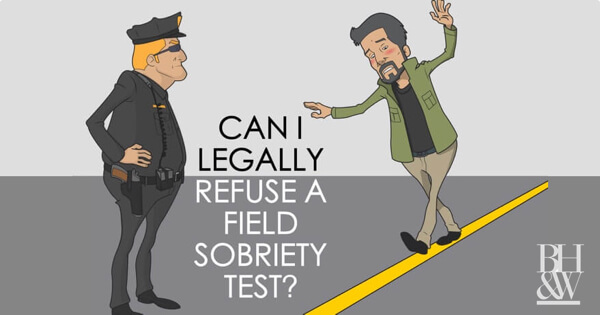
May I Legally Refuse Field Sobriety Tests if Stopped for DWI?

By DWI

We get this question all the time. People want to know if they can refuse the field sobriety tests when the police ask them to participate

Yes! You may legally refuse field sobriety tests in Texas (unless you are already on probation and it is a condition of your probation that you cannot refuse). This article explains why you should consider refusing the SFSTs.

Standardized Field Sobriety Tests Can Be the Best Evidence for the State in a DWI Trial

Field Sobriety Test Fort WorthWhen a driver is stopped in Texas and the officer suspects that the driver may be intoxicated, the officer will typically run through a standard DWI roadside investigation. This investigation begins by simply observing the driver (bloodshot eyes, odor of alcohol, slurred speech) and asking some questions:



  • “Where are you coming from this evening?”
  • “Have you had anything to drink tonight?”
  • “How many is a couple?”

If the officer sees enough to warrant a further investigation, they will ask the driver to step out of the car.

“Let’s Make Sure that You’re Okay to Drive Tonight.”

Once the driver steps out of the car, the officer’s body worn camera and dash camera are recording so that the footage can capture the interaction (to be used later at trial if needed). The officer will then explain that they are going to do some tests just to “make sure that you’re okay to drive.” Note: The officer WILL NOT NORMALLY ask permission to conduct the
standardized field sobriety tasks.  He will jump right in and hope that you just go along with it.

There are 3 standard tests that are explained in more detail on our DWI page.

The Standardized Field Sobriety Tests are Not Designed for You to Pass

The 3 standard tests are (1) the HGN test (Horizontal Gaze Nystagmus), which is the “eye test,” (2) the Walk and Turn test (also known as the Walk the Line test), and (3) the One Leg Stand test. I don’t have enough time to go into the many problems with the tests, but to list a few:

  • The Eye Test (HGN) – this test requires the officer to be precise with his stimulus device in the field and they often make mistakes in distance and degree. Further, even with updated body worn camera technology, the video rarely shows what the officer claims to observe in the eyes. So we are usually left with officer testimony alone (and juries generally do not trust the “eye test”);
  • The Walk and Turn test – this test is difficult (even for completely sober people – try it yourself sometime) because it requires the person to take challenging heel to toe steps on an imaginary line in all conditions and officers never take into account the person’s stress level, the weather/wind conditions, footwear, fatigue from a long day, etc.; and
  • The One Leg Stand – this test is also difficult. It requires you to balance on one foot for 30 FULL seconds. TAKE NOTE – if the person puts their foot down at 27 seconds it is a strike against them and the officer will use this as evidence that they are indeed intoxicated.

Throughout the years, the tests have been debunked and challenged by experts as unreliable, but the courts are still allowing them as proof of intoxication (they are claimed to be used as evidence of the loss of mental or physical faculties).  In short, these tests exist for the officer to build a case against you in court and we feel ultimately set you up to fail. So what benefit is there for a driver who is suspected of DWI to take the tests if they don’t have to?

You DO NOT Have to Submit to Standardized Field Sobriety Tests in Texas

Even though the officer might act as if you must take the tests, you don’t. If he asks you to exit the vehicle then you must get out of the car. But as soon as he tries to start the HGN (eye test) on you, you can (and probably should) politely refuse to take the test. Take note of what I said…Politely Refuse. Do not be a jerk about it and go into a diatribe about how you read this blog and you know these tests are no good and that you refuse to do them. Remember this is all being captured on audio and video; audio and video that will be exhibit #1 at a trial if it goes that far. Simply inform the officer that you do not wish to participate in the standardized field sobriety tests.

Can I Still be Arrested if I Refuse to Perform the Field Sobriety Tests?

Yes you can (and probably will) be arrested if you refuse to perform the SFSTs. If the officer already felt like he had enough evidence to administer the tests, then he will probably go ahead and arrest you for DWI if you refuse to take them. But hey, you were probably going to get arrested anyway. Now, however, there will be less evidence against you.  You have an absolute right not to give evidence against yourself.  This constitutional right applies equally in the DWI context.

Should I Take the Tests if I Haven’t Had that Much to Drink?

You are an adult, and only you know your own level of coordination, so it is really up to you. But our advice (from over 16 years of handling DWI cases) is NO. You should not perform the standardized field sobriety tests. Your DWI case becomes tougher to defend if you look intoxicated on the video. Even if you haven’t had that much to drink, there are many reasons why you might appear intoxicated on the video. For instance, perhaps:

  • You are extremely nervous and have a high stress level from being pulled out of your car in the middle of the night by a police officer;
  • Your footwear is not ideal for walking and turning (high heels, flip flops, etc);
  • The wind is blowing hard;
  • It is cold outside and you are shivering;
  • You have an old injury that causes you to limp or not walk “normally”; or
  • You have bad balance (even on a good day).

Lastly, these tests are extremely technical. The instructions are long and tedious and can be very confusing for someone who has never attempted these tests before. Officers also like to compound this issue by providing you the instructions very aggressively and rapidly. The officer often sounds like the disclaimer at the end of a pharmaceutical commercial when they are reading you the instructions for the tests. Your failure to comply perfectly with these instructions can be used against you in court.

Next Time, Please Take an Uber

We hope you will listen to our advice regarding DWI field sobriety tests. Better yet, we hope that you’ll just pay the $40 for an Uber or taxi from the bar or restaurant and avoid this altogether. But if you didn’t take our advice and you didn’t call and Uber, call us and we’ll be happy to be your advocates.

*This article did not discuss whether you may legally refuse a Breath Test or a Blood Test. We’ve written on that many times and the answer is YES. You may refuse breath and blood tests UNLESS the officer has a warrant for your blood. If they have a warrant, you may not refuse.