Skip to content

News and Insights

Page 54 of 105 · 523 articles

Child Sexual Assault Deferred Adjudication Sentence

Is Deferred Adjudication an Authorized Sentence if Victim is 3 Years-Old?

By Brandon Barnett · Sex Crimes

Trial Judge Properly Imposed Deferred Adjudication in Sexual Assault Case, says CCA

Child Sexual Assault Deferred Adjudication SentenceAnthony v. State (Texas Court of Criminal Appeals, 2016)

Note: This article contains sensitive subject matter dealing with the sexual assault of a minor.

Defendant Pleads Guilty to Sexual Assault Allegations in Exchange for Deferred Adjudication

In 2009, John Anthony was indicted for aggravated sexual assault of a child under fourteen years old. In a plea agreement, Anthony pleaded guilty to the charge in exchange for the prosecution’s recommendation of deferred-adjudication with community supervision. Generally speaking, deferred-adjudication is a type of probation in which a defendant enters a plea of guilty, but the judge defers the ruling for a set amount of time. If the set amount of time passes without further criminal activity or other technical violations by the defendant, the judge sets aside the plea and dismisses the case. For Anthony, the trial judge ordered a deferred period of eight years.  During this time, the defendant would remain on community supervision, under the watch of a probation officer. The judge listed the victim’s age as three years old on the official trial judge’s order for deferred adjudication—not "under fourteen years old" as was listed on Anthony’s indictment.

Several years passed until 2013, when the State moved to adjudicate because Anthony allegedly violated his community supervision directives. Finding the new allegations to be true, the judge adjudicated Anthony guilty and sentenced him to life in prison. Once again, the judgment listed the victim’s age as three years old, not fourteen years old as was listed on Anthony’s original indictment.

Age Discrepancy on Judge’s Orders Leads to Sentence Reversal

Anthony appealed his adjudicated sentence with court-appointed counsel, who eventually filed an Anders brief. See Anders v. California, 386 U.S. 738 (1967). While reviewing the Anders brief, the court of appeals became concerned about the discrepancy in the victim’s age listed on the judge’s orders and on the original indictment. Specifically, the court of appeals was concerned that the trial court’s “finding” that the victim was three years old meant that under section 42.12 of the Texas Code of Criminal Procedure, the trial judge was entirely precluded from imposing deferred adjudication in the first place. TEX. CODE CRIM. PROC. Art. 42.12, § 5(d)(3)(B) (West 2006 & Supp. 2015). Additionally, the court of appeals was concerned that the age discrepancy error led to a potential flaw in sentencing. Further, the sentencing flaw potentially pointed to the fact that Anthony’s trial counsel could have been ineffective, possibly inducing Anthony into pleading “guilty” to a deal that should have never been made at all. Accordingly, the court of appeals reversed the trial court’s judgment. The State petitioned the Court of Criminal Appeals to review the case.

Can the Trial Court Place a Defendant on Deferred Adjudication for a Sexual Offense involving a 3 Year-Old Victim?

Now, the Court of Criminal Appeals must determine whether the potential age discrepancy error on the original indictment and on the trial judge’s orders created a procedural error during sentencing, possibly leading to ineffective assistance of counsel. If the age discrepancy is problematic procedurally, what should happen to Anthony’s original sentence?

Here, the Court of Criminal Appeals says that the trial judge properly imposed deferred adjudication. Because the indictment read that the victim was “younger than fourteen years old” and because there is nothing in the trial record to indicate that the State intended to prosecute under more stringent statutes with more stringent punishment guidelines, the CCA holds that the original sentence is proper. Further, the CCA deems Anthony’s previous trial counsel to be effective. Accordingly, the CCA strikes the “three year old” victim language in the trial court’s order, amending the language to reflect that the victim, “was younger than fourteen years of age at the time of the offense.” TEX. CODE CRIM. PROC. art. 42.015(b); TEX. R. APP. P. 78.1(c). Anthony’s sentence of life imprisonment stands because his deferred adjudication was properly imposed in 2009.

Read full article
Cell Phone Images Character Evidence

Satanic Cell Phone Images Admitted as Relevant Character Evidence

By Brandon Barnett · Sentencing

Second Court of Appeals Holds that Satanic Cell Phone Photos Were Relevant Character Evidence in Punishment Phase for Attempted Capital Murder Case


Cell Phone Images Character EvidencePantoja v. State (2nd Court of Appeals - Fort Worth, 2016)

A Cocaine-Fueled Binge Leads to an Attack

During an alcohol and cocaine-fueled binge, nineteen-year-old Rigoberto Pantoja attacked a group of friends in Mansfield, Texas one evening in September of 2014. After watching the Floyd Mayweather fight, Pantoja began talking to himself. Eventually, he pulled a gun and fired two times, hitting Pantoja’s friend in the face. Pantoja put the gun to the head of a second friend, but when the gun would not fire, Pantoja pulled a knife, stabbing the friend three times. He also stabbed a third friend. All of the victims survived the injuries. Pantoja was arrested and charged with aggravated assault and attempted capital murder.

At trial, Pantoja pled guilty to the aggravated assault and attempted capital murder charges before a judge. Pantoja requested a jury for the punishment phase of his trial, asking that the jury grant him community supervision (probation). At the punishment phase, the State called twelve character witnesses; Pantoja’s defense counsel called four, including his father who was set to testify about Pantoja’s Catholic upbringing and religious way of life.

Just before the defense called Pantoja’s father to the stand, and out of the presence of the jury, the State indicated to the Court that it intended to cross-examine Pantoja’s father about satanic images found on Pantoja’s cell phone, confiscated the night he was arrested. The Judge told the State to proceed with calling witnesses and that “whenever you are ready to ask question [regarding the satanic photos], approach up here and then I’ll make a ruling at that time.” After that conversation, the jury returned to the courtroom.

Cross-Examination Regarding the Defendant's Cell Phone Images

The defense called Pantoja’s father who testified to Pantoja’s good nature. He said that his son helped around the house and helped out with the family’s living expenses. Pantoja’s father also spoke of his son’s strong Catholic faith and upbringing. The defense admitted photos from the father of Pantoja’s first communion, photos of Pantoja’s bedroom with a Virgin of Guadalupe poster on the wall, and photos of Pantoja’s car depicting a rosary hanging from the rearview mirror. The State cross-examined Pantoja’s father, asking, “Were you aware that your son kept pictures of satanic worship on his cell phone?” The father responded, “no.”

The jury assessed Pantoja’s punishment at eighty years’ confinement for both offenses, denying Pantoja’s request for community supervision. Pantoja timely appealed to the Second Court of Appeals, arguing that the satanic photos shown to the jury were highly prejudicial, had no probative value whatsoever, did not establish a material fact that related to any element of his offenses, and ultimately were not relevant to his case and sentencing.

Did the Trial Court Err By Allowing the Satanic Images to Go Before the Jury?

The Second Court of Appeals had to determine whether the trial court should have stopped the State’s cross-examination of Pantoja’s father regarding the Satanic images found on Pantoja’s cell phone. Did the photos have relevance to the case under the Texas Rules of Evidence? If so, were the photos highly prejudicial to the jury?

The Texas Rules of Evidence

Relevancy

Article 37.07 of the Texas Code of Criminal Procedure states that, “evidence may be offered by the State and the defendant as to any matter the court deems relevant to sentencing, including…his character [and] an opinion regarding his character…” Tex. Code Crim. Proc. Ann. Art. 37.07, § 3(a)(1) (West Supp. 2015). Evidence is relevant to a punishment determination if that evidence will assist the fact-finder in tailoring an appropriate sentence. Henderson v. State, 29 S.W.3d 616, 626 (Tex. App.—Houston [1st Dist.]2000, pet. ref’d.

Community Supervision

When a defendant requests community supervision, a trial court may reasonably deem any character trait that pertains to the defendant’s suitability for community supervision to be a relevant matter for the sentencer to consider. Sims v. State, 273 S.W.3d 291, 295 (Tex. Crim. App. 2008).

Character Evidence and Opinion Testimony

When character evidence is admissible—as in a community supervision request during the punishment phase—such character traits may be proven by testimony in the form of an opinion. Tex. R. Evid. 405(a); Wilson v. State, 71 S.W.3d 346, 349-51 (Tex. Crim. App. 2002). An opinion witness is generally to be asked “did you know” questions. Id. at 350.

Cross Examination of Character Witnesses

On cross-examination of a character witness, inquiry may be made about specific incidents of a person’s conduct, subject to the following limitations. Id. at 351.

  1. The incident must be relevant to the character traits at issue. Burke v. State, 371 S.W.3d, 252, 261 (Tex. App.—Houston [1st Dist.] 2011, pet. ref’d, untimely filed).
  2. The alleged Bad Act must have a basis in fact. Id.
  3. Before the questions are asked, the foundation for asking the question should be laid outside of the jury’s presence, so that the judge will have an opportunity to rule on them. Id.

The Second Court of Appeals Finds No Error

Here, the Court says that the father’s testimony about Pantoja’s strict Catholic upbringing and religious faith constituted “opinion” character testimony. Additionally, the Court says, his testimony was relevant under the Texas Rules of Evidence, pertinent to the request made for community supervision, as “a sentencer might rationally want to take into account testimony of his good character and that he had a stable home life…and that he possess an indicia of a religious upbringing.”

Further, this character testimony was provided by the defense. Because the defense called the father as a character witness, the State had the right to cross-examine the father "through did-you-know questions" about Pantoja’s character. "The State had the proper predicate for it’s 'did you know' question by establishing outside the presence of the jury the factual basis for the specific instances of Pantoja’s conduct (the satanic cell phone photos)." The Court overruled Pantoja’s appeal, and affirmed the trial court’s judgment.

Read full article
Robbery Accomplice Texas

When a Criminal Accomplice Exceeds the Scope of the Agreed Plan

By Brandon Barnett · Robbery

The Best Laid Plans of Mice and Men: What Happens When a Robbery Accomplice Goes Rogue?

Robbery Accomplice TexasDavis v. State (2nd COA, 2016)

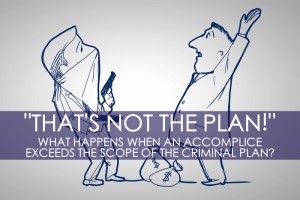
Davis v. State is a case about two robberies— one a planned robbery of a convenience store, and the other of the customer inside the convenience store, a spur of the moment decision. What happens when accomplices to a well-planned robbery go “rogue” and commit additional crimes that are not part of the original plan?  Who is on the hook for their actions?

The Robbery That Didn’t Go According to Plan

Desmond Davis and two accomplices planned to rob a convenience store at night. Around 9:30pm, Davis entered the store alone and chatted with a customer. Moments later, two accomplices entered the store, pointing loaded guns at the cashier and the customer. The accomplices decided to rob the customer first, despite Davis’s instructions not to do so, “we just [came] for the store.” Davis jumped over the cash register and took money from the cash drawer. The customer dropped his cash to the floor and ran to the store’s restroom, locking the door behind him. The gunmen fled with the cash from the store and from the customer. Once the coast was clear, the store employee called 911 and locked the doors. The entire robbery was captured on a security camera. The three robbers split all of the cash among themselves after the robbery.

Shortly after Davis’s arrest, police obtained a confession after the detective told Davis, more or less, that not only could his confession be used for or against him, but that it could be used for or against him at trial. During the interrogation, the detective asked Davis to “man up” and give his side of the story, admitting his own guilt. Davis eventually made a written statement to law enforcement, admitting to his role in planning and carrying out the robbery. The interrogation and confession were captured on video.

The Case Goes to Trial - Davis is Tried for the Original Planned Robbery and the Unplanned Actions of his Cohorts

At trial, the jury convicted Davis on two counts of aggravated robbery with a deadly weapon—one count for the convenience store and one count for the customer. Davis was assessed a punishment of 30 years (for one count) and 15 years (for the other count) and a $1,000.00 fine for each count.

On appeal, Davis argued that his instructions to the accomplices not to rob the customer defeated the theft element of that robbery and thus, the record is insufficient to show his participation in the aggravated robbery of the customer specifically. Further, Davis argues that his confession was obtained under duress, in violation of the Texas Code of Criminal Procedure.

The issue before the Second Court of Appeals was to determine whether, in addition to the robbery of the store, Davis also participated in the robbery of the customer, and, whether Davis’s written confession obtained by police violated section 38.22 of the Texas Code of Criminal Procedure.

The Law in Texas - Robbery and Confessions

Robbery is an assaultive offense, where the assaultive conduct is the essence of the crime, not the theft in and of itself. Ex Parte Hawkins, 6 S.W.3d 554, 560 (Tex. Crim. App. 1999). In robbery prosecutions, the number of persons assaulted is at issue, not the number of thefts in one crime episode. Id.

Section 38.22 of the Texas Code of Criminal Procedure

When law enforcement securing a defendant’s written confession tells the defendant that the confession “could be used for or against him in court” or "for and against him in court" and that "they might go easy on him if he confessed," the written confession becomes inadmissible because it violates section 38.22 of the Texas Code of Criminal Procedure. Sterling v. State, 800 S. W.2d, 513, 518-519 (Tex. Crim. App. 1990). Section 38.22 of the Code deals with admissibility of written confessions in court.

The Second Court of Appeals Affirms the Judgment of the Trial Court

Here, the robbers intended on stealing the money from the cash register when two of the gunmen pointed their weapons at an innocent customer and stole his money. Based on this alone, the Court says, the evidence is sufficient to support the jury’s determination “that [Davis] intended to steal the store’s money and that the [accomplices] threatened the customer while they were stealing money from the [store].” Further Davis and the accomplices shared all of the money stolen in that crime episode—there was no effort made to distribute the customer’s money to only the two accomplices. Davis participated in the store robbery. Even though he told his accomplices to not rob the customer, Davis still placed the customer in fear by waving firearms and by jumping over the counter to steal money out of the register.

Additionally, after the Court reviewed the interrogation tape, the Court “determined that the “officer told [Davis] that he had an opportunity to tell his side of the story and that he could be a man by admitting his guilt.” The officer never suggested to Davis that he would be helping his court case by admitting his guilt. The confession was, therefore, not obtained in violated of Section 38.22 of the Texas Code of Criminal Procedure.

The Court acknowledges that caselaw, such as James v. State, exists that holds that a “defendant who was merely present when his [accomplice] assaulted another was not guilty of robbery…because there was no evidence of a previous agreement to rob the [bystander],” such is not exactly the case here. James v. State, 161 S.W.2d 285, 286 (Tex. Crim. App. 1942). Davis saw the robbery of the customer taking place, and then decided to capitalize on the level of fear created to jump over the counter “and grab some money for himself.”

Read full article
Warrantless Blood Draw DWI CCA

Two New Warrantless Blood Draw Opinions; Two Different Results

By Brandon Barnett · DWI

CCA Reaches Different Conclusions in Two Separate Warrantless Blood Draw DWI Cases
Warrantless Blood Draw DWI CCAJust when we thought the warrantless blood draw issue was starting to reach firm footing in our appellate case law, the Texas Court of Criminal Appeals (CCA) throws a wrench into it. This week the CCA handed down a confounding set of opinions relating to warrantless blood draws in two separate DWI cases—Weems v. State and Cole v. State. Both cases dealt with drivers who were alleged to be intoxicated, both cases involved serious car accidents, both drivers suffered injuries, and, both cases presented law enforcement with the difficult decision to obtain blood samples without a warrant, as the body’s natural metabolic process threatened to destroy evidence over time that could have been used to charge and to prosecute the suspected intoxicated drivers. Procedurally, both Weems and Cole argue that the Texas Transportation Code § 724.012 is at odds with the Fourth Amendment and McNeely. Let’s take a look at the facts of each case and briefly review Texas law to reveal the reasoning behind the surprising conclusions reached by the CCA.

Weems v. State

A Night of Drinking Leads to a Car Accident

FACTS: Daniel Weems drank heavily at a bar for several hours one summer evening in June of 2011. Weems decided to drive home around 11:00pm, and on the way, his car veered off the road and flipped over, striking a utility pole. A passerby stopped to help, but saw Weems exit the car through his window. When asked if he was alright, Weems stumbled around saying that he was drunk. Noticing the smell of alcohol, the passerby called 911 and watched Weems run from the scene. When the first police officer arrived at midnight, Weems was found hiding under a parked car.

Law enforcement noted his bloodshot eyes, slurred speech, and inability to stand without assistance in the police report. Moments later, a second police officer came to the scene and arrested Weems on suspicion of driving while intoxicated (“DWI”). Law enforcement decided against conducting field sobriety tests because Weems suffered injuries and had “lost the normal use of his mental and physical faculties due to alcohol.” TEX. PENAL CODE § 49.01 (2)(A). Weems, however, refused a breathalyzer and a blood test, even after law enforcement informed him of the potential consequences (suspended license, etc.) for refusal. Emergency responders transported Weems to a nearby hospital because Weems complained of neck and back pain.

Arrest Leads to Warrantless Blood Draw

Weems was seen in the hospital’s trauma unit and the second police officer completed the form, requesting a blood draw, while the first police officer remained on duty, but on standby. Weems blood was taken at 2:30 am, over two hours post-arrest, with a result of .18—well above the .08 legal limit. Relying on the Supreme Court case Missouri v. McNeely, where the highest court held that the body’s natural metabolic processing of alcohol in the bloodstream does not create an exigency (emergency) such that an exception to the Fourth Amendment’s warrant requirement is created, Weems sought to have the results of the blood draw suppressed at trial. The trial court did not grant the suppression and jury found Weems guilty of felony DWI, sentencing him to eighty years’ imprisonment. On appeal, Weems argued that his Fourth Amendment rights were violated. Surprisingly, the Fourth Court of Appeals agreed with Weems, holding that in light of McNeely, Texas’s implied consent and mandatory blood draw schemes do not give way to warrant-requirement exceptions, and, that the record established at Weems’s trial did not support admitting the warrantless blood draw results under an exigency exception. The State appealed to the CCA.

Cole v. State

Fatal Car Crash Leads to Arrest

FACTS: On a December evening in 2011, Steven Cole drove his vehicle 110 miles per hour down a busy street, running a red light, and crashing into a pickup truck. The crash caused a large explosion and fire, killing the driver of the pickup truck instantly. When the first police officer arrived at the scene around 10:30pm, he saw Cole shouting for help because he was trapped in his truck in the fire’s path. Shortly thereafter, several police officers arrived and began putting out the multiple fires to secure the area for pedestrians and motorists.

Law enforcement would later testify that “from a law enforcement and safety perspective, they needed as many officers on the scene as they could possibly get” because the raging fires and continued explosions put the public in danger. When the crash occurred, the police were in the middle of a shift change which further complicated securing the scene, conducting the investigation and maintaining public safety. Cole was eventually rescued from his truck and was examined by EMTs, to whom Cole admitted that he had taken some meth. Because of the large debris field that spanned an entire block, fourteen police officers remained at the scene to collect evidence and secure the area, which pushed the limits of the small precinct’s manpower. The debris field was not fully cleared until 6:00am—almost eight hours after the crash. Because of the size of the debris field and dangerousness of the scene requiring multiple officers to secure, only one police officer accompanied Cole to the hospital.

Suspected Intoxication Leads to Warrantless Blood Draw

At the hospital, Cole was observed complaining of pain, but also, “tweaking” and shaking—potential symptoms of suspected methamphetamine intoxication. Under a directive from the superior officer on duty, the police officer arrested Cole at 11:38pm and asked Cole for consent to collect blood and breath samples. When Cole refused, the officer read the statutory consequences for failure to consent. Cole interrupted the officer several times to comment that he had not been drinking, rather, he had taken meth. The officer made a request to the hospital for a blood draw, which was done at 12:20am. The results confirmed that Cole’s blood contained amphetamine and methamphetamine.

Cole moved to suppress the evidence at trial, but the trial court overruled the motion. The jury convicted Cole of intoxication manslaughter, sentencing Cole to a life imprisonment. On appeal, the court of appeals held that the lower court erred in not suppressing Cole’s blood draw results because State v.Villarreal “foreclosed on the State’s reliance on the mandatory blood-draw provision found in the Texas Transportation Code, and that, the trial court record did not establish that an emergency (exigency) existed to justify the warrantless blood draw. Cole v. State, 454 S.W.3d 89, 103 (Tex. App—Texarkana 2014). The State appealed to the CCA.

Law Applicable to Warrantless Blood Draws

The Fourth Amendment

The Fourth Amendment to the United States Constitution provides, “the right of the people to be secure in their persons, houses, papers, and effects, against unreasonable searches and seizures, shall not be violated, and no Warrants shall issue, but upon probable cause.” U.S. CONT. amend. IV. McNeely informs that blood tests are Fourth Amendment searches that implicate a “most personal and deep-rooted expectation of privacy.” McNeely, 133 S. Ct. at 1558-59 (quoting Winston v. Lee, 470 U.S. 753, 760 (1985)). Case law has determined that “a warrantless search is reasonable only if it falls within a recognized exception.” State v. Villarreal, 475 S.W.3d 784, 796 (Tex. Crim. App. 2015), reh’g denied, 475 S.W.3d 817, (Tex. Crim. App. 2015) (per curiam).

One exception to the Fourth Amendment warrant requirement is a warrantless search performed to prevent imminent evidence destruction when there is no time to secure a warrant. Cupp v. Murphy, 412 U.S. 291, 296 (1973); McNeely, 133 S. Ct. at 1559. Whether law enforcement faces an emergency that justifies acting without a warrant calls for a case-by-case determination based upon the totality of the circumstances. Id. In order for courts to determine whether an emergency existed, courts must analyze the totality of the circumstances based on an objective evaluation of the facts reasonably available to law enforcement at the time of a search, and not based on 20/20 hindsight of the facts as they are known after the fact. Brigham City, Utah v. Stuart, 547 U.S. 398, 404 (2006); Ryburn v. Huff, 132 S. Ct. 987, 992 (2012)(per curiam).

Texas Transportation Code § 724.012

Texas Transportation Code § 724.012(a) states, “specimens of a person’s breath or blood may be taken if the person is arrested and at the request of [law enforcement] having reasonable grounds to believe the person was intoxicated while operating a motor vehicle.” § 724.012(b) states, “[Law enforcement] shall require the taking of a specimen of the person’s breath or blood…if the officer arrests the person [for DUI/DWI] and the person refuses the officer’s request to submit to the taking of the specimen voluntarily…[where] any individual has died…an individual other than the person has suffered serious bodily injury.”

The CCA Weighs In—What did the CCA Decide and How Did the Judges Reach The Decisions?

In both Weems and Cole, the Court of Criminal Appeals had to determine whether the warrantless blood draws were justified by exigent (emergency) circumstances under a totality of the circumstances review of the facts. It may be surprising that in one case the CCA upheld the legality of the blood draw and in the other case the CCA held that the blood draw was unlawful.  The charts below shed some light on the relevant facts of each case that the CCA reviewed to determine the holdings in each case. As you can see, the cases are quite similar, yet have some striking differences—differences that distinguished each case just enough for the CCA to arrive at opposite conclusions.

Totality of the Circumstances Analysis Similarities Between Weems and Cole

WEEMS COLE
Refused consent to breath and blood tests. Refused consent to breath and blood tests.
Driver caused car crash. Driver caused car crash.
Driver injured in crash. Driver injured in crash.
Admitted to drinking during initial questioning. Admitted to using meth during initial questioning.
Moved to suppress evidence at trial. Moved to suppress evidence at trial.
Warrantless blood draw. Warrantless blood draw.
Law enforcement claimed “exigency/emergency” as reason for warrantless blood draw. Law enforcement claimed “exigency/emergency” as reason for warrantless blood draw.
Law enforcement concerned BAC would fall over time, destroying potential evidence. Law enforcement was concerned intoxication levels would fall over time, destroying potential evidence.

Totality of the Circumstances Analysis Differences Between Weems and Cole

WEEMS COLE
Single-vehicle crash. Two-vehicle crash.
Small, rural road. Large, high-traffic intersection.
Two police officers, one who remained on “stand-by”. Entire police department tasked with maintaining and securing the exceedingly dangerous scene.
No deaths as a result of crash. One fatality as a result of crash.
Small debris field. Large “one block long” debris field.
Alcohol was the substance at issue. Meth was the substance at issue.
Alcohol has a ‘known’ dissipation time. Meth has a ‘lesser known’ dissipation time.
Police department’s manpower was not overwhelmed by the crash. Police department’s manpower pushed to the limits by the crash.
Nothing on the record to indicate Weems was going to receive pain medication that would impact the results of a blood test. Hospital was set to give narcotics to Cole because of pain, narcotics that could potentially impact the results of a blood test.

The CCA's Holding in Weems - Warrantless Blood Draw Improper

In Weems v. State, the CCA concluded that the warrantless blood draw was NOT justified by exigent (emergency) circumstances. The CCA affirmed the holding of the court of appeals that said that § 724.012 of the Texas Transportation Code does not create an exigency exception to the Fourth Amendment and that the trial court did not establish on the record any facts to support a finding of an exigent circumstance. The CCA stated that law enforcement might have had a “temporal disadvantage,” however, the time frame from the crash to the time Weems was transported to the hospital was short and that the police officer who was on standby could have called a magistrate to obtain a warrant, “the hypothetically available officer could have secured a warrant in the arresting officer’s stead.”

Further, even though the hospital took two hours to obtain the sample, such a timeframe would not have been known beforehand by law enforcement, and thus is considered “hindsight.” Hindsight is not factored into the totality of circumstances analyses. Additionally, the police department’s manpower was not completely tied up with the details of Weems’s crash. Lastly, the CCA commented that law enforcement should have protocols in place to process and deal with blood draw warrants in cases where the suspected intoxicated driver is transported to the hospital with injuries, “the record does not reflect what procedures, if any, existed for obtaining a warrant when an arrestee is taken to the hospital.”

The CCA's Holding in Cole - Warrantless Blood Draw Authorized

In Cole v. State, the CCA held that the trial record established circumstances rendering obtaining a warrant impractical and that the warrantless search was justified under the exigency exception to the Fourth Amendment’s warrant requirement. The case was reversed and remanded to the court of appeals.

The CCA said that the size and severity of the accident scene requiring several police officers to remain on the scene for public safety concerns, the large debris field that required accident investigators extended time to complete the investigation, the fact that someone died in the crash, and the fact that the dissipation rate for methamphetamine is not widely known among law enforcement the way alcohol dissipation in known, are reasons that come together to create a constellation of exigency under a totality of the circumstances analysis.

“Law enforcement was confronted with not only the natural destruction of evidence though natural dissipation of intoxicating substances, but also with the logistical and practical constraints posed by a severe accident involving a death and the attendant duties this accident demanded.” Further, because Cole complained of pain, law enforcement had a legitimate concern that any narcotic drugs administered would impact the outcome of a blood test, rendering the test ineffective for evidence in trial later on.

Justice Johnson did file a dissent in Cole, “I would hold that the circumstances and testimony at trial indicate that a warrant was required.” Justice Johnson says that someone on the police force could have obtained a warrant and had enough time to do so, “this was not a now or never situation that would relieve the state of its burden.”

Where do we go from here?

Read full article
DNA Evidence Biological Testing

DNA Testing of Biological Evidence Under CCP 38.43

By Brandon Barnett · DNA

Does a defendant charged with capital murder have an absolute right to have all of the biological evidence of the crime tested?

DNA Evidence Biological TestingTexas Code of Criminal Procedure, Section 38.43 deals with "Biological Evidence," and outlines the rules and responsibilities for testing such evidence. In the mandamus case summary that follows, the relator (the defendant) is requesting that ALL of the biological evidence be tested, while the trial judge has ruled that only some testing is sufficient.

In Re Solis-Gonzalez (Tex. Crim. App. - Mandamus 2016)

A Triple Homicide and Hundreds of Evidence Samples

Luis Solis-Gonzalez was indicted by a grand jury for capital murder for the 2012 triple murder of his ex-wife, her daughter, and her companion. Before trial, the State moved for DNA testing of over 200 pieces of biological material that was collected at the scene. The trial court granted that the testing be done by the Texas Department of Public Safety forensics laboratory.

A few months later, after the lab had already tested a portion of the samples, the lab communicated to the trial court that testing all of the evidence would be a lengthy process, taking three years to complete. Because of such a delay, the trial court asked the defense to identify any specific articles of biological material that it wanted tested, along with reasons why that material should be tested.

At the pretrial hearing, the State asserted that testing each and every piece of the evidence was unnecessary because the testing that the lab had already completed was sufficient for trial. Solis-Gonzalez claimed that Article 38.43 of the Texas Code of Criminal Procedure created an "absolute right to have all evidence tested." The trial court found that testing all of the biological evidence was unnecessary, as “Article 38.43 does not mandate that every piece of evidence seized by law enforcement in a capital murder case where the State is seeking the death penalty must be forensically analyzed.” Further, the trial court added, “the defense’s response [does] not legally support further delay of trial.”

Should the Trial Judge Have Ordered Tested of All Biological Evidence?

On a petition for a writ of mandamus, the CCA reviewed the case to determine whether Article 38.43 does, in fact, create an absolute right to have all biological evidence collected at a crime scene, especially when the death penalty is at stake.

Article 38.43 of the Texas Code of Criminal Procedure

Article 38.43(j) states, "if the State and the Defendant agree on which biological materials constitute biological evidence, the biological evidence shall be tested...if the State and the Defendant do not agree on which biological materials qualify as biological evidence, the State or the Defendant may request the court to hold a hearing to determine the issue." The statute defines biological evidence as the contents of a rape kit, blood, semen, hair, saliva, skin tissue, finger nails, fingernail scrapings, bone, bodily fluids that might establish the identity of a suspect or exculpate (show the innocence of) a potential suspect.

Justice Delivered Swiftly, or Justice Delivered Meticulously?

Here, the CCA defers to the legislative policy rationale behind Article 38.43, saying, "it thus appears that the legislature granted discretion to the trial court to separate the evidentiary wheat from the chaff and prevent delay of the proceedings because of needless testing." Like the CCA, the trial court stated the evidence submitted and analyzed was sufficient for trial in “substantial compliance with the [legislative] intent of the statute.” It appears that the intent behind the statute is to deliver justice swiftly, not meticulously by testing each and every single piece of biological evidence. Accordingly, the CCA affirmed the decision of the trial court, and denied relief to Solis-Gonzalez.

Read full article

Speak with a Fort Worth attorney

Call (817) 993-9249 or send us a message to discuss your case.