

Skip to content

News and Insights

Page 59 of 105 · 523 articles

Failure to Protect Injury to a Child

"Failure to Protect" and the Affirmative Defense for Domestic Violence Victims

By Brandon Barnett · Defenses, Domestic Violence

Failure to Protect Injury to a ChildIn Texas, our “failure to protect” statute is an omission statute—Injury to a Child by Omission—meaning it aims to encourage parents to remove their children from dangerous and violent environments. If a parent "fails to protect" their child from certain known dangers, that parent can be charged with Injury to a Child by Omission, a felony level offense in Texas. The statute also covers injury to an elderly or disabled individual. If the person charged with Injury to a Child by Omission is a domestic violence victim, it is important to be aware of the Affirmative Defense Texas provides.

Texas’ Injury to a Child by Omission Offense | Failure to Protect

Section 22.04 of the Texas Penal Code provides that a person commits an injury to a child if he recklessly by omission, causes to a child: (1) serious bodily injury; (2) serious mental deficiency, impairment, or injury; or (3) bodily injury. Id. § 22.04(a).

An omission is conduct constituting an offense if: (1) the actor has a legal or statutory duty to act; or (2) the actor has assumed care, custody, or control of a child. PENAL § 22.04(b).

The Texas Family Code provides that a parent, guardian, conservator or foster parent of the child has the legal duty of care, control, and protection of the child. The State must prove that the defendant either intended or was aware that serious bodily injury would occur from their omissions. Patterson v. State, 46 S.W.3d 294.

Affirmative Defense to Prosecution for Domestic Violence Victims

In the early 90s, Texas established an affirmative defense for people charged with Injury to a Child by Omission. An affirmative defense is a complete and absolute legal defense. In the Failure to Protect scenario, a person can claim the affirmative defense if the following requirements are met:

  1. there be no evidence that the defendant had any knowledge of a previous injury to the child and that they failed to report the injury;
  2. the defendant “was a victim of family violence...committed by the same person “who is also charged with an offense against the child”; and
  3. the defendant reasonably believed, at the time they failed to act, that any attempt to prevent the person from hurting the child “would have an effect.”

TEX. PENAL CODE ANN. § 22.04(l)(2) (West 2011).

The Reality of Prosecution for Failure to Protect in Texas

Most often, mothers are the ones charged with Failure to Protect in Texas. In 2014, there were 19 women in Texas prisons serving time for Injury to a Child by Omission with sentences starting at ten years, all the way up to 45 years. Seven of these women were domestic violence victims. In fact, a Tarrant County woman who was also a victim to the violence of the man who injured her child is currently serving 40 years. Hopper v. State, 2013 WL 4679166 (Tex. App.—Fort Worth Aug. 29, 2013, pet. ref’d.) Furthermore, the woman serving 45 years was a case out of Dallas County where she was also a victim to the violence of the man who injured her child. It is unknown whether these women asserted the affirmative defense at trial.

As mentioned above, there are serious consequences attached to Injury to a Child by Omission and it is important to recognize all possible defense options. Many people do not know that the affirmative defense regarding domestic violence exists. If you are charged with an Injury to a Child by Omission and are also a victim of the abuser’s violence, this defense might apply to you. Contact our team today to find out what steps can be taken in your case. Regardless of whether this affirmative defense applies in your case, our attorneys will still fight hard to get your case dismissed or mitigated in any way they can.


Read full article
Car Seat Laws in Texas Seat Belt Regulations

Car Seat and Seat Belt Laws in Texas: Sorting Out the Laws From the Guidelines

By Brandon Barnett · Traffic Offenses

Baby On Board: What Does Texas Law Say About Keeping Our Kids Safe in the Car?

Car Seat Laws in Texas Seat Belt RegulationsWe’ve all seen those yellow “Baby on Board” signs proudly displayed by new parents on the back windows of cars. In a perfect world, drivers would slow down and car accidents involving children would never be an issue. But we don’t live in a perfect world. The Insurance Institute for Highway Safety (“IIHS”) reports that car accidents cause one in four unintentional injury deaths in children younger than 13. The IIHS explains that while most crash deaths occur among children traveling as passengers, proper restraint use dramatically reduces these fatalities.
Such statistics are a sobering reminder that we must do all we can do to ensure that our kids are safe while traveling in a car. So what can Texas families do to make our daily commutes safer for our children? What does Texas law say about keeping our kids safe in the car?

Car Seat Laws in Texas

The car seat law in Texas, meaning the rules for which you can be issued a Class C citation, are provided in the Transportation Code. Section 545.412(a) of the Texas Transportation Code states:

“A person commits an offense if the person operates a passenger vehicle, transports a child who is younger than eight years of age, unless the child is taller than four feet, nine inches, and does not keep the child secured during the operation of the vehicle in a child passenger safety seat system according to the instructions of the manufacturer of the safety seat system.”

SUMMARY OF TEXAS CAR SEAT LAW:

  • 8 years - Children must remain in some sort of car seat or booster seat system until they are 8 years old;
  • 4'9" Tall - If a child younger than 8 is taller than 4'9", he or she may ride in a normal seat without a booster; and
  • Follow manufacturer instructions - It is a violation to use a safety seat improperly.

One of the important parts of the Texas car seat law is that seat must be properly installed according to the manufacturer’s instructions. USA Today reports that nearly half of all car seats are installed improperly.  Many law enforcement agencies are trained to understand proper car seat installation. While it is unlikely that an officer will issue you a citation if you have a car seat that happens to be improperly installed, you should still make sure to get your car seat checked out for the safety of your child.

DEFENSE: It is a defense to prosecution that the individual is operating their vehicle during an emergency or for a law enforcement purpose.

PENALTY: Failure to comply with §545.412(a) may result in a fine ranging from $25 to $250, plus court fees.

Car Seat Guidelines in Texas

Some additional car seat tips are provided as safety guidelines or best practices, meaning that there is not a law on the books in Texas covering this.  However, these are good practices that are taught by doctors and child car safety experts:

  • All infants and toddlers should ride in a rear-facing car seat until they are at least two years old, or until they max out the weight or height limits per the manufacturer’s limits.
  • Children two to four years old may ride in a forward-facing seat according to the manufacturer’s recommendations.
  • Use a booster seat for children four to eight years old, according to the maximum height or weight limits provided by the manufacturer.
  • Most seat belts will fit a child that is 4'9" tall (normally around 10 years old).  If your child is not 4'9" tall, you should consider keeping them in a booster seat to ensure proper seatbelt fit.

Seat Belt Laws in Texas

Under Texas law, all passengers in a motor vehicle must wear a seatbelt.  There are a few exceptions, like for postman, paper delivery crews, or garbage men; but for the average driver and passenger on the Texas roads, you must wear a seat belt. Section 545.413(a) of the Texas Transportation Code covers seat belt laws in Texas.  The law states:

“a person commits an offense if the person, who at least 15 years of age, rides in a passenger vehicle while the vehicle is being operated and is occupying a seat that is equipped with a safety belt, and is not secured by a safety belt.”

Further, §545.413(b) states that:

“a person commits an offense if the person operates a passenger vehicle that is equipped with safety belts and allows a child, who is younger than 17 years old and not required to be in a safety seat system, to ride in the vehicle without requiring the child to be secured by a safety belt.”

Can a Teenager Ride in the Bed of a Pickup Truck? No. Under Texas law, no person under 18 years of age may ride unrestrained in the bed of a pickup truck.

PENALTY: A violation of the seat belt law in Texas can result in a fine of $25 to $200 depending on the situation.

For teenagers, who are legally permitted to ride in the front passenger seat, the Texas Department of Transportation advises that wearing a seat belt while sitting in the front seat improves survival of a car accident by 50%. To be effective seat belts must be used properly—lap belts need to fit snugly on the hips and shoulder belts should go over the shoulder and across the center of the chest. Texas law says that safety belts—designed for adult use only—are not adequate for children under 8.

Front Seat and Back Seat Passenger Laws in Texas

There is not a law in Texas regarding who may ride in the front seat.  The driver must follow the car seat and seat belt laws, but there is not a law prohibiting any person or child from riding in the front seat. However, according to the safety "guidelines," anyone under age thirteen should be restrained in the back seat due to concerns with airbag impact.

Can I Leave My Kids Alone In the Car in Texas?

Yes, but only for 5 minutes.  In 2010, thirteen children in Texas were killed by vehicular heatstroke. As a result, the Texas legislature enacted laws dealing with the amount of time children can be left in a vehicle unattended. Under Texas Penal Code §22.10(a), “a person commits an offense if he intentionally or knowingly leaves a child in a motor vehicle for longer than five minutes, knowing that the child is (1) younger than seven years of age; and (2) not attended by an individual in the vehicle who is 14 years of age or older."

An offense under this section is a Class C misdemeanor. However, if the child is injured as a result of being left in the car, the crime can be increased to a felony, punishable by up to two years in jail and a $10,000 fine.

For More Information About Car Safety in Texas:

Barnett Howard & Williams PLLC Rated 5.0 out of 5 based on 57 Google+ Reviews.
Read full article
Texas Dog Bite Laws Dangerous Dog

Beware of Dog Bite Laws in Texas: Criminal Penalties for Owners of Dangerous Dogs

By Brandon Barnett · Dog Attack

Texas Law Regarding Dog Owners and Dog Attacks

Texas Dog Bite Laws Dangerous DogBelieve it or not, a person could be criminally liable, meaning they could be convicted of a crime, if their dog attacks someone. Texas appellate courts have recently upheld Texas' dog bite law, also known as Lillian's Law. Therefore, it is important to be aware of what is required of you as a dog owner. The article below outlines Texas law as it relates to dog owner responsibility. If you own a dog that has displayed dangerous tendencies, you should take a look.
Can I be Convicted of a Crime in Texas if My Dog Attacks Someone?

Yes. In Texas, you can be convicted of a felony offense if your dog attacks and injures someone. There are two instances in which a dog owner can be convicted of a criminal offense for a dog attack:

  1. If, with criminal negligence as defined by §6.03 of the Penal Code, they fail to secure the dog and the dog, in a place other than the owner’s real property, boat, or motor vehicle, makes an unprovoked attack on another person that causes serious bodily injury or death; and
  2. If they know their dog is a dangerous dog by receiving notice in a manner described in the Texas Health & Safety Code, and the dog, in a place other than the owner’s real property, boat, or motor vehicle, makes an unprovoked attack on another person that causes serious bodily injury or death.

The offense is a third degree felony, which is punishable by 2-10 years in prison and a fine of up to $10,000. If the attack causes death, then it’s a second degree felony punishable by 2-20 years in prison and a fine of up to $10,000.

How do I know if my dog is considered a “Dangerous Dog” under Texas law?

Under the Texas Health and Safety Code, a “dangerous dog” is a dog that makes (1) an unprovoked attack on a person that causes bodily injury or death or (2) commits unprovoked acts leading a reasonable person to believe that the dog will attack them in a place other than an enclosure reasonably certain to prevent escape by the dog.

The law recognizes 3 ways for you to learn that your dog is considered a “dangerous dog”:

  1. You know your dog has attacked someone;
  2. You received notice from the court that they have found the dog to be a “dangerous dog;” or
  3. Animal control informed you that the dog is a “dangerous dog.”

What are my requirements if I know my dog is a “Dangerous Dog”?

Within 30 days after a person is informed that they are the owner of a dangerous dog, the person must:

  • Register the dog with animal control authority for that area;
  • Restrain the dog in a secure enclosure* or on a leash in the immediate control of a person;
  • Be able to show financial responsibility of at least $100,000 to cover any damages from an attack (i.e. liability insurance coverage of at least $100,000);
  • Comply with any local regulation, requirements, or restriction.

*A secure enclosure means a “fenced area or structure that is”

  • Locked;
  • Capable of preventing the entry of the general public, including children;
  • Capable of preventing the dog from leaving on its own;
  • Clearly marked as containing a dangerous do; and
  • In compliance with the enclosure requirements established by the local animal control.

What Defenses are Available if I Have Been Charged With the Dog Bite Statute?

A person has a defense to criminal liability for a dog bite case if:

  • The person is a veterinarian, veterinary clinic employee, a peace officer, employee of a recognized animal shelter, dog trainer/employee of a guard dog company, or a person employed by the state or the state’s political division to deal with stray animals AND has temporary ownership, custody, or control of the dog in connection with their position.
  • The person is employed by the Texas Department of Criminal Justice or other law enforcement agency and is training or using the dog in connection at the time of the attack.
  • The person has a disability, the dog is trained to provide assistance to a person with a disability, and the person is using the dog to provide assistance in connection with their disability.
  • The person attacked was in the process of committing a homicide, kidnapping, trafficking of a person, sexual offense, assaultive offense, any property damage or destruction, robbery, burglary, or criminal trespass.
  • At the time of attack, the dog was on a leash and the person was in immediate control of the dog OR if not, the person was making immediate and reasonable attempts to regain control.

A person has an affirmative defense if, at the time of attack,:

  • The person and the dog are participating in an organized search and rescue effort at the request of law enforcement.
  • The person and the dog are participating in an organized dog show/event sponsored by a recognized kennel club.
  • The person and the dog are participating in a lawful hunting activity or farming/ranching activity.

Tarrant County Animal Control Links

If you need to register your dog with animal control or if you need to ask more questions after reading this article, below are the links to some local animal control offices in Tarrant County:

Read full article
Craigslist Crimes in Texas

Texas’ Online Crime Marketplace: Craigslist Crimes, Craigslist Stings, and Craigslist Thefts

By Brandon Barnett · Computer Crimes, Theft

Craigslist-Related Crimes | New Crimes in the Digital Age

Craigslist Crimes in TexasGone are the days of flipping through your local newspaper’s classified section and circling your favorite ads. These days, Craigslist is the new classifieds of Fort Worth and Dallas. It is the one stop shop source to find a new car, truck, job, furniture, garage sale, or even a love interest. With the rise of Craigslist (and other online forums), there has also been an increase in criminal activity ranging from online scams to fraud and theft. Police stings based on advertisements from Craigslist are also common. Police have seen such a meteoric rise in these “Craigslist related crimes”, that many departments have established “safe exchange locations where transactions can occur under the watchful eye of local law enforcement.
Whenever people meet to engage in a transaction, crime can occur. These crimes can take place anywhere, whether you are in an urban or rural area, in the parking lot of the local shopping center, or even on your own front porch. Craigslist is easily accessible, and is increasingly used to create opportunities for one party to take advantage of another. It is essential to be vigilant whenever meeting up with anyone from the Internet.

Craigslist Criminal Investigations | Fort Worth, Texas

With the advent of Craigslist, law enforcement agencies have seen a few specific areas of criminal activity increase rapidly. These investigations into alleged crimes often facilitated by Craigslist include:

  • Craigslist Robbery: Increasingly, people will post ads on craigslist looking to buy or sell an expensive item, such as a cell phone, and when the other party arrives take either the item or the money by force. Avoid being a target by meeting buyers or sellers at a “safe exchange” location set up by the police department.
  • Craigslist Prostitution: Craigslist is full of ads looking for love, and both men and woman can get caught up in activity they may not have even realized was criminal until too late. Craigslist is used to source potential targets, and can result in charges from soliciting sex with a minor to soliciting sex for pay. Police departments are increasingly using Craigslist to set up sting operations to catch people trying to engage in prostitution.
  • Craigslist Drug Charges: Police are seeing an increase in advertisements for illegal drugs posted on Craigslist using code words. Engaging in a dialogue with someone posting one of these ads could lead police to believe you are involved in drug dealing or drug trafficking through ads placed on Craigslist.

Defending Craigslist-Related Criminal Cases

Defense of Craigslist-related criminal charges can be a very complex proposition, requiring legal counsel experienced in these types of matters and the technology it involves. Forensic Computer Specialists and other experts may be necessary to the investigation and protecting your constitutional rights. Seek counsel from experienced criminal defense attorneys at Barnett Howard & Williams PLLC, former prosecutors with an in-depth understanding of the criminal justice system and its applications in today’s Internet-oriented society.

Contact Our Fort Worth Craigslist Crimes Defense Attorneys Today!

At Barnett Howard & Williams PLLC, our attorneys understand how to investigate and defend against complex computer-related criminal charges, including Craigslist-related charges. To schedule a free consultation, contact us at our offices in Fort Worth, Texas, at 817-993-9249.

Barnett Howard & Williams PLLC Rated 5.0 out of 5 based on 30 Google+ Reviews.
Read full article
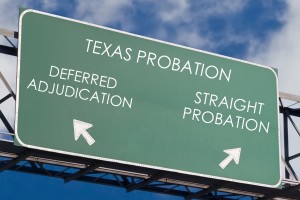
Difference in Deferred Adjudication Straight Probation in Texas

What is the Difference Between Deferred Adjudication and Straight Probation?

By Jason H. Howard · Criminal Defense

Probation in Texas: Make Sure You are Headed Down the Right Path. What is Deferred Adjudication?

Difference in Deferred Adjudication Straight Probation in TexasWhen we are counseling new clients, we routinely address the punishment range that is available for the charged offense and whether probation is an option in their case.  It is important to note that all criminal offenses (except class C citations) are punishable by incarceration. However, first-time offenders and those charged with misdemeanors and non-aggravated felonies will often receive probation when prosecutors, judges, and juries agree that community supervision (probation) is a better alternative to jail time in the given situation.  For some offenses, however, probation is not an option (see our previous article on 3g offenses in Texas).

For those of you that prefer the bullet points up front, here is the short answer regarding the difference between straight probation and deferred adjudication:

Straight Probation in Texas

  • A person on Straight Probation in Texas must report to probation and complete required terms as set by the judge
  • In a straight probation, the case results in a Criminal Conviction
  • In straight probation, there is no option have the case expunged or non-disclosed upon completion of probation
  • If revoked on a straight probation, the penalty range is limited to the underlying jail term (see more below).

Deferred Adjudication in Texas

  • A person on Deferred Adjudication in Texas must report to probation and complete required terms as set by the judge
  • A Deferred Adjudication Case Does NOT result in a Criminal Conviction
  • In a Deferred Adjudication in Texas, there is an option to have the case non-disclosed upon completion (in most cases)
  • Under a Deferred Adjudication, If revoked, the judge may sentence anywhere in the full punishment range for the offense.

Deferred Adjudication vs. Straight Probation

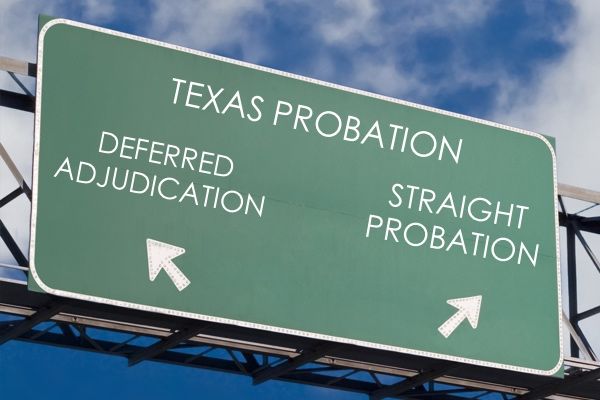
In Texas, there are two types of community supervision in criminal cases: regular community supervision (or what is typically referred to as “straight probation”) and deferred adjudication (or “deferred probation.”) The difference between them is significant.  Chapter 42.12 of the Texas Code of Criminal Procedure covers with both types of probation in Texas.

Straight Probation in Texas

Let’s discuss straight probation first. As an example, assume someone is facing a charge for a Class A Misdemeanor. The penalty range is 0-365 days in jail. A straight probation offer from the state might look like this:

180 days in jail probated for 12 months.

If you agree to this offer and decide to take it, at the time of the plea the judge would ask for your plea of guilty, find you guilty and assess punishment at 180 days in jail. However, he would not require you to actually serve the jail time. Rather, he would probate the jail time and place you on community supervision for a period of 12 months. If you successfully complete the straight probation by reporting as directed and abiding by the terms and conditions, you would not be required to serve jail time for the conviction.

Straight Probation Comes With a Criminal Conviction

With straight probation, the most significant consequence is the conviction itself. When you plead guilty, the judge finds you guilty and a conviction is rendered. You avoid jail time by the sentence being probated, but the conviction remains on your record. A conviction, even if probation, can never be expunged from your record (regardless of the passage of time), so it is important to be wise with your decision to take a plea agreement in which straight probation is offered.

If you receive straight probation and fail to comply with the terms and conditions, the state can seek to have your probation revoked. At a revocation hearing or sentencing, the judge’s sentencing ability is limited by the underlying sentence received at the time of your original plea. So, in the above example, if you received a sentence for 180 days in jail probated for 12 months and are later revoked, the judge cannot sentence you beyond the 180 days (even though the penalty range for a class A misdemeanor is up to 365 days.)

Deferred Adjudication in Texas

Chapter 42.12 section 5 offers a different type of probation than the straight probation discussed above. It’s called deferred adjudication. Let’s go back to our example and say your facing a Class A Misdemeanor with a penalty range of 0-365 days. A deferred adjudication offer might look like this:

18 months probation

If you agree to this offer, you would plead guilty at the time of the plea. However, the judge would withhold finding you guilty and instead place you on probation for a period of 18 months. The reporting and terms and conditions would mirror those of a straight probation. If you successfully complete the probation and are discharged, you would not be required to serve jail time and you would not receive a criminal conviction.

Deferred Adjudication Does Not Come With a Criminal Conviction

With deferred adjudication, the most significant benefit is the case is dismissed upon discharge and no conviction rendered. You not only avoid jail time, but a conviction as well. You also may be eligible to file for a non-disclosure after discharge in most cases. Section 411.081 of the Texas Government Code is the law covering when and if you can file for a non-disclosure after discharge from deferred adjudication.

As with straight probation, if you receive deferred adjudication and fail to comply with the terms and conditions, the state can seek to have your probation revoked. However, there are some significant distinctions at a revocation hearing or sentencing on a deferred adjudication case. First, the judge’s sentencing ability is unlimited. This means he can use the entire penalty range. In our example, if you receive deferred adjudication for 18 months for a class A misdemeanor and are later revoked, the judge can sentence you anywhere in the penalty range of 0- 365 days. Also and more importantly, if revoked, the judge will find you guilty resulting in a conviction.

Contact Our Fort Worth Criminal Defense Firm if You Have Questions About Deferred Adjudication or Straight Probation in Texas

This was a rough overview of the different types of probation in Texas on criminal cases. Of course, there are always factors that can effect if and which type of probation is available as an option to you. The attorneys at Barnett Howard & Williams PLLC would be glad to discuss your situation and provide more information about these options. Please feel free to give us a call at (817) 993-9249.

NOTE:
→ DWI offenses are not eligible for deferred adjudication in Texas. If you’d like to see that changed, contact your state representatives’ offices and voice your opinion

Read full article

Speak with a Fort Worth attorney

Call (817) 993-9249 or send us a message to discuss your case.