

Skip to content
Tag

Fort Worth Drug Crimes Attorneys

Page 4 of 4 · 20 articles

Houston Crime Lab Scandal

More Aftermath from the Houston Crime Lab Scandal

By Brandon Barnett · Drug Crimes

CCA Says “No Relief” for Defendant Who Accepted Plea Deal, even though the Court Infers Defendant’s Lab Reports Were Falsified

Houston Crime Lab Scandal
See the CCA opinion in Ex Parte Barnaby 

Setting the Stage: The Houston Crime Lab Scandal

In January of 2012, the Texas Rangers investigated a Department of Public Safety (“DPS”) Crime Laboratory technician, Jonathan Salvador, for allegedly tampering with crime lab evidence. The Rangers questioned DPS technicians and reviewed evidence records, bringing information that pointed to Salvador’s mishandling of lab results to Harris County’s District Attorney’s office. However, after an extensive investigation, the grand jury did not indict the technician. Subsequently, the DPS Office of Inspector General issued a report, stating that Salvador “failed to properly follow laboratory protocols…misidentified substances, and dry-labbed [falsified] samples.” Following the report, Salvador was terminated from his position at the Houston Crime Lab.

The fallout from Salvador’s actions, “call…into question the veracity and reliability of many cases handled by Salvador…[and as a result courts have] granted relief on several writs of habeas corpus, finding that each case involved a presumptive violation of due process.” Ex Parte Turner, 394 S.W.3d 513 (Tex. Crim. App. 2013) (per curiam); Ex Parte Hobbs, 393 S.W.3d 780 (Tex. Crim. App. 2013) (per curiam). The Texas Court of Criminal Appeals (“CCA”) has since “retreated from a presumption that due process was violated in every Salvador case, [instead] requir[ing] a showing of falsity and materiality.” Ex Parte Coty, 418 S.W.3d 597, 605.

How to Demonstrate a Due Process Violation from the Houston Crime Lab Scandal

In order for a defendant to prove that due process has been violated, the defendant must show (1) falsity—that his evidence from the lab or lab report was falsified; and, (2) materiality—that such falsifications/false reports were material to the outcome of the guilty verdict. Ex Parte Weinstein, 421 S.W.3d 656, 665 (Tex. Crim. App. 2014).

Falsity

The defendant bears the initial burden of showing falsity; the CCA “has implemented a five-part protocol to be used when a [defendant] raises an inference of falsity.” Coty, 418 S.W.3d at 605.
A defendant shows falsity when:

  1. The technician in question is a state actor
  2. The technician has committed multiple instances of intentional misconduct in another case or cases;
  3. The technician is the same technician that worked on the [defendant’s] case;
  4. The misconduct is the type of misconduct that would have affected the evidence in the [defendant’s case]; and,
  5. The technician handled and processed the evidence in the [defendant’s] case within roughly the same period of time as the other misconduct.

Materiality

A defendant bears the burden of persuasion with regard to materiality. Id. at 606. Materiality of false evidence is measured by the impact it had on the defendant’s decision to plead guilty. Id. In cases involving plea agreements, the court examines the voluntariness of the plea—whether there is a reasonable likelihood that [the plea] affected the defendant’s decision to plead guilty, [but] not whether it affected the conviction or sentence. Id. The Court ponders questions like, “if the defendant had known that the lab reports were falsified, would he have plead guilty, or would he have gone to trial?” A plea, however, is not involuntary simply because a defendant does not correctly assess every relevant factor entering into his decision [to take the plea]. Ex Parte Evans, 690 S.W.2d 274, 277 (Tex. Crim. App. 1985); Brady v United States, 397 U.S. 742, 757 (1970). The CCA implies that the decision to “go to trial” is an indicator that the false evidence is indeed material; the decision to “take a plea deal” is a soft indicator that the false evidence is not material.

Applying this to Ex Parte Barnaby

On March 13, 2009, Kemos Marque Barnaby was stopped for a traffic offense. During the traffic stop, police smelled an odor of marijuana coming from inside the car. Barnaby was asked to exit the vehicle, and he consented to a pat-down search. With dashboard cameras rolling, a small plastic bag with white rocks, which tested positive for cocaine during a rapid field test, was found in Barnaby’s pants. The bag was delivered to the Houston Crime Lab, where Jonathan Salvador issued a drug analysis report, identifying the white rocks as cocaine. Instead of going to trial, Barnaby plead guilty to four separate offenses of possession of a controlled substance with intent to deliver in exchange for four concurrent fifty-year sentences. Barnaby appeals to the Court of Criminal Appeals, arguing that because of Salvador’s false report, his guilty plea was involuntary, and had an impact on his decision to take the plea deal.

Here, the Court examines falsity to determine whether due process was violated. Using the five-part falsity protocol, the Court says, (1) Salvador was a state actor; (2) Salvador had multiple instances of misconduct; (3) Salvador worked on Barnaby’s case; (4) Salvador’s misconduct is the type of misconduct that would have affected the evidence in Barnaby’s case; and, (5) Salvador handled Barnaby’s evidence in the same time period as the other misconduct at the Houston Crime Lab. The State conceded that Barnaby was able to raise the inference of falsity, and accordingly the Court infers that Salavador’s report in this case is false, carefully noting that an ‘inference of falsity’ is not an affirmative finding of a negative cocaine test result.

Next, the Court examines materiality to determine whether the false lab report was material to the decision to take a plea bargain and whether the value of the undisclosed information was outweighed by the benefit of accepting the plea offer. Ferrara v. United States, 456 F.3d 278, 294 (1st Cir. 2006). Here, the Court says that Barnaby, a habitual offender, was faced with four drug charges, on top of having two prior felony convictions, thus, enhancing sentencing guidelines ranging from 25 to 99 years imprisonment for each charge. On top of that, Barnaby was also charged with three additional charges of possession with intent to deliver in a drug-free zone, all of which were also enhanced to the habitual-offender statute. The plea resolved all four of those charges in exchange for four concurrent fifty-year sentences; “even if the falsity of the laboratory report had come to light…the State could have still prosecuted [Barnaby] for the three other [drug-free zone] cases. “[Barnaby’s] assertion that he would not have plead guilty had he known of the falsity of the laboratory report is unpersuasive in light of the benefit he received from the plea bargain.”

Even though the Court infers “that the laboratory report in [Barnaby’s] case was falsified, [the Court] finds that [such] falsity was not material to [Barnaby’s] decision to plead guilty,” adding that he received a benefit of a lighter prison sentence by choosing to take the plea deal. Accordingly, the Court of Criminal Appeals denies relief to Barnaby.

We've recently seen experienced drug lab problems in Fort Worth as well.  The problems have impacted countless drug and DWI cases in Tarrant County.  Any case that involves an outside crime lab must be scrutinized carefully by the criminal defense attorney.  While bad lab techniques (or technicians) might not mean an acquittal, but it could mean considerable relief for the defendant.


Read full article
Dangerous Weapon Enhancement

Federal Sentence Enhanced for Presence of Dangerous Weapon Even Though the Defendant Had No Knowledge of the Weapon

By Brandon Barnett · Sentencing

Should a defendant charged with possession of drugs be punished for a "dangerous weapon" found at the scene of the drug trafficking and owned by a co-conspirator, when he did not know about the gun in the first place?

Dangerous Weapon Enhancement
The Federal Fifth Circuit Court of Appeals thinks so.  See the Court's opinion in United States v. Guerrero.

On September 5, 2012, police were investigating a ranch in McAllen, Texas as a possible stash house for drug-trafficking. Officers observed Adrian Rodriguez-Guerrero coming and going from the ranch along with three other men in a caravan. When the officers stopped the caravan, “because the vehicles appeared weighed down,” a dog alerted to the presence of drugs. The police found “boxes of limes with bundles of marijuana concealed among the limes.” The defendants subsequently consented to a search of the McAllen ranch. (I'm always left wondering why people, especially those in possession of drugs, consent to a search.) “There the [police] found…clothing…a loaded shotgun and 125 shotgun shells…plastic cellophane, limes, packing tape…lime boxes, latex gloves, a large scale, and several bundles of marijuana.” In a written statement accepting responsibility, Rodriguez-Guerrero said he was hired to do landscaping at the residence, but was asked to “load the marijuana into a truck at the [ranch]…acknowledg[ing] the [ranch] as a stash house [for drugs].”

Conspiracy to Possess and Distribute Marijuana Enhanced for Possession of a Dangerous Weapon

At trial, he pled guilty to conspiracy to possess with intent to distribute 100 kilograms or more of marijuana, receiving a “guidelines-range sentence of 104 months” imprisonment and four years of supervised release. His sentence included a two-level enhancement for possession of a dangerous weapon—the shotgun found at the McAllen ranch. The district court noted, “[the Court] is not finding Rodriguez-Guerrero possessed the shotgun; rather, it was reasonably foreseeable…that there would be a weapon involved in…the… drug trafficking crime.” The district court added, “the shotgun was a tool of the trade and it [is] reasonably foreseeable to [Rodriguez-Guerrero] that there would have been a weapon, especially [to] a person with the experience that he has in drug trafficking.” Rodriguez-Guerrero appeals to the Fifth Circuit Court of Appeals, stating that there was no evidence to support a finding that either he or a co-conspirator possessed the shotgun—possession which lengthened his prison sentence.

U.S. Federal Sentencing Guidelines Application When a Dangerous Weapon is a "Tool of the Trade"

The United States Sentencing Guidelines Manual provides a two-level sentencing enhancement if “a dangerous weapon was present, unless it is clearly improbable that the weapon is connected with the offense.” U.S.S.G. § 2D1.1(b)(1), cmt. n.11(A). “The government must prove weapon possession by a preponderance of the evidence…[and can do so] by showing a temporal and spatial relationship of the weapon, the drug trafficking activity, and the defendant.” United States v. Zapata-Lara, 615 F.3d 388-90.

Here, the Fifth Circuit Court reasons, the McAllen ranch was a stash house for drug-trafficking, used to “package and transport marijuana.” The ranch was a warehouse to store and move drugs, not a residence “in which drugs were also stored.” Next, several bundles of marijuana were found in the ranch’s master bathroom, making it “plausible [the Court reasons] to find that either Rodriguez-Guerrero or another co-defendant accessed the master bedroom, where the shotgun was found.” Further, the rounds of ammunition suggest that the gun was connected with the drug trade. Lastly, the gun and rounds of ammunition were found on the same day that police observed Rodriguez-Guerrero and the co-defendants at the ranch.

The Court concludes that the “facts identified by the [district] court plausibly establish a temporal and spatial relationship between the weapon, the drug-trafficking activity, and Rodriguez-Guerrero.” The purpose of the sentencing enhancement is to punish because of increased danger and violence when drug traffickers possess weapons. U.S.S.G. § 2D1.1(b)(1), cmt. n.11(A). “The mere fact that a weapon cannot be attributable to any specific drug trafficker does not decrease the danger of violence.” Even though Rodgriguez-Guerrero may not have possessed shotgun, or that he may not have known about the shotgun is irrelevant. The Court states, “there was [sufficient] evidence to support that the weapon must have been possessed by one of the conspirators in furtherance of the conspiracy.”

In short, the Court says that establishing the “temporal and spatial” relationship is enough for possession in these types of drug trafficking cases; and, possession of a weapon could lead to enhanced, or increased prison sentences in federal courts.

Read full article
Possession of Methamphetamine in Fort Worth

Federal Courts No Longer Distinguish Between Pure Meth and Botched Meth When Calculating Weight

By Brandon Barnett · Drug Crimes

Possession of Methamphetamine in Fort WorthHere's a Breaking Bad question for you: If Walt lets Jesse cook a batch of Meth and Jesse screws it up, such that it is unsellable, can they be punished for the amount of bad methamphetamine that they cooked in addition to the amount of good methamphetamine (if there were such a thing)? This 5th Circuit tells us in United States v. Ramirez-Olvera.
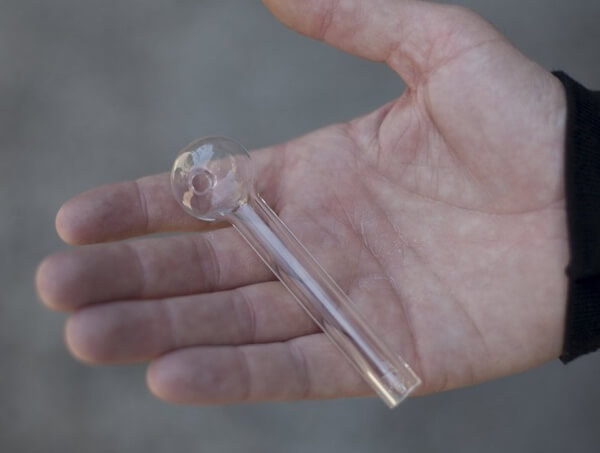
Antonio Ramirez-Olvera was convicted of possessing methamphetamine (meth) with the intent to distribute, violating 21 U.S.C. § 841(a)(1) and (b)(1)(B); he received a sentence of 240 months imprisonment, which is ten years below the bottom of the federal sentencing guidelines range for this offense.  Arguing that the district court excessively punished him, as the court did not distinguish between d-methamphetamine (“d-meth”) and l-methamphetamine (“l-meth”) for the sentencing guidelines’ equivalency table, Ramirez-Olvera appealed to the United States Court of Appeals for the Fifth District.

See the opinion in United States v. Ramirez-Olvera (5th Circuit, 2015)

How Should the Court Determine the Weight of Meth in a Possession Case?

The issue before the Court is whether federal courts must distinguish between the types of meth when deciding punishment, or, whether courts can punish based on a “lump sum” of the meth. As you can imagine, higher amounts generally mean a longer prison sentence.

Had the district court used only the d-meth in its calculations, Ramirez-Olvera’s prison sentence might have, in theory, been shorter. Relying on DEA lab reports,Ramirez-Olvera’s probation officer generated a presentence report that recommended, he “should be held responsible for 7.7 [total] grams,” combining both the l-meth and d-meth seized fromRamirez-Olvera’s home and car.

The Court discusses types of methamphetamine, highlighting the differences scientifically and practically. “D-meth and l-meth are stereoisomers of meth…consist[ing] of identical molecules [that are] differently arranged.” United States v. Acklen, 47 F.3d 739, 742 (5th Cir. 1995). D-meth causes psychological and physical changes in humans. L-meth, on the other hand, “produces little or no physiological effect when ingested.” Id. Further, L-meth is a “weak form of [meth], is rarely seen and is not made intentionally, but rather results from a botched attempt to produce d-meth.” U.S. Sentencing Guidelines Manual § 2D1.1(c)(1)(2014). In other words, l-meth is an accidental byproduct when creating d-meth goes awry; L-meth has little to no cash value.

The Court reviews this case anew, focusing on the plain meaning of the Federal Sentencing Guidelines for drug crimes; the Guidelines are the authoritative, controlling source of law. United States v. Moore, 733 F.3d 161-63 (5th Cir. 2013). Amendment 518, “a 1995 amendment to § 2D1.1, indicates that courts need not distinguish between d-meth and l-meth when determining the quantity of…meth attributable to a defendant.” U.S. Sentencing Guidelines, [Sentencing Commission Dicta], §2D1.1(c)(1)(2004). Under this amendment, “l-meth [is to] be treated the same as d-meth…thereby simplifying guideline application [from this point forward].” Id. Further, the Court “ha[s] relied on Amendment 518 to hold [in an unpublished case] that any distinction between d-meth and l-meth is now immaterial when calculating drug quantity under the guidelines. United States v. Beltran, 91 F. App’x 349 (5th Cir. 2004).

The Court affirms the district court’s opinion, holding that under Amendment 518 to the sentencing guidelines, meth no longer is to be categorized for sentencing purposes; l-meth and d-meth are to be added together to render the quantity courts will use in assessing punishment. All meth created, pure and botched, will be added together to determine a defendant’s prison sentence.

Read full article
Knowing Possession of Drugs in Texas

Trace Amounts of Drugs Inside Pipe Not Enough For Knowing Possession of Drugs

By Brandon Barnett · Drug Crimes

What Does it Mean to Be in Knowing Possession of Drugs in Texas?

Knowing Possession of Drugs in TexasPolice found George Williams sitting behind an air conditioner unit of a business building. Even though it was a cool morning, Williams had his shirt off and was sweating profusely. After doing a pat-down of Williams, police found a crack pipe in his pocket that was later determined to have cocaine residue in it by police and a chemist.

The Trial Court convicted Williams of knowingly possessing a controlled substance. The elements are:

  1. that appellant exercised actual care, control and management over the contraband; and
  2. that appellant had knowledge that the substance in his possession was contraband.

The 14th Court of Appeals (Houston) wanted to look further to see whether the evidence would support a reasonable inference that the defendant knowingly possessed the contraband. When the quantity of a substance possessed is so small that it cannot be measured, there must be evidence other than mere possession to prove that the defendant knew the substance in his possession was a controlled substance.

Read the Case:  Williams v. State (14th District Court of Appeals - Houston, 2015)

In other cases, the defendant was convicted because the State proved that there was saliva on the crack pipe, suggesting that it had recently been smoked and that the defendant was intoxicated at the time the police found him. Another example is a defendant being found in a well-known drug house holding a syringe with cocaine in it in a manner that he was about to insert, or had just inserted it, into his body.

In this case, the Court of Appeals found that the only evidence was that Williams had his shirt off and was sweating. The Court of Appeals held that this was not enough to prove Williams had recently used the pipe or knew of its purpose as a crack pipe. The Court of Appeals reversed this case in the favor of Williams.

This signals that it takes more than just merely being found with a pipe containing trace amounts of a drug to be convicted of knowingly possessing the drug. There must be more evidence such as intoxication, recent usage, or being found in a known drug house.

Fort Worth Drug Crimes Attorneys | Free Case Consultation

If you have been charged with possession of a controlled substance or any other drug crimes, contact our attorney today for a Free consultation of your case. We will take the time to speak with you about the incident and answer your questions about the criminal justice process in Tarrant County. Contact our office at (817) 993-9249.

Read full article

Conspiring With a Government Informant

By Brandon Barnett · Conspiracy

It Takes Two to Tango | Can a Person be convicted for Conspiring With a Government Informant?

Conspiring With a Government InformantUnited States v. Delgado, U.S. Courts of Appeals for the 5th Circuit (Federal)

In this U.S. v. Delgado, the Defendant-Appellant, Maria Aide Delgado, was convicted of

  1. possession of marijuana with the intent to distribute and
  2. conspiracy to commit the same offense.

She was sentenced to a concurrent term of 100 months imprisonment for each conviction. Delgado appealed, complaining that she shouldn't be convicted for Conspiracy if she was Conspiring With a Government Informant.

The Federal 5th Circuit Court of Appeals dismissed a conspiracy charge in the indictment because the government failed to introduce sufficient evidence to establish that the Appellant entered into a conspiracy with anyone other than a government informant. While it takes at least two people to form a conspiracy, an agreement must exist among co-conspirators who actually intend to carry out the agreed upon criminal plan. A defendant cannot be criminally liable for conspiring solely with an undercover government agent or a government informant, therefore, evidence of any agreement Delgado had with the government informant cannot support a conspiracy conviction.

Read full article

Speak with a Fort Worth attorney

Call (817) 993-9249 or send us a message to discuss your case.